
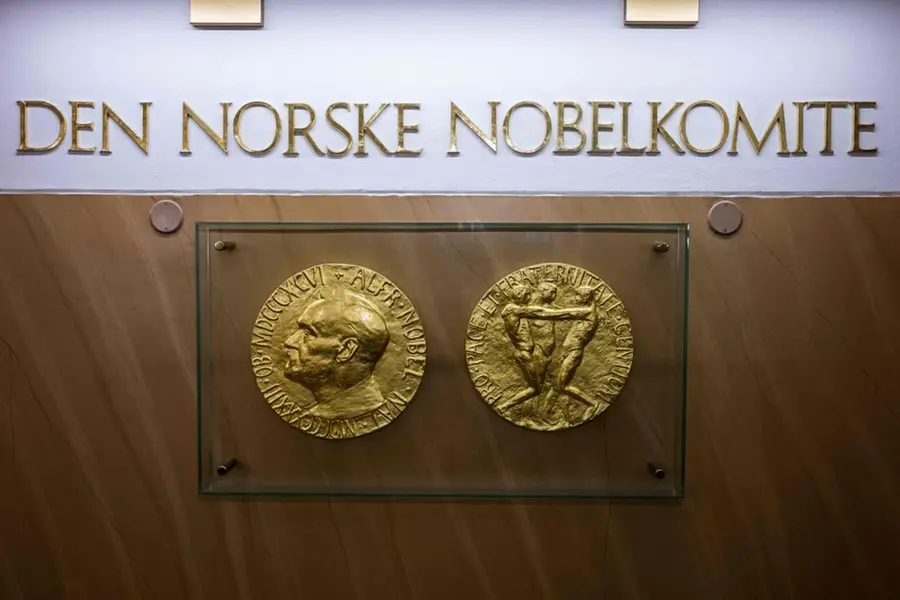
Artificial intelligence is already transforming industries like banking, finance, film, and journalism, and now, scientists are exploring how AI could revolutionize their field -- potentially even earning a Nobel Prize.
In 2021, Japanese scientist Hiroaki Kitano proposed the "Nobel Turing Challenge," encouraging researchers to develop an "AI scientist" capable of conducting autonomous research worthy of a Nobel Prize by 2050. This ambitious idea has sparked interest, with this year's Nobel laureates to be announced between October 7 and 14.
Around 100 "robot scientists" are already in existence, according to Ross King, a professor of machine intelligence at Chalmers University in Sweden.
One of the earliest, "Robot Scientist Adam," made its debut in 2009, autonomously generating scientific hypotheses, testing them, and discovering previously unknown gene functions in yeast. Although modest, these discoveries proved the potential of AI in science.
AI’s Advantages and Limitations in Science
Robot scientists have several advantages over human researchers. They operate 24/7, cost less, and meticulously record every detail. However, King acknowledges that AI has a long way to go before achieving Nobel-level breakthroughs, requiring significantly more intelligence and a deeper understanding of the bigger picture in science.
Inga Strumke, an associate professor at the Norwegian University of Science and Technology, believes that human scientists remain irreplaceable for now.
However, she recognizes AI’s growing influence on scientific practices, with models like AlphaFold already demonstrating AI’s capabilities. Developed by Google DeepMind, AlphaFold can predict protein structures from amino acids, something previously impossible for humans to achieve manually.
The Future of AI and Nobel Prizes
Despite AI's impressive computational abilities, Strumke emphasizes that science is about understanding, not just providing correct answers. While AI models like AlphaFold offer valuable insights, they don’t yet contribute to a deeper understanding of the underlying biology.
Still, the groundbreaking work of AlphaFold has led some to speculate that the minds behind it, John Jumper and Demis Hassabis of Google DeepMind, could soon be Nobel Prize contenders. Their achievements have already earned them the Lasker Award in 2023, and Clarivate Analytics places them as top picks for the 2024 Nobel Prize in Chemistry.
Although Nobel Prizes are typically awarded for discoveries made decades earlier, experts like David Pendlebury, head of Clarivate’s research group, predict that AI-assisted research will likely receive Nobel recognition within the next decade.
As AI continues to advance, it is poised to play an increasingly critical role in the future of scientific discovery.
AFP
Published: 03 Oct 2024, 10:55 am IST
Disclaimer: Kindly avoid objectionable, derogatory, unlawful and lewd comments, while responding to reports. Such comments are punishable under cyber laws. Please keep away from personal attacks. The opinions expressed here are the personal opinions of readers and not that of Mathrubhumi.
