
Humanitarian groups say rebel conflict, healthcare shortages, mass displacement and public distrust are pushing the region deeper into crisis
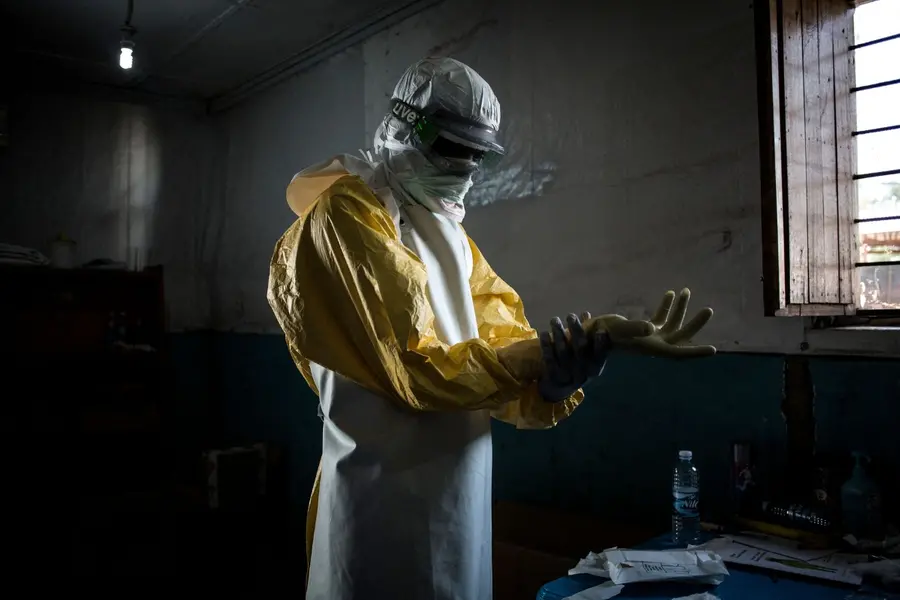
Congo: Arson attacks on Ebola treatment centres in eastern Democratic Republic of the Congo have exposed the mounting difficulties authorities face in containing a deadly outbreak that has already been declared a global health emergency.
The attacks, which targeted treatment facilities in two towns at the centre of the outbreak, underline the growing anger and mistrust among local communities in a region already grappling with armed conflict, mass displacement, collapsing healthcare systems and severe international aid cuts.
Health experts and humanitarian organisations warn that the combination of violence, political instability and fragile medical infrastructure is complicating efforts to stop the spread of the rare Bundibugyo strain of Ebola.
“A devastating set of emergencies are converging,” the non-profit organisation Physicians for Human Rights said while describing the worsening situation.
Rebel violence and insecurity continue to destabilise eastern Congo
Eastern Congo has remained affected by violence involving dozens of armed groups for several years, with some organisations maintaining links to foreign governments or extremist networks such as the Islamic State group.
The Rwanda-backed M23 currently controls parts of the region. Although the Congolese government still retains formal control over northeastern Ituri Province, where the Ebola outbreak is concentrated, that authority remains fragile.
The Allied Democratic Forces, a Ugandan Islamist organisation linked to Islamic State, is among the dominant rebel groups operating in the region and has been blamed for repeated attacks on civilians.
Before the latest Ebola outbreak, Doctors Without Borders had already warned that insecurity in Ituri was worsening rapidly, forcing doctors and nurses to flee while leaving local healthcare facilities overwhelmed.
The organisation described conditions in some areas as “catastrophic”.
According to the United Nations humanitarian office, nearly one million people in Ituri have already been displaced because of conflict.
Gabriela Arenas, Regional Operations Coordinator at the International Federation of Red Cross and Red Crescent Societies, said the Ebola outbreak is now unfolding in communities already weakened by insecurity, displacement and fragile healthcare systems.
Fears grow over spread in displacement camps
Health authorities are particularly concerned that the outbreak could spread to overcrowded displacement camps near the city of Bunia, where the first Ebola cases were identified.
Officials have announced more than 700 suspected Ebola cases and over 170 suspected deaths, most of them recorded in Ituri Province.
However, infections have also been reported in North Kivu and South Kivu, regions currently controlled by M23 rebels, as well as in neighbouring Uganda.
The situation has created a fragmented response system, with some areas managed by the Congolese government while others remain under rebel influence alongside multiple international aid agencies operating independently.
Aid cuts leave health workers struggling
Humanitarian organisations say international funding cuts by the United States and other wealthy nations last year severely weakened Congo’s ability to respond to infectious disease outbreaks.
Thomas McHale, public health director at Physicians for Human Rights, said the reductions significantly weakened outbreak detection and emergency response systems in a country that has already experienced more than a dozen Ebola outbreaks in the past.
Aid workers on the ground say they continue to face shortages of essential protective equipment, including face shields, protective suits, testing kits and body bags required for the safe handling and burial of Ebola victims.
Julienne Lusenge, president of the aid organisation Women’s Solidarity for Inclusive Peace and Development, which operates a small hospital near Bunia, said the shortages are becoming critical.
“We have made requests to different partners, but we have not yet really received anything,” she said.
“We only have hand sanitiser and a few masks for the nurses.”
Complicating matters further, the Bundibugyo strain responsible for the outbreak currently has no approved vaccine or specific treatment.
Public distrust and anger fuel backlash against health measures
The burning of Ebola treatment centres in the Rwampara and Mongbwalu areas, which currently report some of the highest infection numbers, has highlighted growing resistance among sections of the local population.
Colin Thomas-Jensen, director of impact at the Aurora Humanitarian Initiative, said the attacks may reflect years of frustration and mistrust among residents of eastern Congo.
According to him, many communities feel abandoned after enduring years of violence linked to foreign-backed rebel groups while receiving insufficient protection from both the government and international peacekeeping forces.
Strict burial protocols introduced to prevent the spread of Ebola have also become a major source of tension.
Because Ebola victims remain highly contagious after death, health authorities have taken charge of many burials to prevent families from preparing bodies or gathering in large funeral crowds.
Witnesses and police said the first attack on an Ebola treatment centre in Rwampara involved a group of local youths attempting to retrieve the body of a friend who had died. The crowd reportedly accused the foreign aid organisation operating the facility of falsely claiming the death was caused by Ebola.
Authorities tighten restrictions to prevent further spread
In response to the worsening outbreak, authorities in northeastern Congo have banned funeral wakes and public gatherings involving more than 50 people.
Security forces, including armed soldiers and police officers, are now guarding certain burials conducted by aid workers to ensure health protocols are followed and to prevent further unrest.
As eastern Congo continues to battle armed conflict, displacement and collapsing healthcare systems, experts warn that controlling the Ebola outbreak will remain extremely difficult unless security, public trust and humanitarian support improve simultaneously.
Agency inputs
Published: 24 May 2026, 08:28 pm IST
Related Topics
Disclaimer: Kindly avoid objectionable, derogatory, unlawful and lewd comments, while responding to reports. Such comments are punishable under cyber laws. Please keep away from personal attacks. The opinions expressed here are the personal opinions of readers and not that of Mathrubhumi.
