
Former funeral home owner Carie Hallford faces 25 to 35 years in prison for helping conceal nearly 200 decomposing bodies in Colorado
Denver: A former funeral home owner here is set to be sentenced on Friday for abusing corpses after helping her former husband conceal nearly 200 decomposing bodies. The case has prompted authorities in Colorado to tighten oversight of an industry long criticised for repeated scandals and weak regulation.
Under a plea deal, Carie Hallford is expected to receive a prison sentence ranging from 25 to 35 years during her appearance before District Judge Eric Bentley in Colorado Springs.
Her former husband, Jon Hallford, was sentenced to 40 years in prison in February on similar charges. During that hearing, relatives of the deceased described him as a “monster” after discovering the condition in which bodies had been kept.
Funeral home operations and discovery
Carie Hallford acted as the public representative of the funeral home business, Return to Nature, interacting with grieving families. Jon Hallford handled much of the physical work at a separate facility in Penrose, located south of Colorado Springs.
In 2023, residents near the Penrose property reported a strong and unpleasant smell.
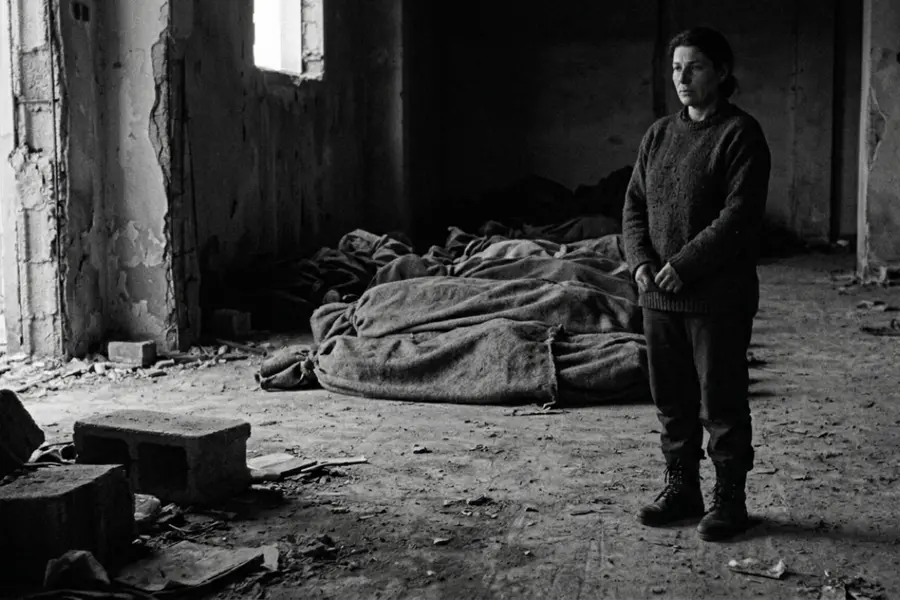
Investigators found the bodies stored in a Penrose building from 2019 to 2023, some stacked atop one another and covered with decomposition fluid and swarming insects. Among the remains were adults, infants, and fetuses. Families were reportedly given dry concrete instead of ashes, leaving many traumatised and some struggling with guilt.
Part of wider funeral industry scandals
The case is regarded as one of the most serious among several criminal incidents involving funeral homes in Colorado. Investigations revealed that the Hallfords had been spending lavishly while also defrauding customers.
Only months before the Penrose discovery, a mother and daughter running a funeral home in Montrose were sentenced to federal prison. They had been accused of selling body parts and providing families with fake ashes.
In 2024, authorities in Denver arrested another former funeral home owner who, while facing financial difficulties, kept a woman’s body in a hearse for two years. Police also found the cremated remains of at least 30 individuals at the same property.
In another incident last year, inspectors uncovered 24 decomposing bodies and containers of bones hidden behind a concealed door at a funeral home in Pueblo. The facility was owned by the Pueblo County coroner and his brother. It marked the first inspection carried out under new rules allowing routine checks of funeral homes.
Claims of abuse and victim impact
Carie Hallford had sought a lighter sentence in March during proceedings in a related federal fraud case, stating that she had been subjected to abuse and manipulation within her marriage.
However, many victims have shown little sympathy. Among them is Crystina Page, whose son David died in 2019. His body remained for years inside the Penrose building, which was kept at room temperature, before it was eventually discovered along with others.
Page said Jon Hallford “was the monster under the bed, but Carie was the one who fed the monster”. She and other families were given fake ashes instead of the remains they had been promised.
The couple, who divorced after their arrest, have already been sentenced in a related federal fraud case. Carie Hallford received 18 years, while Jon Hallford was given 20 years. Both have appealed those convictions.
Regulatory changes and industry response
Officials and industry representatives said this week that reforms introduced by Colorado lawmakers are beginning to improve oversight. Following the Hallford case, the state introduced mandatory inspections and a licensing system for the funeral sector.
Sam Delp from the state’s Department of Regulatory Agencies said the changes have brought Colorado to a moderate level of regulation compared with other states. He noted that Colorado had previously been the only state without formal regulation of funeral homes. Delp leads the Division of Professions and Occupations within the department.
Matt Whaley said increased media coverage of the Return to Nature case and similar incidents has made families more cautious. He noted that more people now request to be present during cremations rather than simply collecting ashes later.
He added that trust in funeral professionals has been affected and that rebuilding confidence will take time and consistent effort.
Concerns over past lack of oversight
Blanca Eberhardt, who has previously worked in Indiana, Texas and Hawaii, recalled her experience after moving to Colorado. She said she was shocked by the condition in which some bodies were handled at a funeral home in Pueblo where she had worked.
According to Eberhardt, the situation reflected the state’s long-standing reputation for lacking basic rules, including licensing requirements and regular inspections.
She noted that for decades there had been a perception that people who lost their licences in other states could simply relocate to Colorado and continue working.
“The joke has been for the last 40 years if you lose your license in another state, just move to Colorado," she said.
Agency inputs
Published: 24 Apr 2026, 03:03 pm IST
Related Topics
Disclaimer: Kindly avoid objectionable, derogatory, unlawful and lewd comments, while responding to reports. Such comments are punishable under cyber laws. Please keep away from personal attacks. The opinions expressed here are the personal opinions of readers and not that of Mathrubhumi.
