
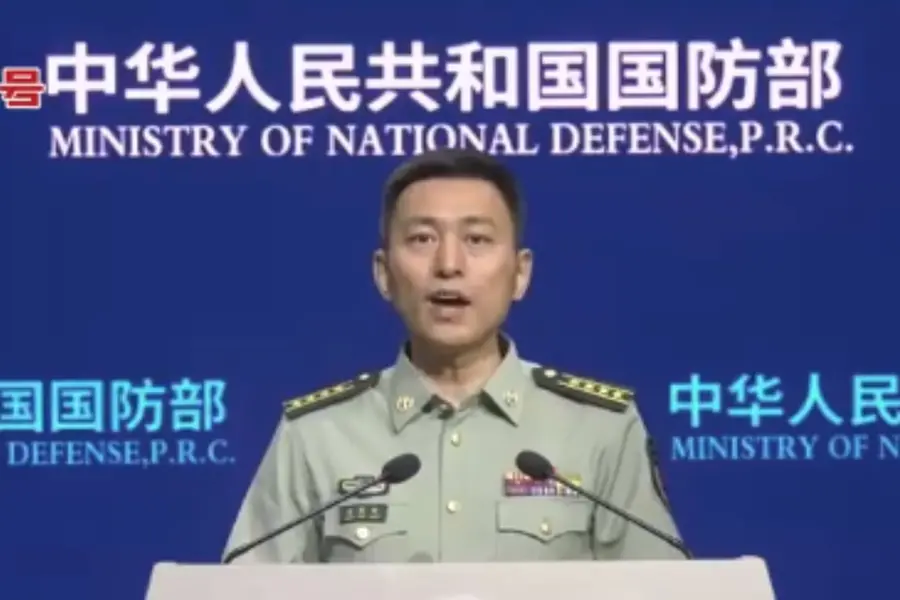
China conducted a test launch of an intercontinental ballistic missile (ICBM) into the Pacific Ocean on Wednesday, raising concerns in an already tense region due to Beijing's territorial claims and its rivalry with the US.
According to a statement from China's Defence Ministry, the missile carried a dummy warhead and landed in a designated area of the ocean. The launch, conducted by the People's Liberation Army's Rocket Force, was described as part of routine annual training and compliant with international law, with no specific target or country involved.
Uncommon Nature of the Test
It remains unclear how frequently China conducts long-distance missile tests, with the last known test of this nature occurring in 1980 when China launched an ICBM into the South Pacific.
A map published during that time showed the target area surrounded by nations such as the Solomon Islands, Fiji, and Samoa. The recent test is considered unusual, as China typically conducts missile launches toward its western deserts from its east coast.
According to James Acton, co-director of the Nuclear Policy Program at the Carnegie Endowment for International Peace, this type of test signals China's growing confidence in its nuclear capabilities, mirroring the US in displaying its nuclear power.
Broader Implications Amid Regional Tensions
The timing of the missile test coincided with the United Nations General Assembly in New York, where China, a permanent member of the UN Security Council, seeks to expand its influence in international affairs.
The launch follows a series of corruption arrests within China's Rocket Force and military leadership, signaling an effort to maintain internal stability amid economic challenges.
Analysts, such as Jeffrey Lewis from the Middlebury Institute of International Studies, suggest this test marks a new phase in US-China relations, resembling an arms race. Meanwhile, tensions remain high with the US deploying its new mid-range missile system, Typhon, in the Philippines, adding pressure to an already strained regional security environment.
While defence officials from Japan, Taiwan, and South Korea refrained from commenting directly on the test, all three nations maintain strong defenses against potential Chinese military actions.
AP
Published: 25 Sept 2024, 09:55 am IST
Related Topics
Disclaimer: Kindly avoid objectionable, derogatory, unlawful and lewd comments, while responding to reports. Such comments are punishable under cyber laws. Please keep away from personal attacks. The opinions expressed here are the personal opinions of readers and not that of Mathrubhumi.
