
Former Israeli prime ministers Naftali Bennett and Yair Lapid have joined forces in a new political alliance aimed at challenging Benjamin Netanyahu in the 2026 elections.
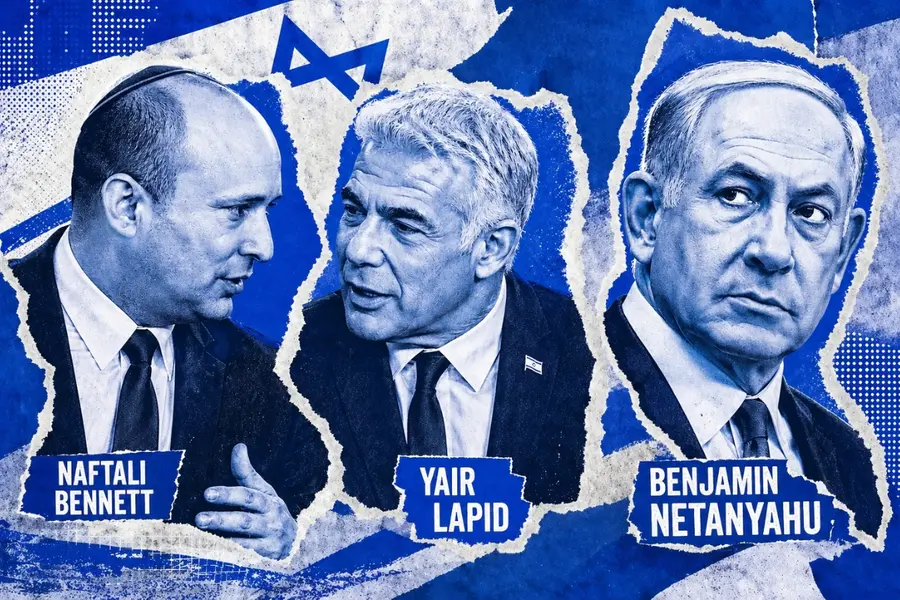
Jerusalem: Israeli politics has entered a new phase ahead of the 2026 elections, with former prime ministers Naftali Bennett and Yair Lapid announcing a joint alliance named “Together” to challenge long-time leader Benjamin Netanyahu.
The move brings together two of Netanyahu’s most prominent rivals in an attempt to unify Israel’s fragmented opposition and strengthen their electoral position.
Also Read

New opposition alliance
The alliance was formally announced in Jerusalem, with Bennett, a right-wing leader, taking charge of the bloc and Lapid, a centrist politician, joining as a key partner.
Both leaders previously worked together in a coalition government that ended Netanyahu’s 12-year continuous rule in 2021, although that government lasted only 18 months.
Their renewed partnership is being seen as one of the most significant political developments ahead of the upcoming vote, though analysts say it does not guarantee a shift in voter support.
Focus on October 7 and governance issues
A central theme of the alliance’s campaign is expected to be accountability over the Hamas-led attack on Israel on October 7, 2023, which continues to shape political debate and public sentiment.
The bloc is also expected to push for a state commission of inquiry into the attack and reforms related to military service obligations for ultra-Orthodox communities.
Political challenge to Netanyahu
Despite criticism of Netanyahu’s government over security failures, judicial reforms, and ongoing regional conflicts, opposition parties have struggled to present a unified alternative until now.
Polls suggest Netanyahu remains politically resilient, with deep divisions still existing among opposition voters.
Key political uncertainty
While the “Together” alliance may strengthen coordination among centrist and right-wing opposition groups, experts note that ideological differences and voter loyalties could limit its impact.
Some analysts also suggest that broader opposition unity would require inclusion of additional political groups, including Arab parties, which has historically been a contentious issue in Israeli coalition politics.
The alliance marks a significant reshaping of Israel’s political landscape ahead of the elections, but its ability to translate into electoral success against Netanyahu remains uncertain.
Published: 27 Apr 2026, 09:50 pm IST
Related Topics
Disclaimer: Kindly avoid objectionable, derogatory, unlawful and lewd comments, while responding to reports. Such comments are punishable under cyber laws. Please keep away from personal attacks. The opinions expressed here are the personal opinions of readers and not that of Mathrubhumi.