
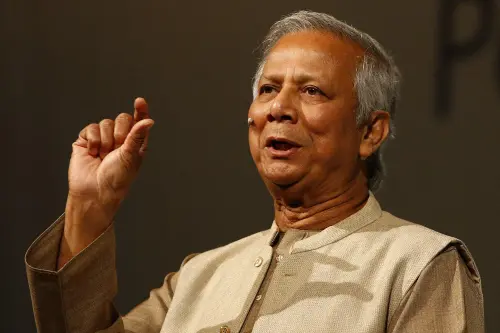
Dhaka: Muhammad Yunus, the Chief Advisor to Bangladesh's interim government, has written to US President Donald Trump, appealing for a three-month delay in the implementation of new reciprocal tariffs on Bangladeshi exports.
The United States has raised tariffs on Bangladeshi goods from an average of 15 percent to a steep 37 percent. A significant proportion of Bangladesh’s export income comes from its ready-made garments (RMG) sector, with the US being a key destination. The country exports roughly $8.4 billion worth of goods annually to the US, mostly from the RMG industry.
According to local media, the US administration has applied a 50 percent discount to its existing average tariff of 74 percent on American goods, effectively levying a 37 percent rate on Bangladeshi products.
Trump defends tariffs amid global market slide
On Monday, as international stock markets took a hit, President Trump stood by his aggressive tariff policies. Brushing aside fears of economic fallout, he claimed that "world leaders are dying to make a deal" regarding reciprocal trade measures.
Economic woes deepen in Bangladesh
Since the interim government assumed power in August 2024, Bangladesh’s economic situation has been on the decline. The nation’s business sector is currently grappling with a severe liquidity crisis. Numerous industrial and commercial entities have ceased operations, leading to disruptions in international trade.
The prevailing political instability has caused global buyers to explore alternative sourcing destinations. Bangladeshi entrepreneurs, meanwhile, are struggling to import essential raw materials to keep their operations afloat.
Tensions in the RMG sector have escalated due to unpaid wages and worsening working conditions. Demonstrations and strikes by garment workers have swept across the country. Several reports have detailed factory shutdowns and the tragic loss of life and serious injuries resulting from protest-related violence.
Indicators show grim economic outlook
A report published in Prothom Alo, a major Bengali-language daily, highlights concerning trends across a range of economic indicators. Metrics such as inflation, unemployment, revenue generation, foreign investment, capital imports, and private investment all paint a bleak picture.
The Dhaka-based think tank, Centre for Policy Dialogue (CPD), has warned that Bangladesh will not be able to attract meaningful domestic or international investment unless political and institutional stability is restored.
IANS
Published: 07 Apr 2025, 08:04 pm IST
Related Topics
Disclaimer: Kindly avoid objectionable, derogatory, unlawful and lewd comments, while responding to reports. Such comments are punishable under cyber laws. Please keep away from personal attacks. The opinions expressed here are the personal opinions of readers and not that of Mathrubhumi.
