
Bangladesh’s political tensions have deepened after BNP claimed that the accused shooter in radical activist Osman Hadi’s killing was granted bail twice with help from a senior Jamaat-e-Islami leader.
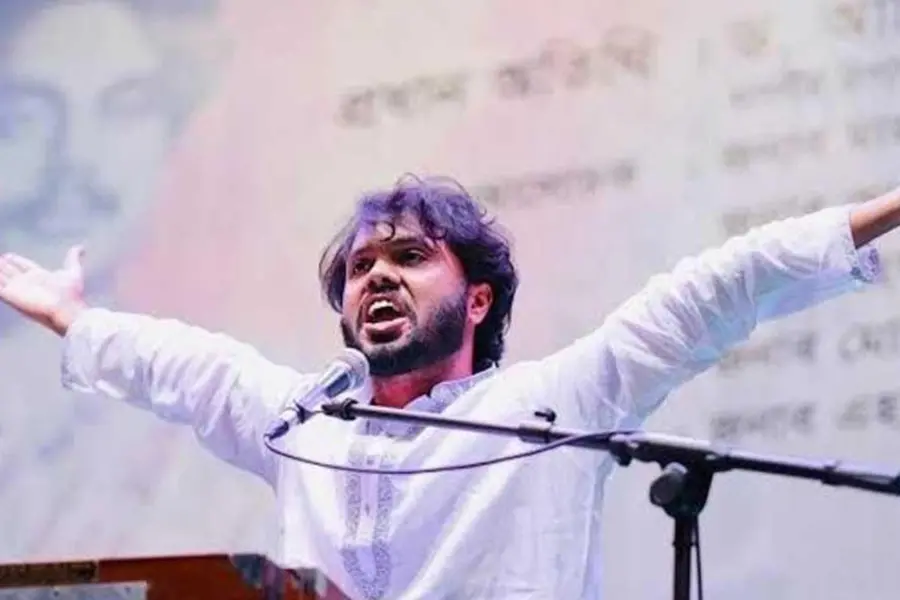
Days after radical activist Sharif Osman Hadi succumbed to gunshot injuries, Bangladesh’s political landscape has been rocked by explosive claims from the Bangladesh Nationalist Party (BNP), alleging that the man accused of shooting Hadi had been granted bail twice with the help of a senior Jamaat-e-Islami leader.
Speaking during a televised panel discussion on Ekushey Television, BNP executive committee member Nilofer Chowdhury Moni alleged that prominent lawyer and Jamaat leader Shishir Manir had secured bail for the accused on two occasions — including once just months before the attack.
“The man who fired at Hadi — we need to examine his background. Who bailed him out twice? Shishir Manir did. I am saying this responsibly,” Moni said, questioning how the accused repeatedly managed to obtain bail despite his criminal history.
Who Was Osman Hadi?
Sharif Osman Hadi, founder of Inqilab Mancha, a radical student platform linked to Dhaka University, was known for his strident anti-India rhetoric and vocal opposition to former prime minister Sheikh Hasina. He was also associated with the July 2024 uprising, making him a polarising figure in Bangladesh’s political discourse.
Hadi was shot by unidentified assailants in Dhaka earlier this month and later airlifted to Singapore, where he died from his injuries. His death was officially announced by Bangladesh’s interim leader Muhammad Yunus on December 18.
Violence Erupts After Hadi’s Death
Hadi’s killing triggered widespread unrest across Bangladesh. What began as sporadic protests soon escalated into nationwide violence, including attacks on cultural centres and street demonstrations marked by anti-India and anti-Hindu slogans.
On December 19, a Hindu man, Dipu Chandra Das, was lynched by a pro-Hadi mob in Mymensingh, an incident that drew sharp reactions from India. The following day, protests intensified, with demonstrators pelting stones at the residence of the Indian Assistant High Commissioner in Chattogram.
Counter-protests later emerged against Hadi’s radical outfit. On December 22, another political figure — Motaleb Shikder, Khulna divisional chief of the National Citizen Party (NCP) — was shot in Khulna. He survived the attack and is reported to be out of danger.
India-Bangladesh Diplomatic Tensions Rise
In the aftermath of the violence, Dhaka summoned Indian High Commissioner Pranay Verma, demanding cooperation in the investigation and protesting the activities of former PM Sheikh Hasina.
Protests were held outside Indian missions in Bangladesh, prompting New Delhi to summon Bangladesh’s envoy and lodge a strong demarche over threats to Indian diplomatic premises and the lynching of Dipu Chandra Das.
India subsequently suspended visa services indefinitely at application centres in Chittagong, Rajshahi, and Khulna, citing security concerns. Bangladesh responded by suspending visa services at its High Commission in New Delhi and missions in Tripura and Siliguri.
Bangladesh’s Foreign Affairs Adviser M Touhid Hossain warned that Dhaka could consider “scaling back its presence” in India if the diplomatic standoff continues.
Published: 23 Dec 2025, 05:50 pm IST
Related Topics
Disclaimer: Kindly avoid objectionable, derogatory, unlawful and lewd comments, while responding to reports. Such comments are punishable under cyber laws. Please keep away from personal attacks. The opinions expressed here are the personal opinions of readers and not that of Mathrubhumi.
