
The Baghdad summit followed the collapse of a ceasefire agreement between Israel and Hamas in January. In recent days, Israeli forces have intensified their military operations across Gaza
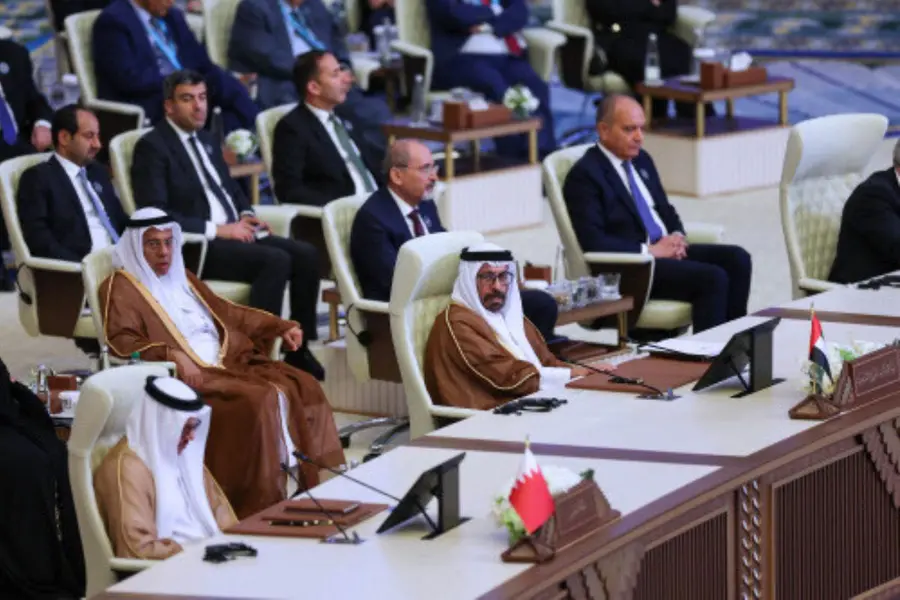
Baghdad: Arab leaders gathered at an annual summit in Baghdad on Saturday reaffirmed their efforts to mediate a ceasefire between Israel and Hamas in the Gaza Strip and pledged to support the reconstruction of the territory once hostilities cease.
At the summit, leaders referenced an earlier emergency Arab League meeting in Cairo held in March, during which a plan for Gaza's reconstruction was endorsed — one that opposes the displacement of the territory’s roughly two million residents.
Among those attending were Qatar’s Emir Sheikh Tamim bin Hamad Al Thani and Egypt’s President Abdel Fattah el-Sissi. Spanish Prime Minister Pedro Sánchez and United Nations Secretary-General António Guterres were also present as guests. Guterres reiterated the UN’s position, calling for the release of Israeli hostages in Gaza and the unimpeded delivery of humanitarian aid into the besieged enclave. He added that the organisation rejects any form of “forced displacement” of Palestinians.
The Baghdad summit followed the collapse of a ceasefire agreement between Israel and Hamas in January. In recent days, Israeli forces have intensified their military operations across Gaza. Prime Minister Benjamin Netanyahu has stated his intention to escalate the campaign further in pursuit of dismantling Hamas.
“This genocide has reached levels of ugliness not seen in all conflicts throughout history,” said Iraq’s Prime Minister Mohammed Shia al-Sudani. In his address, he called for the urgent delivery of aid into Gaza and announced that Iraq would contribute $20 million towards Gaza’s reconstruction, with an additional $20 million pledged for Lebanon. He also revealed plans to establish an Arab fund to support recovery efforts in affected areas.
President el-Sissi noted that Egypt, working in coordination with Qatar and the United States, is “exerting intense efforts to reach a ceasefire” in Gaza. He highlighted that these efforts had contributed to the release of Israeli-American hostage Edan Alexander. El-Sissi also mentioned Egypt's intention to host an international conference focused on Gaza’s reconstruction “once the aggression stops.”
Palestinian President Mahmoud Abbas urged Hamas to relinquish control of Gaza and to hand over weapons — along with other militant factions — to the Palestinian Authority. Hamas has governed Gaza since 2007, after wresting control from Abbas’s Western-backed Palestinian Authority. Several attempts at reconciliation between the rival groups have failed.
The Baghdad summit took place just days after U.S. President Donald Trump’s regional visit, which overshadowed the event. While Trump’s trip did not result in a breakthrough ceasefire deal, it drew international attention due to his meeting with Syria’s newly installed President Ahmad al-Sharaa — a former militant who previously fought U.S. forces in Iraq. During the meeting, Trump pledged to lift American sanctions imposed on Syria.
Al-Sharaa did not attend the Baghdad summit. Syria was instead represented by Foreign Minister Asaad al-Shibani. The presence of al-Sharaa remains controversial among Iraqi Shiite factions, many of whom are uneasy about his past as a Sunni militant. Some had reportedly opposed his invitation to the event.
During Syria’s long-running conflict, which began in March 2011, several Iraqi Shiite militias supported the forces of former Syrian President Bashar Assad. Al-Sharaa’s leadership now presents a particularly delicate issue for those groups.
According to an Iraqi official who spoke on condition of anonymity, Esmail Ghaani, commander of Iran’s Quds Force, visited Baghdad shortly before the summit. The official said Ghaani “conveyed messages of support for the Iranian-American negotiations” aimed at reviving the nuclear deal and lifting sanctions on Iran.
Published: 17 May 2025, 08:12 pm IST
Disclaimer: Kindly avoid objectionable, derogatory, unlawful and lewd comments, while responding to reports. Such comments are punishable under cyber laws. Please keep away from personal attacks. The opinions expressed here are the personal opinions of readers and not that of Mathrubhumi.
