
Lawler recalled that then-CIA Director George Tenet directly told Musharraf that AQ Khan “was betraying Pakistan's nuclear secrets to at least the Libyans and maybe others,” triggering an explosive outburst.
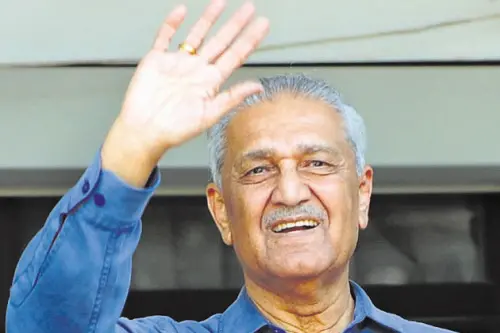
Washington: Former CIA operations officer James Lawler, who led covert missions that penetrated and ultimately dismantled AQ Khan’s global nuclear trafficking network, has revealed dramatic new details of how Pakistan’s leadership reacted when confronted with evidence that its top nuclear scientist was selling state secrets.
In an interview with ANI, Lawler said the turning point came when US intelligence presented “absolutely incontrovertible evidence” to Pakistan’s President Pervez Musharraf that Khan was illicitly trading nuclear technology abroad.
Lawler recalled that then-CIA Director George Tenet directly told Musharraf that AQ Khan “was betraying Pakistan's nuclear secrets to at least the Libyans and maybe others,” triggering an explosive outburst. According to Lawler, Musharraf responded furiously, declaring, “I'm going to kill that son of a bitch.”
Instead, Lawler said, Musharraf ultimately chose to place Khan under years-long house arrest — a move that became central to shutting down the proliferation network.
Inside the CIA operation to sabotage the Khan network
Lawler recounted that he was tasked in the mid-1990s with leading counter-proliferation operations in Europe before the CIA authorised him to “penetrate and sabotage” nuclear procurement chains. His small team created front companies posing as legitimate suppliers and used sting operations so that “the people came,” enabling the CIA to infiltrate the network from within.
Studying historical covert actions convinced him that the most effective strategy was to mirror proliferators’ own methods. “If you want to defeat proliferation and proliferators, you need to become a proliferator,” he said.
The team’s work, involving “no more than 10 people” at headquarters, ultimately exposed Khan’s transition into what Lawler called an “outward proliferator” selling nuclear expertise to foreign states. Lawler said he nicknamed Khan “the ‘Merchant of Death’.”
A decisive breakthrough came with the interception of the BBC China, a freighter carrying containers packed with nuclear components intended for Libya. The evidence forced Libyan leader Muammar Gaddafi to acknowledge a secret nuclear programme.
Sabotaging nuclear capability
Lawler described the CIA’s strategy as a combination of intelligence gathering and technical disruption.
“Harm” proliferators’ capability using scientific sabotage techniques developed with national laboratories. The stakes, he said, justified bold actions: “The risk of not acting would be the risk.”
Looking ahead, Lawler expressed deep concern about Iran acquiring a nuclear weapon, warning, “My biggest concern is the nuclear pandemic this would set off in the Middle East.”
India–US ties: ‘compatible interests’
Lawler also urged the United States to strengthen its relationship with India.
“I think sometimes American foreign policy is a big puzzle. What I am hopeful for is that the United States needs a much stronger relationship with India,” he opined.
He questioned why the two nations, despite shared democratic values and converging interests, had never become true strategic partners.
“You're a democracy. We're a democracy… I think we could be much stronger working together than standoffish,” he asked.
He added that major frictions during Donald Trump’s presidency, including reciprocal tariffs and disputes over Russian oil imports, should not define the long-term partnership.
Lawler served from 1980 to 2005 in multiple overseas roles. His nickname “Mad Dog” originated from a dog bite incident in France early in his career.
Published: 24 Nov 2025, 09:05 am IST
Disclaimer: Kindly avoid objectionable, derogatory, unlawful and lewd comments, while responding to reports. Such comments are punishable under cyber laws. Please keep away from personal attacks. The opinions expressed here are the personal opinions of readers and not that of Mathrubhumi.
