
Towering flames, toxic black smoke and burnt vehicles turned Oklahoma’s Sinclair refinery into a scene of horror, raising fresh fears after multiple refinery fires rocked the US in recent months.
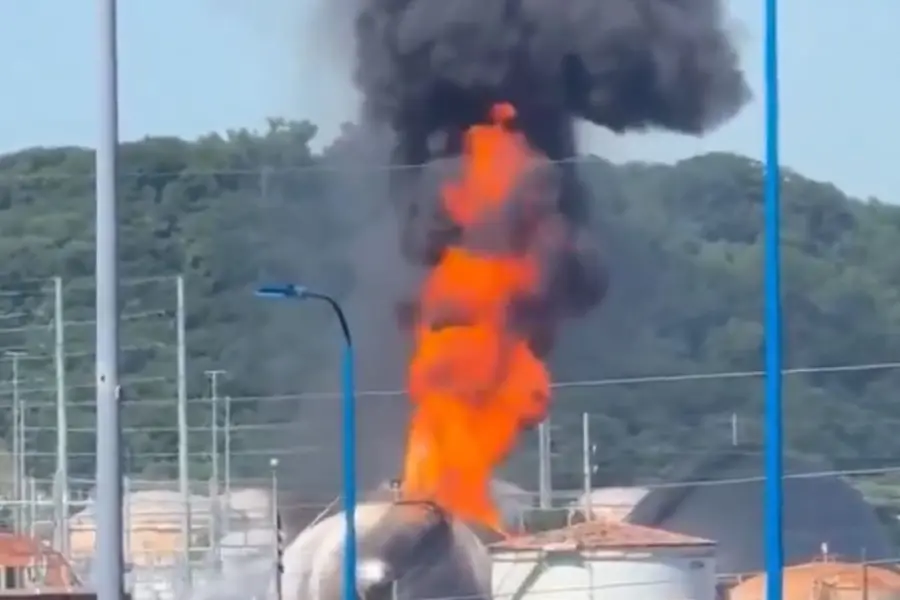
A terrifying wall of fire and thick black smoke engulfed a major oil refinery in the US state of Oklahoma, sending panic rippling through the surrounding area and reigniting fears over a disturbing rise in refinery disasters across America.
The massive blaze broke out at the Sinclair refinery in Tulsa on May 11 at around 10:45 am local time.
Within minutes, gigantic flames could be seen shooting high into the sky as dense clouds of toxic smoke swallowed the industrial zone.
Visuals from the scene showed an apocalyptic landscape, orange fireballs roaring through refinery structures, vehicles reduced to twisted shells of metal, and the sky turning almost completely black.
Workers inside the refinery reportedly scrambled for safety as alarms rang out across the complex. Emergency response teams rushed to the scene while local authorities closely monitored the spread of the fire.
Though firefighters from the city were deployed and kept on standby, refinery officials later claimed that the facility’s own internal firefighting system managed to bring the inferno under control after several hours.
Several vehicles parked inside the refinery compound were destroyed in the blaze. Several workers also fell ill after inhaling heavy smoke and were immediately taken to the hospital.
Officials later confirmed that their condition was stable and that no deaths had been reported.
The exact cause of the fire remains unknown, but investigators and local police have launched a detailed probe into the incident.
The refinery management has so far avoided revealing the scale of financial losses caused by the disaster.
The Oklahoma inferno has once again raised alarming questions about the safety and security of America’s energy infrastructure.
The country has witnessed a string of refinery fires and explosions in recent months, fuelling speculation over possible sabotage, industrial negligence, or coordinated attacks on critical facilities.
Earlier this year, a massive explosion at the Valero refinery in Port Arthur, Texas, sent shockwaves through nearby residential areas. Residents reported hearing a thunderous blast strong enough to shake buildings and shatter window panes.
Thick black smoke continued to rise from the refinery long after sunset, creating scenes eerily similar to the latest Oklahoma disaster.
With multiple refinery fires reported across the United States within just a few months, concerns are now mounting over whether these incidents are isolated industrial accidents, or signs of a far more dangerous pattern emerging inside America’s vital oil network.
Published: 14 May 2026, 04:23 pm IST
Disclaimer: Kindly avoid objectionable, derogatory, unlawful and lewd comments, while responding to reports. Such comments are punishable under cyber laws. Please keep away from personal attacks. The opinions expressed here are the personal opinions of readers and not that of Mathrubhumi.
