
Macron recognises Palestinian state at UN, triggering global support but deepening tensions with Israel and US.
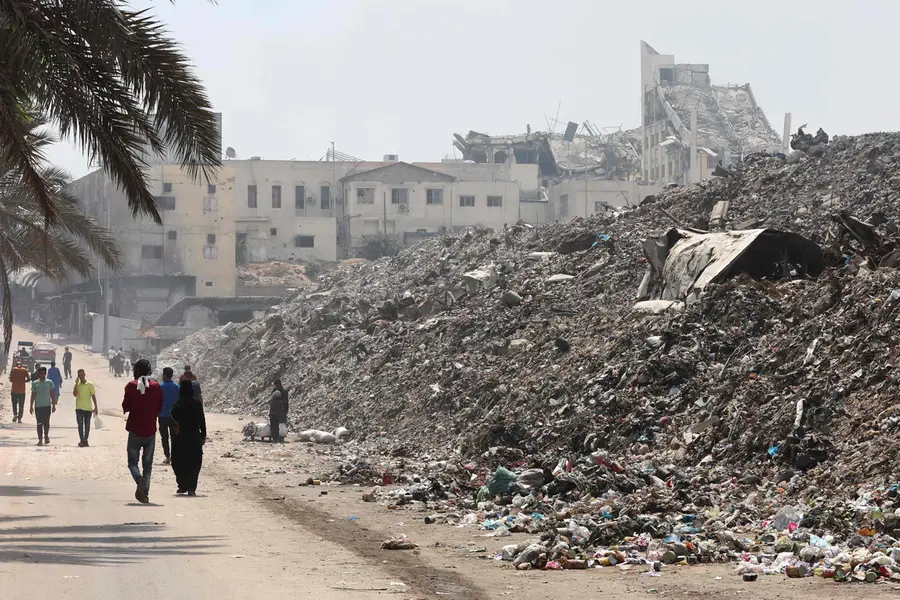
United Nations, United States: French President Emmanuel Macron formally recognised a Palestinian state at the United Nations on Monday, describing the move as essential for peace. The announcement, delivered at a summit boycotted by Israel and the United States, called for an immediate halt to the Gaza conflict.
"The time for peace has come, as we are just moments away from no longer being able to seize it," Macron said in the General Assembly. He urged the release of 48 hostages held by Hamas and an end to bombings, massacres and displacement.
Macron clarified, however, that France would not open an embassy to a Palestinian state until a ceasefire is in place and hostages are freed.
Global recognition builds momentum
The Palestinian Authority hailed France's "historic and courageous" step, with its delegation offering a standing ovation. Australia, Britain, Canada and Portugal joined in recognition, followed by Monaco, Belgium, Andorra, Malta and Luxembourg, bringing three-quarters of UN members in support.
Spain, Ireland and Norway had already recognised Palestine earlier in May, while Sweden did so in 2014.
Israel and US push back
Israeli Prime Minister Benjamin Netanyahu has vowed to block Palestinian statehood, while far-right cabinet members threatened annexation of the West Bank. Israel's UN ambassador Danny Danon accused countries of "supporting terrorism" and warned that Israel "will take action."
The White House, through Press Secretary Karoline Leavitt, said President Donald Trump saw recognition as "a reward to Hamas."
UN Secretary-General Antonio Guterres told AFP: "We should not feel intimidated by the risk of retaliation."
Palestinian Authority challenges Hamas
The war began with Hamas’ October 7, 2023 attack on Israel, which killed 1,219 people, mostly civilians. Israel’s counteroffensive has since killed 65,344 Palestinians, largely civilians, according to Gaza’s Hamas-run health ministry, figures the UN recognises.
Palestinian Authority president Mahmud Abbas, barred from attending in person, addressed the summit virtually. The 89-year-old urged Hamas to surrender its weapons and condemned the killing and detention of civilians, including Hamas’ October 7 actions.
France co-hosted the summit with Saudi Arabia, whose foreign minister Prince Faisal bin Farhan called on all nations to follow suit.
Limited impact on the ground
Not all allies backed the recognition. Germany, Italy and Japan argued that only a negotiated two-state solution could ensure lasting peace. Germany’s Foreign Minister Johann Wadephul said this was the only viable path to “peace, security and dignity.”
Britain, despite recognising Palestine on Monday, signalled it would reverse the decision if Israel agreed to a Gaza ceasefire.
Yet, Israel launched a new offensive in Gaza City, underlining the limits of the move.
Max Rodenbeck of the International Crisis Group cautioned: "Unless backed up by concrete measures, recognizing Palestine as a state risks becoming a distraction from the reality, which is an accelerating erasure of Palestinian life in their homeland."
Published: 23 Sept 2025, 06:39 am IST
Disclaimer: Kindly avoid objectionable, derogatory, unlawful and lewd comments, while responding to reports. Such comments are punishable under cyber laws. Please keep away from personal attacks. The opinions expressed here are the personal opinions of readers and not that of Mathrubhumi.
