
The reported conditions paint a grim picture: widespread filth, medical neglect, mistreatment, and serious breaches of legal rights.
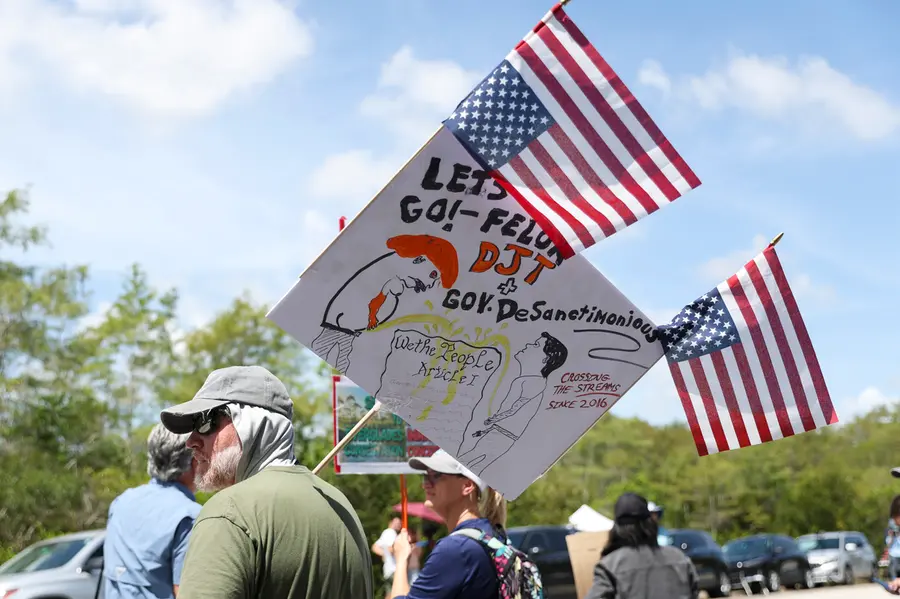
Ochopee (United States): At US President Donald Trump's newly established migrant detention facility in Florida’s Everglades, detainees describe a place where time loses all meaning.
Held in a windowless environment under relentless fluorescent lighting, prisoners are denied access to natural daylight and live without clocks or any means of tracking the passage of time.
Multiple detainees, alongside family members and legal representatives, have condemned the inhumane conditions inside the centre – dubbed “Alligator Alcatraz” by officials. The nickname reflects the administration’s aggressive stance, which has included comparing undocumented migrants to “animals” and pledging to deport millions.
The media gathered testimonies from detainees via phone calls, supported by additional details from relatives, lawyers, and legal documentation. The reported conditions paint a grim picture: widespread filth, medical neglect, mistreatment, and serious breaches of legal rights.
“They don't even treat animals like this. This is like torture,” said Luis Gonzalez, a 25-year-old Cuban detainee, speaking from within the facility.
Rapid construction, harsh conditions
The controversial detention centre was constructed in just eight days and opened on July 2 at a disused airfield deep within the Everglades. Florida, governed by Republican Ron DeSantis, entered into an agreement with US Immigration and Customs Enforcement (ICE) to detain undocumented migrants—a responsibility traditionally reserved for federal agencies.
The Trump administration is now positioning the facility as a model for similar centres across the country.
Gonzalez, who arrived in the US in 2022 and was awaiting the outcome of his asylum claim, was arrested last month after a judge dismissed his case. ICE agents transported him to “Alligator Alcatraz”, chaining his hands, waist, and feet during the journey, which lasted over 24 hours.
He described how the officers treat the detained immigrants like criminals, adding that he hadn’t seen sunlight in two weeks.
“When they take us to the dining hall, they take us with our hands on our heads as if we were murderers.”
He shares a makeshift cell with approximately 30 other detainees, enclosed by chain-link fencing—conditions he likens to a chicken coop. He reported poor sanitation, with three toilets for the entire group and no access to a shower for over a week.
Extreme heat, swarms of mosquitoes, and the absence of basic hygiene have turned daily life into a struggle for survival.
Medical neglect and alleged abuse
Many detainees have spoken out about the lack of medical attention.
Michael Borrego Fernandez, 35, was left untreated for pain until he began to bleed. He eventually underwent emergency surgery for haemorrhoids, but without post-operative antibiotics, his condition worsened, resulting in a second hospitalisation.
Reports of mistreatment are also growing. Detainee Marcos Puig, 31, claims he was segregated to prevent him from speaking out during an official visit. In protest, he broke a toilet, which prompted a violent response: “a dozen guards” entered his cell, handcuffed him, and allegedly beat him before leaving him kneeling for 12 hours in an unmonitored, uncooled space.
“I arrived here broken. I was covered in bruises,” Puig told the media from another Florida facility where he is now being held.
Another inmate, Gonzalo Almanza Valdes, reportedly witnessed guards “beat up” fellow detainees, according to a recorded phone call with his wife.
The psychological toll is equally concerning. In a call with his partner, 63-year-old detainee Rafael Collado said: “I have tried to kill myself twice, I have cut my veins.”
Florida officials have denied all allegations of abuse.
Legal action and environmental fears
The facility is currently the subject of two lawsuits. One accuses authorities of denying detainees their constitutional right to due process.
“There are people who have been there since they arrived and have still not seen a judge. And that cannot be, it is completely illegal,” said Magdalena Cuprys, the lawyer representing Gonzalez.
She argues that detainees are unable to apply for bail or request case reviews because local courts claim they lack jurisdiction over the state-run centre.
A second legal challenge alleges that the facility endangers the delicate Everglades ecosystem. In response, a federal judge recently ordered a 14-day halt to all new construction while the case is under review.
Mounting pressure for closure
With growing outcry from human rights activists, legal experts, and environmental advocates, pressure is mounting on Florida and the Trump administration to shut down the controversial detention centre. Critics argue that “Alligator Alcatraz” is not only a humanitarian crisis but also a legal and environmental timebomb.
AFP
Published: 20 Aug 2025, 08:30 am IST
Disclaimer: Kindly avoid objectionable, derogatory, unlawful and lewd comments, while responding to reports. Such comments are punishable under cyber laws. Please keep away from personal attacks. The opinions expressed here are the personal opinions of readers and not that of Mathrubhumi.
