
Critics argue that building such a facility in the fragile Everglades ecosystem threatens the environment and that the harsh conditions, including extreme heat, mosquitoes, and flooding risks, make it cruel for detainees.
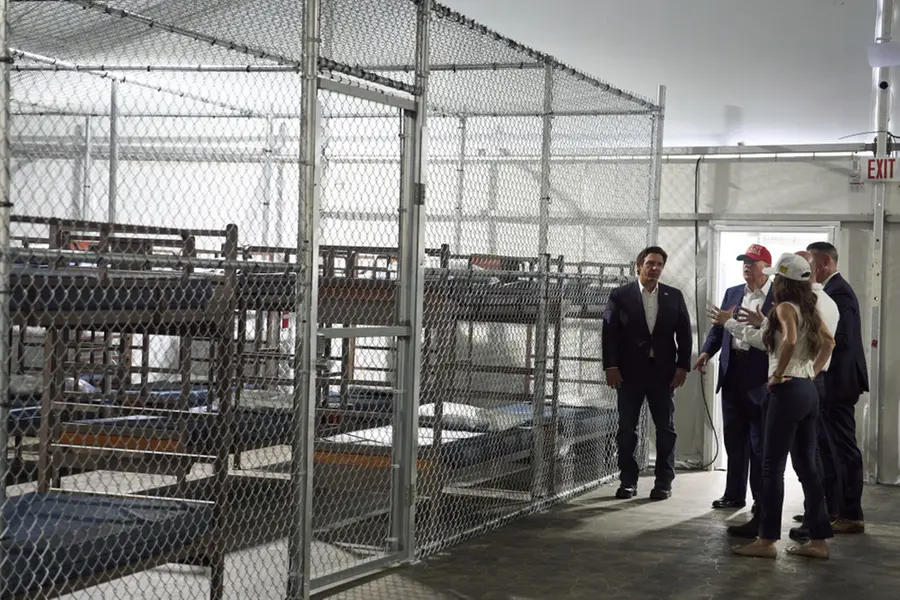
Florida is preparing to receive the first group of immigrants at a newly built detention centre deep in the Everglades, a facility officials have dubbed “Alligator Alcatraz.” The detention site is set to begin operations soon, housing hundreds of detainees transported by bus, according to state authorities.
Florida Republican Attorney General James Uthmeier announced on social media that “Alligator Alcatraz will be checking in hundreds of criminal illegal aliens tonight. Next stop: back to where they came from.” However, exact details on the detainees’ arrival time and origins remain unclear.
A fortress
Located on a remote airport training facility in the Everglades, the detention centre was constructed in just eight days and spans over 10 miles (16 kilometres) of wetlands. When fully operational, it is expected to hold up to 3,000 detainees initially, with plans to expand to a capacity of 5,000 beds by early July.
The sprawling compound is heavily secured, featuring more than 200 security cameras, over 28,000 feet (8,500 meters) of barbed wire, and 400 security personnel. The facility will house immigrants arrested under the federal 287(g) program, which empowers local law enforcement officers to detain immigrants for potential deportation.
Controversy and criticism
The detention centre has sparked a significant backlash from environmental groups and Native American tribes. Critics argue that building such a facility in the fragile Everglades ecosystem threatens the environment and that the harsh conditions, including extreme heat, mosquitoes, and flooding risks, make it cruel for detainees. The land also holds cultural and spiritual importance for Native American communities.
Many have argued that the facility is a blatant violation of human rights, drawing unsettling comparisons to the concentration camps of Nazi Germany. Critics warn that the centre could become a traumatic environment for its occupants, resembling a prison more than a detention facility.
Heavy rains have already caused flooding in some tents, including during a recent visit by President Donald Trump to mark the facility’s opening. State officials say the complex is built to withstand a Category 2 hurricane and have taken steps to reinforce vulnerable areas.
A deterrent strategy
Governor Ron DeSantis and other Florida officials have described the centre’s remote location as a deliberate deterrent to undocumented immigrants. Naming the facility “Alligator Alcatraz”, a reference to the infamous federal prison known for its harsh conditions, is intended to send a tough message.
This move aligns with the Trump administration’s broader approach, using scare tactics and stringent enforcement measures to encourage undocumented immigrants to leave the country voluntarily.
The detention centre has also become a political symbol among Florida Republicans. The state party has promoted “Alligator Alcatraz” through social media and conservative media outlets, sharing memes of alligators guarding the prison compound with ICE hats. They have also launched fundraising campaigns selling merchandise like T-shirts and beer koozies branded with the facility’s name.
As “Alligator Alcatraz” begins operations, it remains a focal point of debate over immigration enforcement, environmental protection, and the treatment of detainees in Florida. (With inputs from AP)
Published: 03 Jul 2025, 07:50 am IST
Disclaimer: Kindly avoid objectionable, derogatory, unlawful and lewd comments, while responding to reports. Such comments are punishable under cyber laws. Please keep away from personal attacks. The opinions expressed here are the personal opinions of readers and not that of Mathrubhumi.
