
Iran has executed Ali Fahim amid a surge in wartime death sentences linked to the January protests. Rights groups warn more protesters face imminent execution.
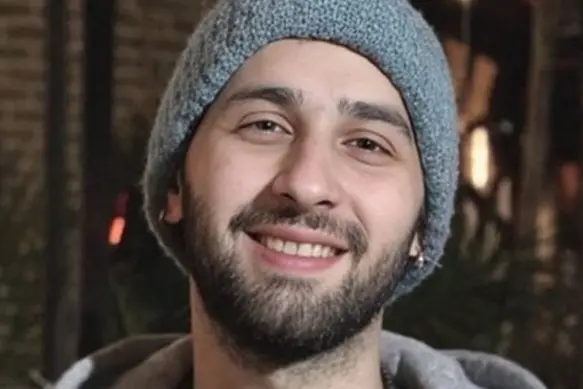
Iran has carried out another execution linked to the January nationwide protests, putting to death Ali Fahim after the Supreme Court upheld his death sentence. State media said his punishment was enforced on Monday, marking yet another escalation in a fast-rising wave of wartime executions as the country grapples with internal unrest and conflict with Israel and the United States.
The execution comes amid one of the harshest crackdowns Iran has seen in years, following demonstrations that erupted in late December over rising living costs and quickly morphed into widespread anti-government protests. Rights organisations say the trials of protesters have been rushed, coercive, and marred by torture.
Who was Ali Fahim?
Fahim, a 26-year-old from Tehran, had been convicted of attempting to enter a military site and seize weapons during the early-January unrest. He was handed a death sentence by Judge Abolghasem Salavati of Branch 15 of the Revolutionary Court on the charge of moharebeh, or “enmity against God”. According to the judiciary’s Mizan Online website: “Ali Fahim, one of the enemy elements in the terrorist riots of Dey (January)… was hanged after the Supreme Court reviewed the case and confirmed the verdict.”
Authorities accused Fahim of acting at the behest of foreign adversaries. Mizan reported that he had been found guilty of working against Iran “on behalf of ‘the Zionist regime and the United States’ and of breaking into a classified military site to seize weapons.”
Rights groups, however, have challenged the legitimacy of the conviction. Iran Human Rights (IHR), based in Norway, said Fahim and others tied to the same case had been denied due process, held without proper legal representation, and subjected to torture during interrogation.
Protest crackdown
The unrest of early January, considered one of the largest waves of anti-government protest in recent Iranian history, was met with a sweeping security response. Demonstrators, initially motivated by economic grievances, soon began calling for political change, prompting what authorities labelled as “foreign-instigated riots”.
Tehran has insisted that the protests turned violent, claiming more than 3,000 people were killed, including members of the security forces. But the US-based Human Rights Activists News Agency (HRANA) has documented more than 7,000 deaths, the majority of whom it says were protesters, warning that the actual death toll may be significantly higher.
Executions linked to the Basij base incident
Fahim was one of seven men sentenced to death in February for allegedly attempting to attack a Revolutionary Guards’ Basij militia base in Tehran during the demonstrations. “Ali Fahim, 23, was hanged after being found guilty of involvement in an attack on a Tehran base of the Revolutionary Guards' Basij militia during the protests,” rights groups monitoring his case reported.
Four of the seven, including two teenagers, have now been executed. Three others remain under immediate threat of execution, according to rights monitors.
The Iranian judiciary confirmed earlier executions of Mohammad-Amin Biglari, 19, and Shahin Vahedparast, 30, on Sunday, and Amir Hossein Hatami, 18, on Thursday. Amnesty International has condemned the pace and nature of these cases, saying the judiciary is functioning as “a tool of repression sending individuals to the gallows to spread fear and exacting revenge on those demanding fundamental political change”.
IHR described the proceedings as “grossly unfair”, accusing the Revolutionary Court of using fast-track trials to deliver predetermined outcomes. The cases were presided over by Judge Abolghasem Salavati, sanctioned by the United States in 2019 and known domestically for his heavy use of capital punishment. He has been referred to by the US Treasury as the “Judge of Death”.
Wartime surge in executions
According to IHR, Iran had paused political executions shortly after the war with Israel and the United States erupted on February 28, following strikes that killed Supreme Leader Ali Khamenei. But in the last eight days alone, the organisation says, authorities have executed 10 political prisoners, four tied to the January protests and six accused of belonging to the opposition group MEK.
IHR director Mahmood Amiry-Moghaddam said the pattern shows a regime using wartime turmoil to intensify repression. “These executions are part of the Islamic republic's strategy of survival, waging war against its own people under the shadow of external conflict,” he said, urging global pressure on Tehran. “The international community must respond with urgency. The situation of prisoners and the regime's systematic use of the death penalty must be made a central condition in any negotiations or engagement with the Islamic republic.”
Fahim’s execution is the latest in a growing list of death sentences enforced since the January uprising. Iran also executed three men on March 19 accused of killing police officers during the protests, its first set of executions linked directly to the unrest before the latest cluster of hangings.
(With AP inputs)
Published: 06 Apr 2026, 05:39 pm IST
Related Topics
Disclaimer: Kindly avoid objectionable, derogatory, unlawful and lewd comments, while responding to reports. Such comments are punishable under cyber laws. Please keep away from personal attacks. The opinions expressed here are the personal opinions of readers and not that of Mathrubhumi.
