
Skydiver Felix Baumgartner, known for his supersonic jump from space, died in a paragliding accident in Italy.
Milan: Felix Baumgartner, the Austrian skydiver who made history with a supersonic leap from the edge of space in 2012, has died in a paragliding accident in Italy. He was 56.
The incident occurred on Thursday, July 17 2025, in Porto Sant’Elpidio, a coastal city along Italy’s Adriatic shoreline. According to reports, Baumgartner was piloting a powered paraglider when he is believed to have suffered a sudden medical emergency mid-air, possibly cardiac arrest, causing him to lose control and crash into the swimming pool of Le Mimose Family Camping Village. A hotel worker nearby sustained minor injuries, while Baumgartner was fatally wounded. Emergency services rushed to the scene, but he was declared dead before the air ambulance arrived.
Just hours before the fatal crash, Baumgartner had posted about challenging weather conditions, writing on Instagram about “too much wind.” Local authorities later confirmed his identity, and Porto Sant’Elpidio’s mayor Massimiliano Ciarpella expressed condolences, calling him “a symbol of courage and passion for extreme flight.”
The moment that made history
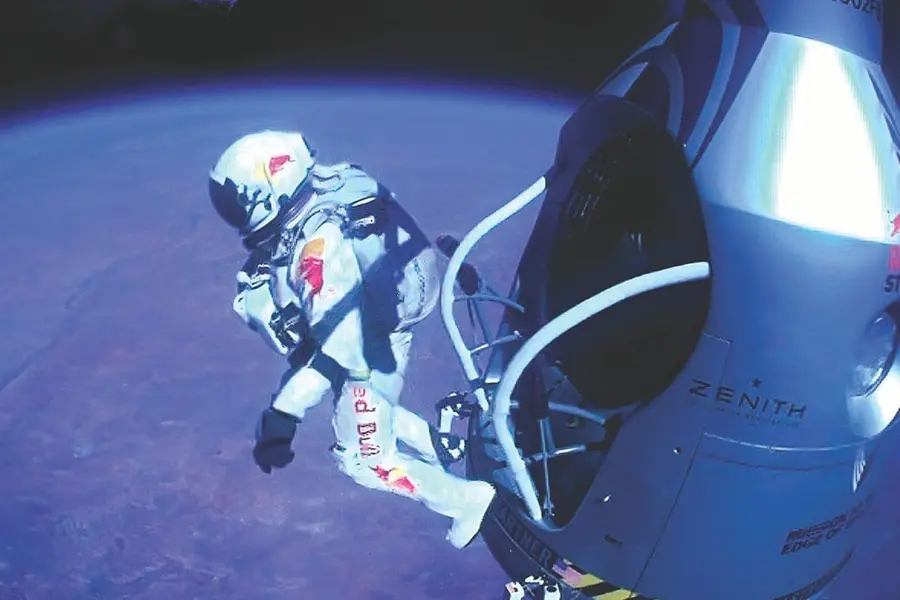
Baumgartner’s name became synonymous with daring after his gravity-defying feat on October 14 2012. As part of the Red Bull Stratos project, he ascended to nearly 39 kilometres (24 miles) above Earth in a pressurised capsule lifted by a giant helium balloon. Wearing a specially designed suit, he stepped out into the stratosphere — and into history.
With a brief, steady jump, he entered near-vacuum conditions and began a four-minute-and-19-second free fall, reaching a top speed of 1,357.64 km/h (843.6 mph) — exceeding the speed of sound without any vehicle or propulsion system. He was the first person to achieve this milestone in free fall, making him a global sensation overnight.
At one point during the descent, he entered a dangerous flat spin, rotating uncontrollably for about 13 seconds. His team later confirmed the risk it posed, but Baumgartner managed to stabilise himself and deploy his parachute.
“When I was standing there on top of the world, you become so humble, you do not think about of breaking records anymore, you do not think of about gaining scientific data. The only thing you want is to come back alive,” he said after landing in the New Mexico desert.
Millions of viewers around the world watched the event unfold via YouTube’s livestream. Moments after leaving the capsule, Baumgartner gave a calm thumbs-up to the camera. He activated his parachute as he neared the ground, raising his arms in triumph upon landing.
The jump set multiple records at the time, including the highest manned balloon ascent, the highest skydive, and the fastest free fall. While some records were later surpassed — notably by Google executive Alan Eustace in 2014 — the sheer scale and visibility of Baumgartner’s leap cemented it as a defining moment in the history of human flight. The Federation Aeronautique Internationale officially recognised his achievements.
A lifetime of pushing boundaries
Before becoming a household name, Baumgartner served as a military parachutist in the Austrian Army. He later carved a niche as one of the world’s most daring base-jumpers and skydivers, leaping from aircraft, skyscrapers, bridges, and even iconic landmarks like the Christ the Redeemer statue in Brazil.
In 2003, he soared across the English Channel using a custom-built carbon fibre wing, another feat that showcased his unrelenting pursuit of extreme flight. In his later years, he took to the skies as a helicopter stunt pilot with The Flying Bulls, performing aerial displays across Europe.
Baumgartner remained active on social media, often sharing updates on his flying experiences and motivational reflections on his journey. Known by the nickname “Fearless Felix,” his personal motto was “born to fly.”
Reflecting on his landmark 2012 jump, he once said, “Traveling faster than sound is hard to describe because you don’t feel it.” He also noted, “Sometimes we have to get really high to see how small we are.”
(With inputs from AP)
Published: 18 Jul 2025, 03:18 pm IST
Disclaimer: Kindly avoid objectionable, derogatory, unlawful and lewd comments, while responding to reports. Such comments are punishable under cyber laws. Please keep away from personal attacks. The opinions expressed here are the personal opinions of readers and not that of Mathrubhumi.
