
A 6.3-magnitude earthquake struck northern Afghanistan, shaking Mazar-i-Sharif and nearby provinces overnight. In August, a 6.0-magnitude earthquake in the country’s east wiped out villages and killed more than 2,200 people.
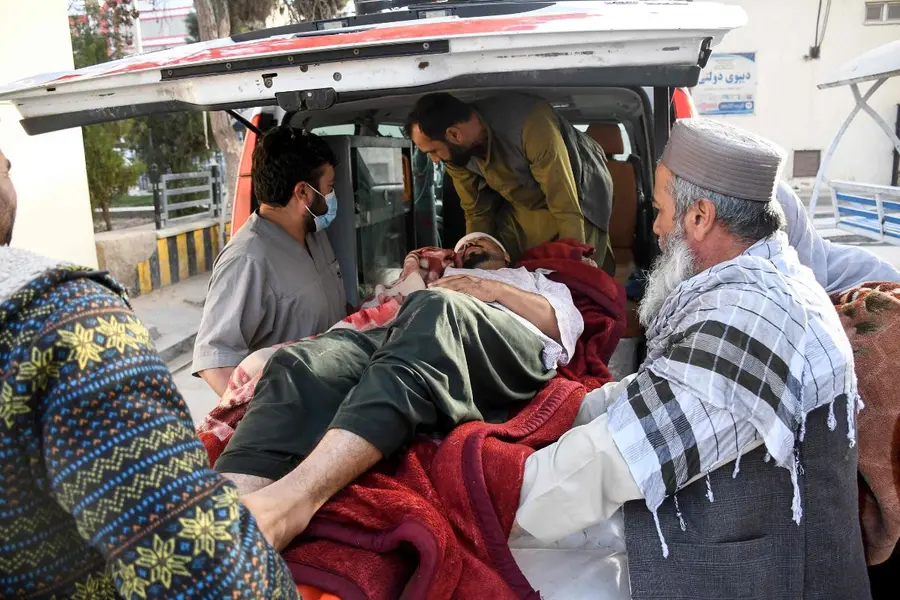
Afghanistan: A powerful 6.3-magnitude earthquake that struck northern Afghanistan overnight has killed more than 20 people and injured around 320, the Health Ministry said on Monday.
The quake’s epicentre was located near Mazar-i-Sharif city at a depth of 28 kilometres, according to the US Geological Survey.
Balkh and Samangan provinces worst affected
In the Balkh and Samangan provinces, “around 320 countrymen have been injured and more than 20 have been killed,” Health Ministry spokesman Sharafat Zaman said in a video message shared with journalists, describing the figures as preliminary.
Earlier reports from local authorities confirmed that four people were killed in Balkh province and five in neighbouring Samangan, with hospitals treating hundreds of injured residents.
Panic and communication challenges
The quake triggered panic across Mazar-i-Sharif, one of the country’s largest northern cities, sending residents running into the streets in fear of collapsing homes, an AFP correspondent reported. Tremors were also felt in the capital Kabul, about 420 kilometres to the south.
Poor communication and weak infrastructure have historically delayed disaster responses in Afghanistan, leaving authorities struggling to reach remote mountainous villages to assess damage.
Series of deadly quakes since Taliban takeover
The latest quake adds to a string of deadly natural disasters that have hit Afghanistan since the Taliban took control in 2021. In August, a 6.0-magnitude earthquake in the country’s east wiped out villages and killed more than 2,200 people.
Earlier, large tremors in western Herat in 2023 and eastern Nangarhar in 2022 destroyed thousands of homes and claimed hundreds of lives.
Humanitarian crisis deepens
The United Nations and aid agencies have repeatedly warned that hunger is on the rise as Afghanistan faces one of its worst humanitarian crises. Drought, banking restrictions, and the forced return of Afghan migrants from Iran and Pakistan have worsened the situation.
Quake-prone and vulnerable
Earthquakes are frequent in Afghanistan, particularly along the Hindu Kush mountain range where the Eurasian and Indian tectonic plates meet. Many homes, especially in rural areas devastated by decades of war, are poorly built, leaving them highly vulnerable to tremors.
Difficult terrain and steep roads often delay rescue and relief efforts, isolating entire villages during disasters or harsh weather conditions.
Published: 03 Nov 2025, 06:59 am IST
Related Topics
Disclaimer: Kindly avoid objectionable, derogatory, unlawful and lewd comments, while responding to reports. Such comments are punishable under cyber laws. Please keep away from personal attacks. The opinions expressed here are the personal opinions of readers and not that of Mathrubhumi.
