
The attacks transformed U.S. foreign policy and national security and triggered the U.S.-led war in Afghanistan. They also reshaped airport security, intelligence operations and America's approach to terrorism.
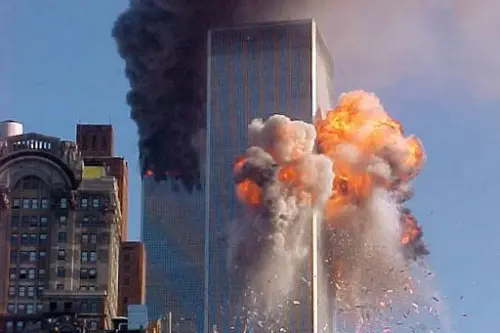
Twenty-five years ago, on September 11, 2001, the United States suffered the deadliest terrorist attack in its history. In less than two hours, four hijacked passenger planes became weapons, the World Trade Centre towers were destroyed, the Pentagon was struck, and nearly 3,000 people were killed. As the attacks unfolded, millions watched the events in real time. Here is how that morning and the extraordinary day that followed unfolded.
September 11, 2001: The timeline
5:45 a.m. | Hijackers begin their journey
Mohamed Atta and Abdul Aziz al-Omari, two of the men who would later be identified as hijackers, pass through security at Portland International Jetport in Maine.
They board a commuter flight bound for Boston, where they are scheduled to connect to American Airlines Flight 11.
7:59 a.m. | Flight 11 takes off
American Airlines Flight 11 leaves Boston's Logan International Airport for Los Angeles.
Five hijackers are aboard, along with 76 passengers and 11 crew members.
8:15 a.m. | Flight 175 leaves Boston
United Airlines Flight 175 takes off from Boston for Los Angeles with five hijackers, 51 passengers and nine crew members.
8:19 a.m. | First warning from Flight 11
Betty Ann Ong, a flight attendant aboard American Airlines Flight 11, alerts ground personnel that the plane has been hijacked and that the cockpit cannot be reached.
Her call becomes one of the earliest warnings that something is seriously wrong aboard the aircraft.
8:20 a.m. | Flight 77 takes off
American Airlines Flight 77 departs Washington Dulles International Airport for Los Angeles.
Five hijackers are aboard, along with 53 passengers and six crew members.
8:24 a.m. | A hijacker alerts air traffic control
Mohamed Atta, one of the hijackers aboard Flight 11, inadvertently transmits a message to air traffic controllers in Boston.
He had intended to communicate with passengers, but instead his words alert controllers to the hijacking.
8:37 a.m. | The military is alerted
Boston air traffic control contacts the U.S. Air Force's Northeast Air Defence Sector after learning of the hijacking.
The Air National Guard is mobilised to respond to the threat.
8:42 a.m. | Flight 93 takes off
United Airlines Flight 93 leaves Newark, New Jersey, after a delay caused by routine air traffic.
It is bound for San Francisco and carries four hijackers, 33 passengers and seven crew members.
The flight will later become the only one of the four hijacked planes that does not reach its intended target.
8:46 a.m. | Flight 11 hits the North Tower
American Airlines Flight 11 crashes into the North Tower of the World Trade Centre in New York.
Everyone aboard the aircraft is killed. The impact traps people inside the tower, with many above the 91st floor.
For the country, what initially appears to be a terrible aviation accident is only the beginning.
9:03 a.m. | Flight 175 hits the South Tower
United Airlines Flight 175 crashes into the South Tower of the World Trade Centre.
The second impact, broadcast live on television, makes clear that the United States is facing a coordinated attack.
Millions of people watching television see the second plane strike the tower.
9:05 a.m. | President Bush is told about the second plane
President George W. Bush is visiting Emma E. Booker Elementary School in Sarasota, Florida, when his chief of staff, Andrew Card, tells him that a second plane has hit the World Trade Centre.
Bush later recalled the decision to remain calm in the classroom:
“I made the decision not to jump up immediately and leave the classroom. I didn’t want to rattle the kids. I wanted to project a sense of calm… I had been in enough crises to know that the first thing the leader has to do is to project calm.”
The president remains with the students as officials begin assessing the scale of the attack.
9:28 a.m. | Flight 93 is hijacked
Hijackers take control of United Flight 93.
Unlike the other three aircraft, however, some passengers soon learn what has happened elsewhere and begin discussing a way to fight back.
9:37 a.m. | Flight 77 hits the Pentagon
American Airlines Flight 77 crashes into the Pentagon in Arlington, Virginia.
All passengers and crew aboard the plane are killed, along with 125 people in the building.
The attack has now reached the heart of the U.S. military establishment.
9:45 a.m. | U.S. airspace is shut down
Under Operation Yellow Ribbon, civilian aircraft across the United States are ordered to land at the nearest available airport.
The unprecedented shutdown begins clearing American skies as authorities try to determine whether more hijacked aircraft remain in the air.
9:55 a.m. | Air Force One leaves Florida
Air Force One, carrying President Bush, takes off from Florida as the president is moved to a secure location.
The whereabouts and intentions of other hijacked aircraft remain uncertain.
9:57 a.m. | Passengers fight back on Flight 93
Passengers aboard Flight 93 begin moving toward the cockpit.
Hijacker Ziad Jarrah attempts to prevent them from reaching him by violently manoeuvring the aircraft.
The passengers continue their attempt to regain control.
9:59 a.m. | South Tower collapses
The South Tower of the World Trade Center collapses.
It is the first of the two towers to fall, sending an enormous cloud of dust and debris through lower Manhattan.
10:02 a.m. | Flight 93 crashes in Pennsylvania
United Flight 93 crashes into a field near Shanksville, Pennsylvania.
The plane does not reach its intended target. Investigators later concluded that passengers' revolt prevented the hijackers from carrying out their plan.
The exact target remains uncertain, although the White House or U.S. Capitol have been cited as likely possibilities.
All 40 passengers and crew members aboard the flight are killed.
10:18 a.m. | Bush authorises the use of force against aircraft
President Bush authorises the military to shoot down aircraft that fail to comply with orders.
By then, all four hijacked planes have already crashed, although officials are still operating under the belief that Flight 93 may remain airborne.
10:28 a.m. | North Tower collapses
The World Trade Centre's North Tower collapses, less than two hours after Flight 11 struck it.
The collapse leaves a vast area of lower Manhattan covered in debris and smoke.
10:53 a.m. | U.S. military moves to higher alert
Defence Secretary Donald Rumsfeld orders the U.S. military to move to DEFCON 3, raising the country's state of military readiness.
11:45 a.m. | Air Force One lands in Louisiana
Air Force One lands at Barksdale Air Force Base near Shreveport, Louisiana.
President Bush continues consultations with senior officials as the government responds to the unprecedented attacks.
12:15 p.m. | U.S. skies fall silent
No commercial or private aircraft remain in American airspace.
The nationwide grounding of flights becomes one of the most visible signs that the country has entered an extraordinary state of emergency.
1:30 p.m. | Air Force One leaves Barksdale
The presidential aircraft departs Barksdale Air Force Base.
The president remains away from Washington as security officials assess the situation and work to ensure the safety of the government.
2:30 p.m. | Giuliani visits Ground Zero
New York Mayor Rudy Giuliani visits the devastated World Trade Centre site with Defence Secretary Donald Rumsfeld.
The area, later widely known as Ground Zero, becomes the centre of the rescue and recovery effort.
3 p.m. | Bush reaches secure bunker
Air Force One lands at Offutt Air Force Base in Nebraska.
President Bush is taken to a secure bunker designed to withstand a nuclear attack, as officials continue to assess the possibility of further attacks.
4:30 p.m. | President heads back to Washington
Air Force One leaves Offutt Air Force Base and heads toward Andrews Air Force Base near Washington.
The president prepares to return to the capital and address a shaken nation.
5:30 p.m. | World Trade Centre Building 7 collapses
World Trade Centre Building 7 collapses in the late afternoon.
The building had been damaged during the attacks, and fires had burned inside it for hours.
8:30 p.m. | Bush addresses the nation
Nearly 13 hours after the first plane struck the World Trade Centre, President Bush addresses Americans from the White House.
By the end of September 11, the scale of the tragedy is becoming clear: 2,977 people have been killed in the attacks in New York, Washington and Pennsylvania.
The attacks became the deadliest terrorist assault on American soil, surpassing the death toll of the 1941 attack on Pearl Harbour.
25 years later
The images of September 11 remain among the most recognisable and traumatic moments of the 21st century: planes striking the Twin Towers, smoke rising from the Pentagon, crowds fleeing lower Manhattan and passengers aboard Flight 93 fighting back against their hijackers.
The attacks transformed U.S. foreign policy and national security and triggered the U.S.-led war in Afghanistan. They also reshaped airport security, intelligence operations and America's approach to terrorism.
Twenty-five years later, the timeline of September 11 remains more than a sequence of timestamps. It records the progression of an ordinary Tuesday morning into an event that changed the United States and the world forever.
Published: 10 Sept 2026, 09:58 pm IST
ABOUT THE AUTHOR

Related Topics
Disclaimer: Kindly avoid objectionable, derogatory, unlawful and lewd comments, while responding to reports. Such comments are punishable under cyber laws. Please keep away from personal attacks. The opinions expressed here are the personal opinions of readers and not that of Mathrubhumi.