
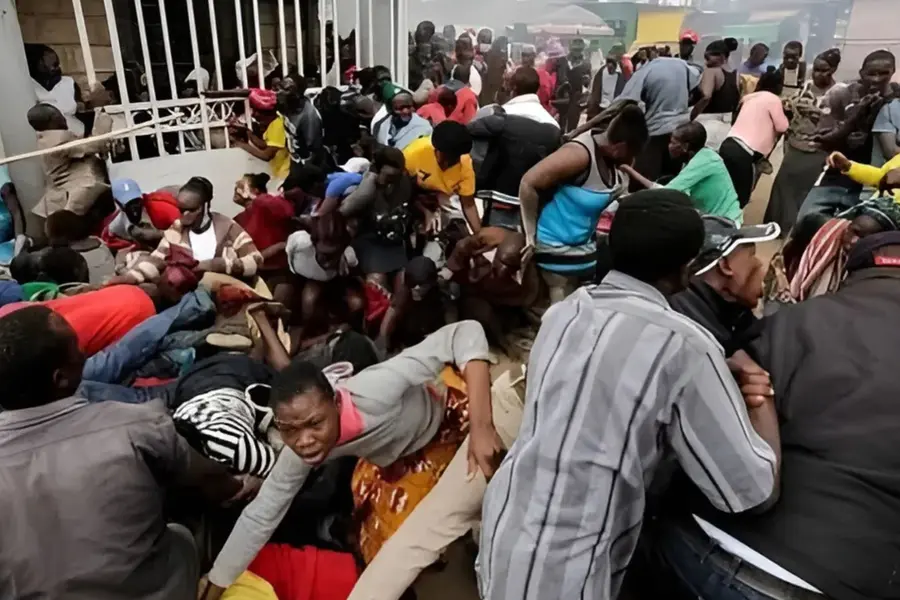
Abuja: Recent stampedes at three Christmas charity events across Nigeria have claimed the lives of at least 67 people, including many children, amid the country’s worst cost-of-living crisis in a generation. The tragic incidents occurred as families struggle with skyrocketing inflation and widespread poverty.
On Wednesday, 35 children were killed in southwestern Oyo state, while 22 people died in southeastern Anambra state on Saturday. In Abuja, the capital, 10 people lost their lives when over 1,000 gathered at a church for food and clothing donations. Here's why people in Africa's most populous country are risking their lives for holiday donations.
Also Read

Inflation at a 28-year high
Nigeria is facing a severe economic crisis, with inflation hitting a 28-year high of 34.6% due to government policies aimed at attracting investors and saving money. “There is hunger in this Nigeria. Every Nigerian needs food,” one woman, in tears, told the local Arise television after the stampede in Abuja.
Meanwhile, the naira currency is at record lows against the dollar, and over 63% of Nigeria’s population lives in poverty, according to official statistics. Unemployment remains high, and protests over hardship are often met with force from security forces. In August, more than 20 people were killed during protests.
“The average Nigerian has seen food go out of their reach,” said Cheta Nwanze, managing partner at the Lagos-based SBM Intelligence research firm. In 2022, the firm found that about 97 per cent of Nigerians spend up to 63 per cent of their income on food, but that share must have grown since then, he said.
Many of the victims in Abuja had waited outside the church overnight in cold conditions, hoping to be among the first to receive aid, according to witness Loveth Inyang, who helped rescue a baby from the crowd.
A lack of safety and security measures
The desperation for food and basic goods has made crowd control more challenging, and the lack of safety measures at charity events has contributed to the deadly stampedes. In Abuja and Anambra, witnesses and police confirmed that the stampedes occurred before the events began, as people scrambled for prime positions.
Deadly stampedes are not uncommon in Nigeria, often resulting from poor crowd management and inadequate safety planning. Organizers of such events frequently overlook security, said Ademola Adetuberu, head of the Abuja-based Barricade Executive Protection security firm. Despite increasing charitable efforts to address food shortages, the growing demand for aid has led to more events, stretching resources thin and creating dangerous conditions. “If organisers of such events brainstorm more, get professionals to advise them and have a budget for security, this can be prevented,” Adetuberu said.
How authorities are responding
In light of the recent tragedies, President Bola Tinubu has instructed authorities to hold event organizers accountable for operational lapses, and police are now requiring organizers to obtain permission before hosting such events. However, analysts warn that these commitments are difficult to enforce, and similar promises have often failed in the past.
“People's incomes have been squeezed through the entire year. When they hear somewhere that food is being distributed, their natural instinct is to go," Nwanze said. “Add this to our notoriously poor queue culture and you have the perfect storm that will lead to such a stampede.”
Agency
Published: 23 Dec 2024, 09:53 am IST
Disclaimer: Kindly avoid objectionable, derogatory, unlawful and lewd comments, while responding to reports. Such comments are punishable under cyber laws. Please keep away from personal attacks. The opinions expressed here are the personal opinions of readers and not that of Mathrubhumi.