
The lakes are located at the headwaters of rivers flowing south into Nepal, raising concerns for downstream communities, hydropower projects and other critical infrastructure.
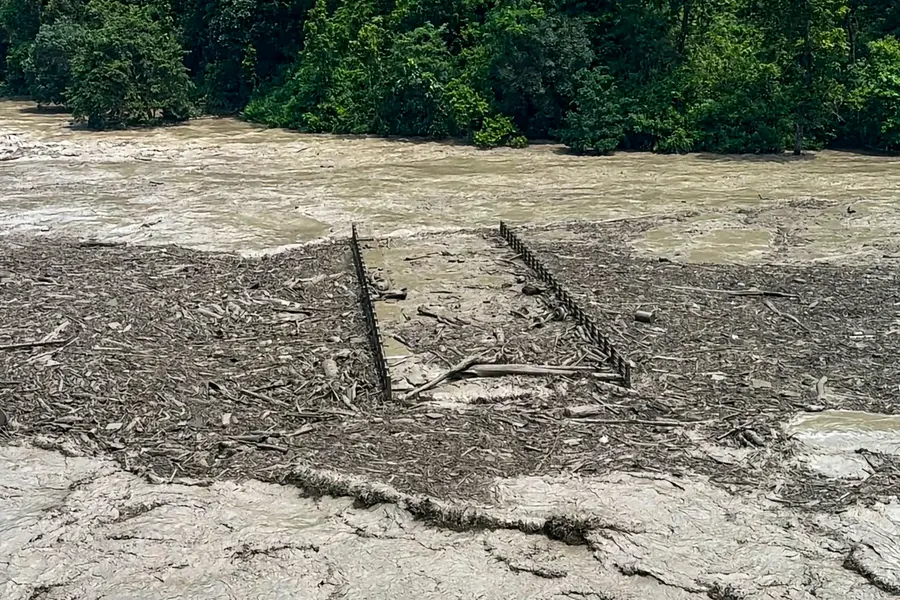
Kathmandu: Nepal faces a potentially devastating glacial flood threat, with 47 glacial lakes identified as Potentially Dangerous Glacial Lakes (PDGLs) that could unleash catastrophic glacial lake outburst floods (GLOFs) into major river systems, according to scientific assessments by the International Centre for Integrated Mountain Development (ICIMOD) and the Government of Nepal.
The lakes are located at the headwaters of rivers flowing south into Nepal, raising concerns for downstream communities, hydropower projects and other critical infrastructure.
Of the 47 potentially dangerous lakes, 21 are located within Nepal, and 25 are transboundary lakes in Tibet.
Also read | If it wasn't an earthquake, what caused Nepal's deadly floods?
Disaster management authorities and the United Nations Development Programme (UNDP) have separately identified a smaller group of rapidly expanding, moraine-dammed lakes as requiring urgent risk-reduction measures, including lake-lowering interventions.
Among the lakes considered particularly concerning are Lower Barun (Tallopokhari), Thulagi (Dona), Lumding Tsho, Hongu 2 / Chamlang South, Tsho Rolpa and Imja Tsho.
The potential danger is spread across several high-mountain and mid-hill districts lying along downstream river corridors. A major GLOF from one of the identified lakes could send huge volumes of water and debris downstream, threatening settlements and infrastructure.
Also read | China's mega dam push in Tibet faces fresh scrutiny after deadly Nepal floods
"We do know what climate change trends look like in the Himalayas. The high confidence of more heat waves, glacial retreat, permafrost reduction, these sorts of things that can drive things like landslides and glacial outburst floods," Dorothy Heinrich, a researcher at the UK's University of Reading, told AFP.
More than 85% of regional risk concentrated in vulnerable areas
The Koshi and Bagmati basins in eastern and central Nepal account for more than 85 per cent of the total regional risk identified in vulnerable areas.
Solukhumbu is among the exposed districts, particularly along the Dudh Koshi and Imja basins. Sankhuwasabha faces risks along the Barun and Arun river corridors, while Dolakha lies along the Tama Koshi corridor and is exposed to the potential threat from Tsho Rolpa.
Sindhupalchok, meanwhile, is vulnerable along the Bhote Koshi and Sun Koshi corridors, including from possible outbursts from transboundary lakes in Tibet.
Downstream settlements in Ramechhap, Kavrepalanchok and Rasuwa are also considered vulnerable, particularly those located along the Trishuli basin.
Western Nepal also faces major GLOF threat
The risk extends into western and far-western Nepal, where potentially dangerous lakes could affect communities and hydropower infrastructure across the Gandaki and Karnali river basins.
Manang and Lamjung are exposed along the Marsyangdi basin downstream of Thulagi Lake, while Gorkha faces potential impacts along the Budhi Gandaki basin.
Mustang and Myagdi are vulnerable along the Kali Gandaki basin. In the far west, remote areas of Humla, including the Limi Valley and the Humla Karnali corridor, also fall within potential impact zones.
The identification of the 47 lakes highlights the growing concern over glacial lakes in the Himalayas and the need for early risk-reduction measures in downstream areas.
Search for missing continues
Some 403 tourists, 341 of them foreigners, were unaccounted for several hours after the disaster struck, according to Nepal's tourism ministry.
The missing foreigners included 142 Indians, and others from Australia, Britain, Malaysia, the Netherlands, Portugal, South Africa, South Korea and the United States, the tourism board said.
"Entire villages and market areas have been wiped out," said David Fisher, the Nepal head of the International Federation of Red Cross and Red Crescent Societies (IFRC).
It said it was dispatching emergency supplies including blankets, first aid kits, stretchers and body bags.
Tibet government officials mobilised nearly 800 emergency workers and 150 vehicles as well as sniffer dogs and speed boats to help the rescue efforts, China's state-run news agency Xinhua said.
Published: 27 Aug 2026, 08:03 am IST
ABOUT THE AUTHOR

Related Topics
Disclaimer: Kindly avoid objectionable, derogatory, unlawful and lewd comments, while responding to reports. Such comments are punishable under cyber laws. Please keep away from personal attacks. The opinions expressed here are the personal opinions of readers and not that of Mathrubhumi.