
The resulting surge of water and debris struck settlements along the Bhote Kosi and Trishuli rivers, sweeping away vehicles and damaging buildings.
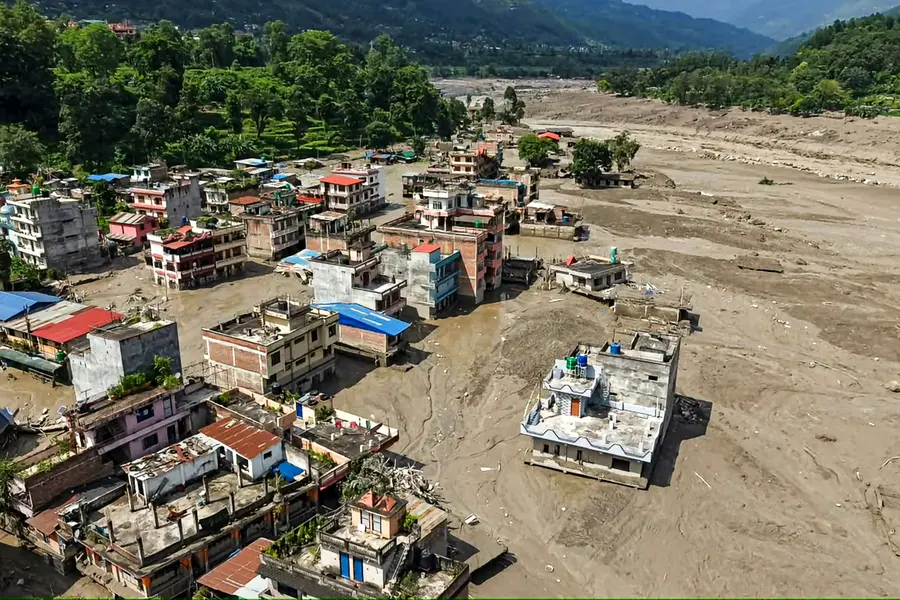
Kathmandu, Nepal: A glacial collapse and debris flow, rather than an earthquake, caused the seismic activity recorded near the Nepal-China border and triggered "catastrophic" downstream impacts in Nepal and Tibet, the US Geological Survey said Thursday.
At least 160 people were killed after torrents of water and debris swept through villages and towns on either side of the Nepal-Tibet border, with hundreds of others reported missing. Rescue teams were searching Thursday for survivors and those still unaccounted for.
The USGS said a "magnitude 5.2 seismic event occurred near the border between Nepal and China on Aug 26 at 8:37 am local time." The event was initially reported as a magnitude 4.4 earthquake.
Also read | China's mega dam push in Tibet faces fresh scrutiny after deadly Nepal floods
However, after analysing data from nearby seismic stations, long-period seismic waves and satellite imagery, the agency concluded that the seismic event "was instead a glacial collapse and debris flow, and that no earthquake had occurred."
The USGS said the collapse "caused subsequent catastrophic impacts downstream".
The finding clarified the possible cause of a disaster whose origins remained uncertain in the immediate aftermath. Nepal's Foreign Minister Shishir Khanal had earlier said an earthquake likely triggered a landslide, which then blocked a river and sent water gushing downstream.
Also read | Iran, Oman discuss deal to manage Strait of Hormuz; military ships may be barred
Other possible explanations included a glacial lake outburst flood, in which a fragile debris barrier holding back meltwater collapses, or an ice avalanche.
The resulting surge of water and debris struck settlements along the Bhote Kosi and Trishuli rivers, sweeping away vehicles and damaging buildings.
Surveillance footage from the Chinese side of the border showed a massive wall of mud and debris crashing over a multi-storey building as people fled. Buses and cars were also swept away by the powerful surge.
Officials said many of those missing were foreign tourists.
The disaster affected communities and transport links along the Nepal-Tibet frontier, with rescue operations continuing amid the extensive destruction.
Published: 27 Aug 2026, 07:16 am IST
ABOUT THE AUTHOR

Related Topics
Disclaimer: Kindly avoid objectionable, derogatory, unlawful and lewd comments, while responding to reports. Such comments are punishable under cyber laws. Please keep away from personal attacks. The opinions expressed here are the personal opinions of readers and not that of Mathrubhumi.