
Dalai Lama confirms succession, sparking global tussle over Tibetan religious leadership
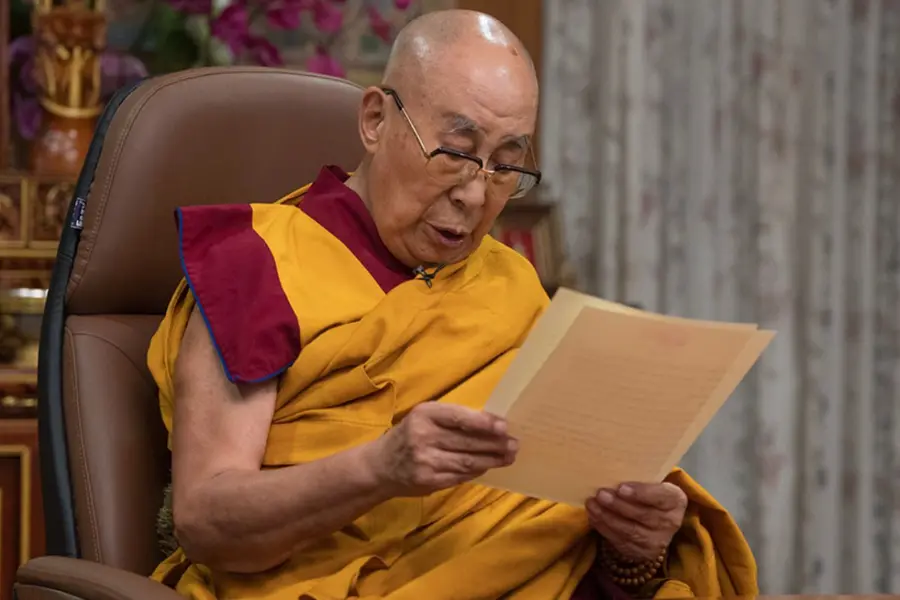
As the Dalai Lama marks his 90th birthday in McLeodganj—home to the Tibetan government-in-exile—he confirmed that the institution of the Dalai Lama will continue. In doing so, he has ended years of speculation over whether a successor would be named after his death. The announcement, delivered at a major religious conference attended by global Buddhist leaders, has reignited a geopolitical tug-of-war over Tibetan religious leadership.
How is a Dalai Lama traditionally chosen?
The process of selecting a new Dalai Lama involves Tibetan Buddhist rituals that include visions, omens, and mystical tests. Historically, the child thought to be the reincarnation of Avalokiteshvara, the Bodhisattva of Compassion, is discovered by high-ranking lamas through divination and confirmed by spiritual signs. After selection, the child undergoes decades of religious training.
The current Dalai Lama, Tenzin Gyatso, was identified as the reincarnation of the 13th Dalai Lama at the age of two, based on his recognition of personal belongings of his predecessor. His formal enthronement followed years of rigorous spiritual validation.
Who gets to choose the next Dalai Lama?
This question now lies at the heart of an international dispute. The 14th Dalai Lama has declared that only the Gaden Phodrang Trust, an organisation he founded in 2015, will have the authority to confirm his reincarnation. He has also suggested that the next Dalai Lama will be born in a free country—not within China or Tibet under Chinese control.
This declaration challenges China’s official stance. Beijing insists that any reincarnated lama, including the Dalai Lama, must receive state approval under Chinese law. The process would include the historical golden urn lottery system, drawing lots to select a candidate, a method rejected by many Tibetan Buddhists.
What is India's position?
While India has offered sanctuary to the Dalai Lama since his escape from Tibet in 1959, the government maintains an official stance of religious neutrality. The Ministry of External Affairs clarified that matters of reincarnation are rooted in faith, and India does not interfere. However, Union Minister Kiren Rijiju, himself a Buddhist, stated unequivocally that only the Dalai Lama and traditional Tibetan methods should decide his successor.
China, reacting to Rijiju's remarks, cautioned India against interference and reiterated that Tibet is an internal matter. The diplomatic tone underlines India’s balancing act—hosting the Tibetan exile community while managing its already strained ties with China.
The Chinese strategy and past interventions
Beijing’s insistence on controlling the reincarnation process is not new. In 1995, the Dalai Lama recognised a Tibetan boy as the reincarnated Panchen Lama—second only to the Dalai Lama in religious hierarchy. China detained the boy and his family; their whereabouts remain unknown. Instead, the Chinese government installed its own Panchen Lama, a figure largely rejected by Tibetan Buddhists.
This precedent has fuelled fears that Beijing may similarly install a rival Dalai Lama following the death of the 14th, leading to a division of the spiritual institution.
Could there be two Dalai Lamas?
Many observers believe this is a likely scenario. One candidate could be chosen by exiled Tibetan lamas following tradition, and another installed by Beijing. While this may not divide the Tibetan diaspora, it may create serious challenges for Tibetans inside China, who may be forced to publicly back the state-appointed figure.
Such a development could further marginalise the Tibetan cause, or conversely, intensify global support for religious autonomy.
What is at stake geopolitically?
For India and the United States, the succession has broader implications. India sees the Tibetan exile community as a buffer against China’s influence in the Himalayas. The United States, which passed the Tibetan Policy and Support Act in 2020, backs the Dalai Lama’s authority to decide his successor. The law allows sanctions against Chinese officials interfering in the process.
For China, control over the next Dalai Lama means asserting dominance in Tibet and curbing any revival of independence sentiments.
Published: 05 Jul 2025, 08:00 am IST
Related Topics
Disclaimer: Kindly avoid objectionable, derogatory, unlawful and lewd comments, while responding to reports. Such comments are punishable under cyber laws. Please keep away from personal attacks. The opinions expressed here are the personal opinions of readers and not that of Mathrubhumi.
