
The typhoon moved away from western Palawan by late Wednesday morning and continued toward the South China Sea en route to Vietnam, according to weather authorities.
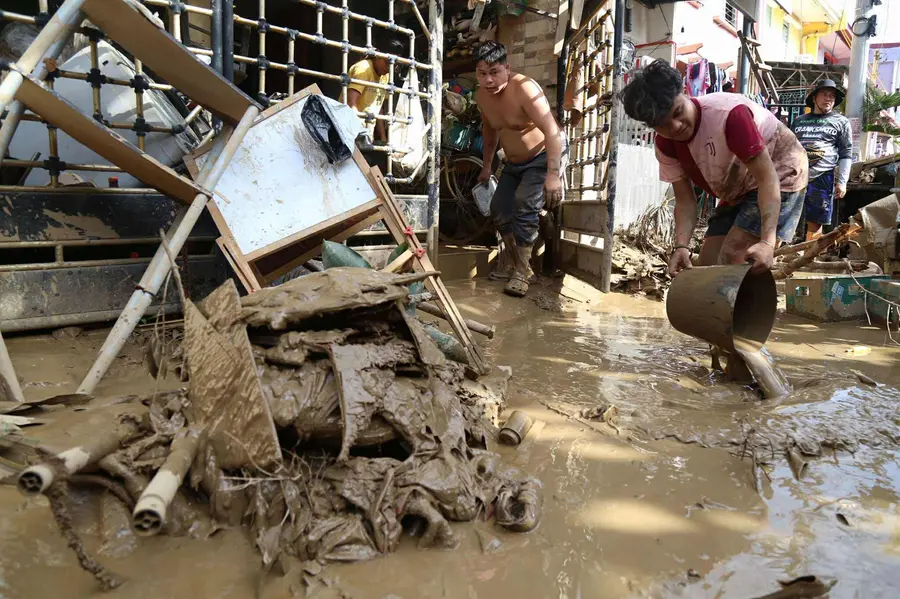
Manila: The death toll from Typhoon Kalmaegi’s destructive onslaught across the central Philippines has risen to at least 114, with 127 people still missing, officials said on Wednesday. The storm triggered widespread flooding and landslides in provinces still reeling from a recent earthquake.
Bernardo Rafaelito Alejandro IV, deputy administrator of the Office of Civil Defence, said the majority of the fatalities were recorded in Cebu province, which suffered severe flash floods after rivers and waterways overflowed when Kalmaegi made landfall on Tuesday.
The typhoon moved away from western Palawan by late Wednesday morning and continued toward the South China Sea en route to Vietnam, according to weather authorities.
Among the fatalities were six Philippine Air Force personnel who died when their helicopter crashed in Agusan del Sur while en route to deliver humanitarian aid to storm-hit areas. The military did not specify the cause of the crash.
Officials in Cebu reported that sudden flooding submerged residential areas, forcing residents to seek refuge on rooftops and call for urgent rescue. Philippine Red Cross secretary-general Gwendolyn Pang said the organisation received numerous distress calls from stranded residents in Cebu on Tuesday.
According to the Office of Civil Defence, at least 49 people drowned in the floods, while others were killed by landslides and falling debris. Thirteen people remain unaccounted for in Cebu alone.
In the neighbouring provinces of Negros Occidental and Negros Oriental, 62 people were reported missing as floods and landslides disrupted communities and communication lines.
“We did everything we could for the typhoon, but you know, there are really some unexpected things like flash floods,” Cebu Governor Pamela Baricuatro told The Associated Press by telephone.
Caloy Ramirez, a volunteer rescuer, said the massive flooding set off by the typhoon turned an upscale riverside residential community in Cebu city on Tuesday into an unrecognisable scene of tumbled SUVs and houses in disarray.
Residents said floodwater engulfed the first floors of their houses in just a few minutes, sending them scrambling to upper floors or roofs in panic.
“We always expect the worst and what I saw yesterday was the worst,” Ramirez told The AP. He described how the faces of desperate residents would light up when they realised they were being rescued.
Concerns grow over flood control projects
The problems may have been made worse by years of quarrying that caused clogging of nearby rivers, which overflowed, and substandard flood control projects in Cebu province, Baricuatro said.
A corruption scandal involving substandard or non-existent flood control projects across the Philippines has sparked public outrage and street protests in recent months.
Cebu, a bustling province of more than 2.4 million people, declared a state of calamity to allow authorities to disburse emergency funds more rapidly.
Cebu was still recovering from a 6.9 magnitude earthquake on September 30 that left at least 79 people dead and displaced thousands when houses collapsed or were severely damaged.
Thousands of northern Cebu residents who were displaced by the earthquake were moved to sturdier evacuation shelters from flimsy tents before the typhoon struck, Baricuatro said. Northern towns devastated by the earthquake were mostly not hit by floods generated by Kalmaegi, she added.
Published: 06 Nov 2025, 05:58 am IST
Related Topics
Disclaimer: Kindly avoid objectionable, derogatory, unlawful and lewd comments, while responding to reports. Such comments are punishable under cyber laws. Please keep away from personal attacks. The opinions expressed here are the personal opinions of readers and not that of Mathrubhumi.
