
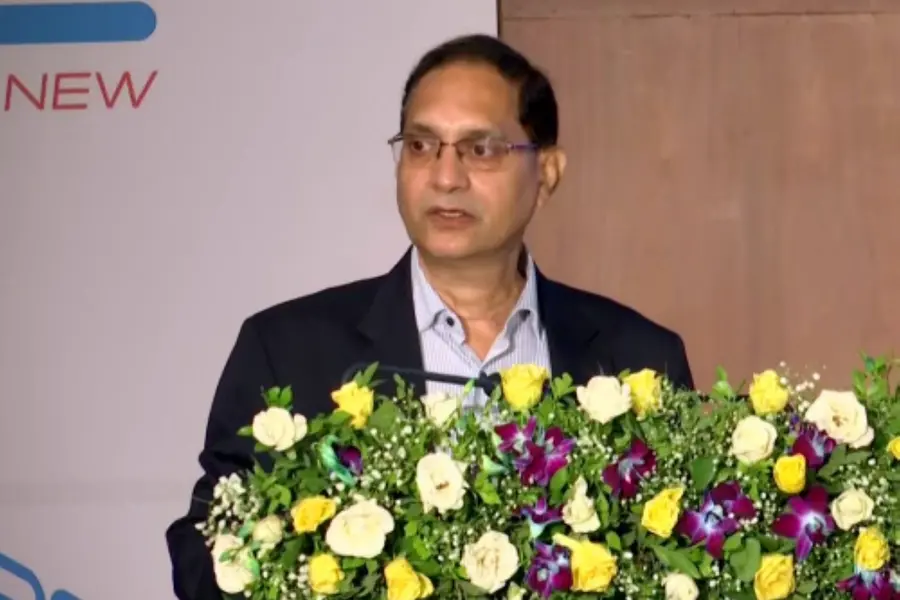
Seasoned bureaucrat and finance secretary Tuhin Kanta Pandey has been appointed as the new chairperson of the Securities and Exchange Board of India (SEBI) for a three-year term. A 1987-batch Odisha-cadre Indian Administrative Service (IAS) officer, Pandey replaces Madhabi Puri Buch, whose tenure ended on Friday.
This appointment is a return to convention since the post of SEBI chair has traditionally been occupied by bureaucrats. Buch was the first woman and the first private-sector professional to head SEBI.

This is the second high-profile bureaucratic appointment in recent months. In December 2024, the government had appointed Revenue Secretary Sanjay Malhotra as the Governor of the Reserve Bank of India (RBI) following the completion of Shaktikanta Das' term.
Pandey's appointment is at a pivotal moment for SEBI, as Indian stock markets are under pressure from foreign institutional investor (FII) outflows, with foreign portfolio investors (FPIs) withdrawing more than ₹1 lakh crore since January 2025.
In her three-year term, Buch brought about some major reforms, including quicker settlements in equity markets, improved FPI disclosures and higher mutual fund penetration through Rs 250 Systematic Investment Plans (SIPs). However, her last year was tainted with controversy. Notable among those were Hindenburg Research and the Congress party's allegations and protests by employees against 'toxic work culture' at SEBI.
Backed by the above, the government chose Tuhin Kanta Pandey, a stickler for rules and an expert in economic policy, especially disinvestment and privatization.
Who is Tuhin Kanta Pandey?
Before he was appointed the SEBI chief, Pandey was the Finance Secretary and longest-serving Secretary in the Department of Investment and Public Asset Management (DIPAM), where he supervised a string of pathbreaking disinvestment exercises, including:
* Privatization of Air India (taken over by the Tata Group for ₹18,000 crore)
* Private sector-led monetization of non-core assets, ongoing privatization of IDBI Bank, subject to due diligence
* Implementation of the Public Sector Enterprises (PSE) policy to disentangle government in non-strategic areas
Pandey was instrumental in shaping the 2025-26 Union Budget, which proposed Rs 1 lakh crore of tax relief for the middle class. He also helped prepare a new Income Tax Bill to supersede the 64-year-old Income Tax Act, 1961.
Academic Background
Education: MA in Economics (Punjab University, Chandigarh), MBA (University of Birmingham, UK)
Previous Positions
* Finance Secretary, Government of India
* Secretary, DIPAM
* Joint Secretary, Planning Commission (now NITI Aayog)
* Deputy Secretary, Ministry of Commerce
* Administrative positions in Odisha in the areas of health, finance, transport, and commercial taxes
Challenges ahead for new SEBI chief
When he assumes office, Pandey will have to steer volatile market conditions, build investor confidence, and bring more transparency to capital markets. In the backdrop of heightened global uncertainty, corporate governance issues, and tightening regulation, his experience will be closely monitored by investors and industry players.
His experience in economic policy and financial management makes him well-equipped to guide SEBI through these times, promoting market stability and investor protection in India's changing financial environment.
Published: 28 Feb 2025, 07:31 am IST
Related Topics
Disclaimer: Kindly avoid objectionable, derogatory, unlawful and lewd comments, while responding to reports. Such comments are punishable under cyber laws. Please keep away from personal attacks. The opinions expressed here are the personal opinions of readers and not that of Mathrubhumi.