
Wayanad declared a Niti Aayog aspirational district at Kerala Innovation Festival.
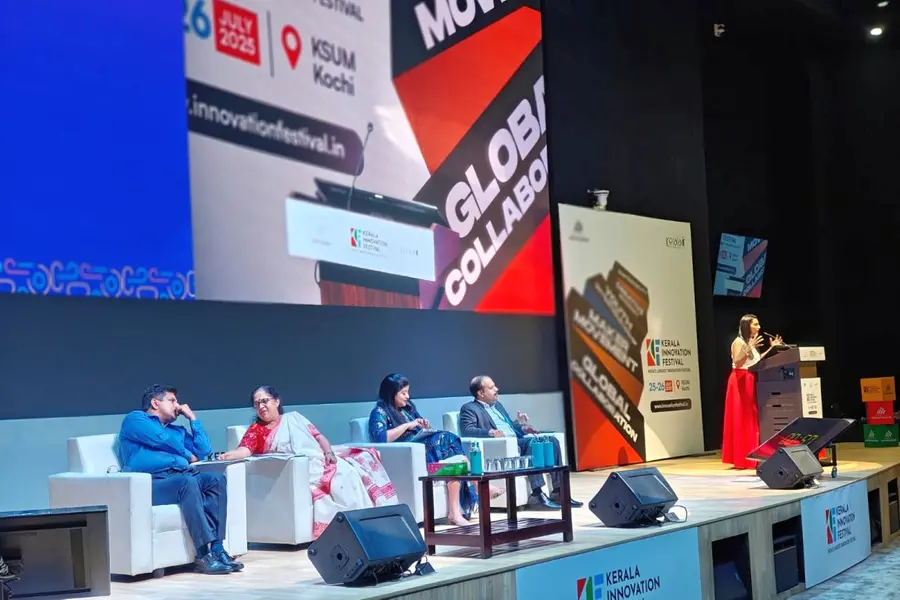
The Kerala Innovation Festival got off to a flying start on Friday at the Kerala Startup Mission auditorium in Kalamassery, Kochi, with a strong coming together of innovation, policy, and purpose.
The inaugural ceremony was highlighted by a major announcement made by Mamatha Venkatesh, Head of Startup India, and she announced Wayanad as an aspirational district under the Niti Aayog program. This announcement puts Wayanad on the national startup map and indicates the increasing interest of the central government in facilitating bottom-up innovation from far-off and underrepresented areas.
The festival, which was marking a decade of startup-led development in the state, was attended by officials like Anoop Ambika, Chief Executive Officer, Kerala Startup Mission, Mini Sukumaran, Member, State Planning Board, Government of Kerala, and Vivek Krishna Govind, President, The Indus Entrepreneurs (TiE), Kerala chapter. They collectively symbolised the resultant synergy between state, industry, and the startup ecosystem that has characterized Kerala's innovation odyssey.
Mamatha Venkatesh smiled at the warmth of response to startup initiatives all over the state, underscoring how the passion and participation she saw reinforced Kerala's growing reputation as a serious player in India's innovation ecosystem. She underlined that selecting Wayanad as a Startup India aspirational district was symbolic but not merely symbolic; it was strategic.
Wayanad, with its unique geographical and social challenges, is regarded as fertile soil for creative solutions to sustainable development, rural healthcare, farming, and tribal uplift.
The Startup India initiative, with its incubation, mentorship, and access to funding, will now have a targeted effect in this district, fueling entrepreneurship where it is most required.
The announcement was also consistent with Kerala Startup Mission's long-term goal of democratising access to innovation. Since the last decade, Kerala Startup Mission has sponsored over 6,500 startups, raised funds in excess of Rs 6,000 crore, and created one of India's strongest support systems for innovators through incubators, maker labs, fab labs, and funding platforms.
CEO Anoop Ambika said that this year's festival is not just a commemoration of previous success but also a strategic launching pad for the future. With new policies, broader outreach, and growing global collaborations, Kerala is creating a future-ready innovation ecosystem where students, artists, and grassroots innovators are also included in the growth story.
The festival itself, which will wind up on July 26, has brought together an energetic blend of participants, including founders, students, investors, artists, mentors, and policy think-tank experts. From early morning sessional workshops to cultural events in the evening, the campus was abuzz with ideas and interactions.
Exhibitions showcased cutting-edge products ranging from artificial intelligence solutions to green design solutions, biotech models to educational technology tools. Visitors delved into immersive pavilions on health-tech, agri-tech, creative industry, and clean energy, while hackathons and pitch sessions lit the mood in every nook and corner of the venue.
The spread of participants from school entrepreneurs to international tech consultants revealed that innovation in Kerala is no longer limited to city campuses. The large number of female founders and social entrepreneurs also highlighted the state's inclusive approach to startup policy.
Perhaps the most lively part of the festival was the Maker Fest, where innovations by students and grassroots engineering wonders were exhibited alongside highly refined commercial concepts. Generative AI, design thinking, and social innovation workshops attracted standing room-only audiences, and artists and technologists worked together on installations that represented sustainability targets in creative media.
The She Leads Summit, which focused on empowering women in technology and entrepreneurship, conducted parallel sessions on femtech, wellness, and creative enterprise.
The BioFEST pavilion, in partnership with biotech incubators, highlighted innovation in medical diagnosis, agriculture, and health research by nascent startups.
Global partnerships and investor networking areas provided an international flavor to the event, and state planning officials enabled policy discussions with founders on scaling and maintaining momentum in 14 districts of Kerala.
Mini Sukumaran, in her first address, reiterated that planning has to go along with innovation. She emphasised how the Planning Board has been collaborating closely with KSUM to develop a strategy for development that connects entrepreneurship with human development objectives.
For her, facilitating innovation in places like Wayanad is a move toward sustainable, inclusive development where entrepreneurship acts as a means of social justice and not merely economic profit.
Vivek Krishna Govind further added that the function of such platforms as TiE is to bring founders into contact with international mentors and markets, and that Kerala startups are increasingly finding mention on national and international forums due to the integrity and emphasis on impact of the ecosystem.
What is different about this year's Kerala Innovation Festival is its evident intention to decentralise innovation and make a wider set of people innovators. From rural students to city planners, from state engineers to housewives creating climate tools, everybody was invited. The narrative change from technology for profit to technology for good could be seen in the themes, discourse, and collaborations established throughout the day.
Incubation hubs from all over the state – ranging from rural colleges to small towns – displayed their stories of success, demonstrating that even minor interventions can bring scalable solutions. Artificial intelligence and data science were not just confining themselves to software startups but were also driving disability access tools, low-cost diagnostics, and waste management systems.
With vigorous direction and policy support again, the second and final day of the festival is set to gain momentum. The valedictory tomorrow will be addressed by P. Rajeev, Minister for Industries, Law and Coir, Government of Kerala.
He is also supposed to present the state's vision for the next five years, especially with regards to connecting manufacturing and MSMEs with startup innovations. His speech will also very likely address Kerala's new industrial policies, sustainability requirements, and public-private partnerships in technology and infrastructure.
While the first day was all about the ethos of teamwork and the dynamism of young entrepreneurs, the final day is likely to chart a course of implementation and scale.
The glow of prototype stalls, art pieces, and food trucks remains on, reflecting the hope of a state that is slowly turning into a sustainable, people-first innovation powerhouse.
The announcement of Wayanad as a Startup India aspirational district might have been the newsgrabber, but the richer tale coming out of the festival is one of a people who believe in building forward – not necessarily quickly, but equitably. Kerala, which was previously regarded mainly as a consumer of innovation, is now assertively presenting itself as an innovator of ideas that can determine futures far beyond its confines.
Published: 25 Jul 2025, 02:56 pm IST
Related Topics
Disclaimer: Kindly avoid objectionable, derogatory, unlawful and lewd comments, while responding to reports. Such comments are punishable under cyber laws. Please keep away from personal attacks. The opinions expressed here are the personal opinions of readers and not that of Mathrubhumi.
