
US report details challenges for foreign investors in Sri Lanka, including Adani Green`s $400M wind project withdrawal due to policy shifts and high transaction costs.
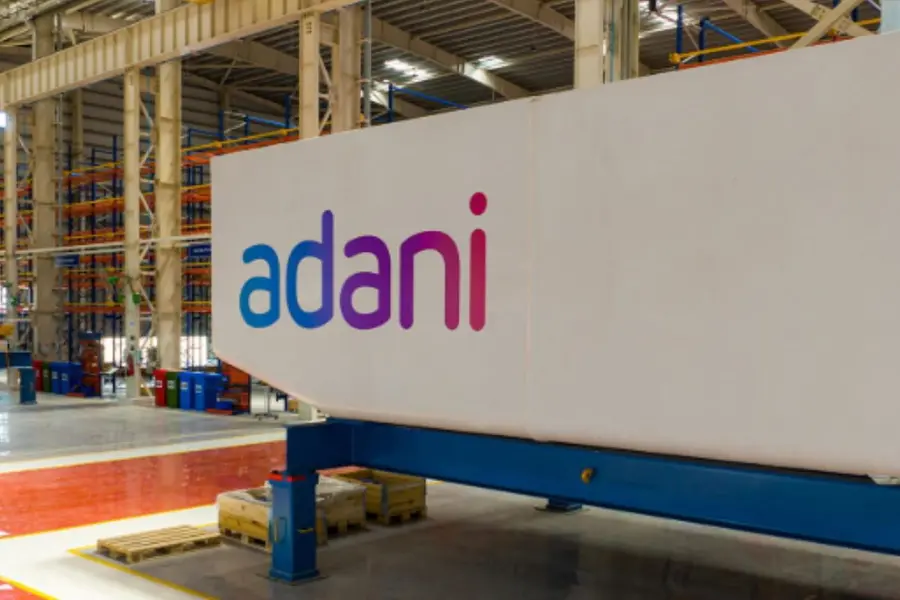
Colombo: A new US Department of State report has highlighted the withdrawal of Adani Green Energy from a proposed $400 million wind energy project in Sri Lanka as a reflection of the challenges foreign investors face under the administration of President Aruna Dissanayake, who came to power in 2024.
The 2025 Investment Climate Statement noted that foreign investors consistently report “high transaction costs, unpredictable policies and opaque procurement procedures.”
In February 2025, India’s Adani Green Energy pulled out of a planned 484 MW renewable energy wind farm in northern Sri Lanka after the government sought to renegotiate terms approved by the previous administration. President Dissanayake’s government had pushed for lower tariffs on electricity, which Adani found unviable.
The report added that while Sri Lanka is showing signs of recovery from its 2022 economic crisis, its “investment climate remains challenging,” despite improved political stability following the 2024 electoral victory of Dissanayake’s National People’s Power (NPP) coalition.
Although the NPP supports Sri Lanka’s $3 billion IMF programme, concerns linger over its historically Marxist and Western-sceptical stance. Investors frequently cite “project reversals, regulatory shifts, slow decision-making and inadequate support for established businesses” as persistent issues.
Adani had originally tendered the most competitive tariff of 8.26 cents per unit after two years of negotiations, with payments to be made in Sri Lankan rupees to avoid foreign exchange strain. However, when the government pushed for a rate below 5 cents, the company deemed the project unviable. The project has yet to find another developer willing to meet that price point.
Adani Group has since redirected resources to more promising markets such as India, where renewable energy projects face fewer regulatory hurdles. The company currently has more than 15 GW of renewable capacity in operation, with plans to scale up to 50 GW by 2030, making it one of the world’s top three renewable energy players. Its investment in Sri Lanka, including transmission infrastructure, would have exceeded $1 billion.
The US report also underscored that foreign direct investment (FDI) in Sri Lanka remains constrained, with most deals falling in the modest $53–55 million range. Despite the government’s ambitious $5 billion FDI target for 2025, “policy stability, regulatory reform and improved transparency must precede any significant uptick in large-scale investments,” it said.
US firms continue to explore opportunities in ICT, energy, aviation and defence, but “regulatory unpredictability, bureaucratic hurdles and selective transparency” remain obstacles. The report noted that Sri Lanka’s Board of Investment struggles to operate as a true one-stop shop due to fragmented authority across multiple departments, creating lengthy approval processes that frustrate investors.
Key impediments include “unnecessary regulations, legal uncertainty and poor bureaucratic responsiveness,” while shifting policies on the privatisation of state-owned enterprises, particularly the loss-making Ceylon Electricity Board, hinder cost-effective energy development crucial for industry.
The NPP government has publicly expressed interest in attracting investment. In January 2025, President Dissanayake committed to finalising a $3.7 billion Sinopec oil refinery project near the Chinese-controlled Hambantota International Port, the largest FDI project in Sri Lankan history.
However, the US report warned that “many potential investors remain reluctant to commit capital given ongoing mixed messages,” noting that some senior officials regularly criticise private-sector-led growth while publicly promoting state-owned collectivism as the preferred economic model.
IANS
Published: 30 Sept 2025, 09:44 pm IST
Disclaimer: Kindly avoid objectionable, derogatory, unlawful and lewd comments, while responding to reports. Such comments are punishable under cyber laws. Please keep away from personal attacks. The opinions expressed here are the personal opinions of readers and not that of Mathrubhumi.
