
Union Budget 2026 lays out an ambitious growth roadmap centred on infrastructure, manufacturing and inclusion, but questions remain over execution and immediate relief.
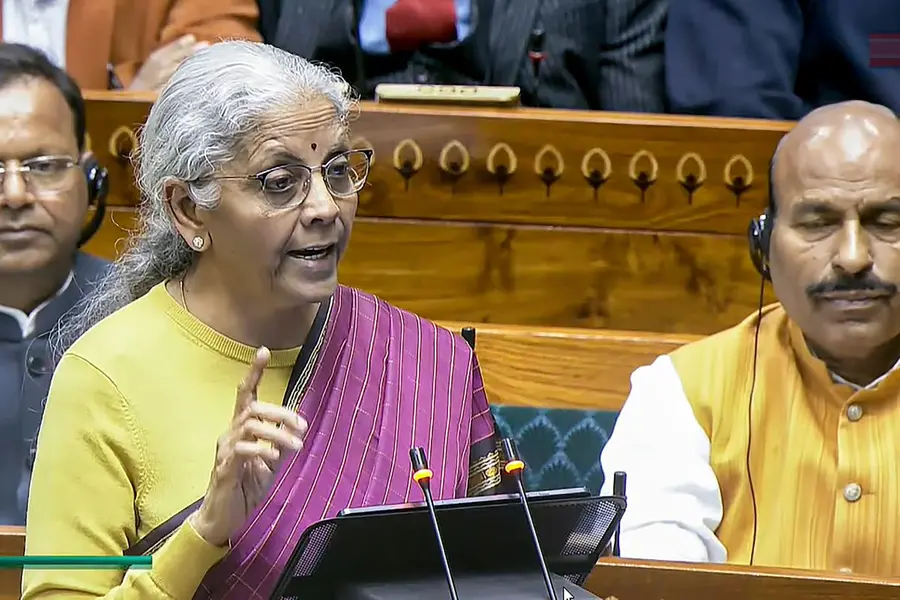
New Delhi: The Union Budget 2026, presented in Parliament on Friday, laid out the Government of India’s economic roadmap for the coming financial year, with a sharp focus on growth, fiscal consolidation, job creation, and social welfare. Balancing macroeconomic stability with targeted relief for the middle class and vulnerable sections, the budget continued to prioritise capital expenditure, infrastructure expansion and digital governance, while keeping an eye on inflation and global uncertainties.
The finance minister underlined that Budget 2026 is designed to “strengthen domestic demand, crowd in private investment and ensure inclusive development,” amid a challenging global environment. Below are the 20 key highlights of the Union Budget 2026:
Also Read

Union Budget 2026: 20 key highlights from the Finance Minister’s speech
- Finance Minister Nirmala Sitharaman outlined three Kartavyas for the government, beginning with accelerating and sustaining economic growth amid volatile global conditions.
- The second Kartavya focuses on fulfilling people’s aspirations by strengthening their capacity and making them partners in India’s prosperity.
- The third Kartavya reiterates the vision of “Sabka Saath, Sabka Vikas”, ensuring equitable access to resources and opportunities for all regions and communities.
- The Budget proposes targeted interventions in six priority sectors, including manufacturing scale-up, MSME growth, infrastructure push, and city economic regions.
- Manufacturing will be expanded across seven strategic and frontier sectors, alongside the rejuvenation of legacy industrial clusters.
- A Mahatma Gandhi Gram Swaraj Initiative was announced to strengthen the Khadi and handloom sectors.
- The government will set up mega textile parks in a challenge mode to enhance competitiveness and exports.
- A National Fibre Scheme was proposed to achieve self-sufficiency in advanced and strategic fibres.
- The Self-Reliance India Fund will be topped up with ₹4,000 crore in FY27 to support MSMEs.
- Infrastructure development in Tier-2 and Tier-3 cities will continue with focused investments.
- A high-level committee on banking for Viksit Bharat will be set up to align the sector with India’s next growth phase.
- Seven high-speed city corridors were announced, including Mumbai–Pune, Hyderabad–Bengaluru and Delhi–Varanasi routes.
- The finance minister stated that nearly 25 crore people have exited multidimensional poverty.
- Three new All India Institutes of Ayurveda will be established to strengthen traditional medicine.
- An outlay of ₹20,000 crore over five years was proposed for Carbon Capture, Utilisation and Storage (CCUS) technologies.
- Ayush pharmacies and drug testing labs will be upgraded, along with the expansion of the WHO Traditional Medicine Centre at Jamnagar.
- The Centre will support five university townships near major industrial and logistics hubs.
- The Khelo India Mission will be expanded with structured talent pathways, coach development and competitive leagues.
- A pilot scheme will upgrade the skills of 10,000 tourist guides at 20 iconic destinations and develop eco-trails in hill states.
- Public capital expenditure was raised to ₹12.2 lakh crore for FY 2026–27, alongside customs duty exemption on 17 drugs and medicines.
Growth-driven vision with infrastructure, inclusion at the core
The Union Budget speech delivered by Nirmala Sitharaman struck a largely optimistic and forward-looking tone, anchored around growth, inclusion, and long-term structural reform.
The emphasis on capital expenditure, manufacturing scale-up, MSME support, and infrastructure expansion, particularly in Tier-2 and Tier-3 cities, reinforces the government’s commitment to crowd in private investment and generate employment.
Initiatives such as high-speed city corridors, carbon capture technologies, education-linked industrial townships, and a strong push for sports, tourism, and women entrepreneurship signal a broad-based development agenda. The articulation of three “Kartavyas” also provided a clear philosophical framework, positioning citizens as active partners in India’s growth story rather than passive beneficiaries.
Ambitious intent, but gaps remain on execution and middle-class relief
However, the speech was not without its shortcomings. While ambitious in vision, several announcements lacked granular timelines and funding clarity, raising questions about execution capacity. The absence of major, immediate tax relief for the middle class may disappoint urban consumers grappling with inflation and cost-of-living pressures.
Similarly, while MSMEs and manufacturing received repeated mention, concrete measures to ease regulatory burdens and improve ease of doing business were limited in detail.
Critics may also point out that social sector spending, particularly in health and education, though expanded, may still fall short of the scale required to address deep structural gaps. Overall, the speech balanced aspiration with caution, but its success will ultimately depend on delivery rather than intent.
Published: 01 Feb 2026, 01:03 pm IST
Related Topics
Disclaimer: Kindly avoid objectionable, derogatory, unlawful and lewd comments, while responding to reports. Such comments are punishable under cyber laws. Please keep away from personal attacks. The opinions expressed here are the personal opinions of readers and not that of Mathrubhumi.