
Union Budget 2026 proposes seven high-speed rail corridors linking major cities, aiming to cut travel time and boost regional economic growth.
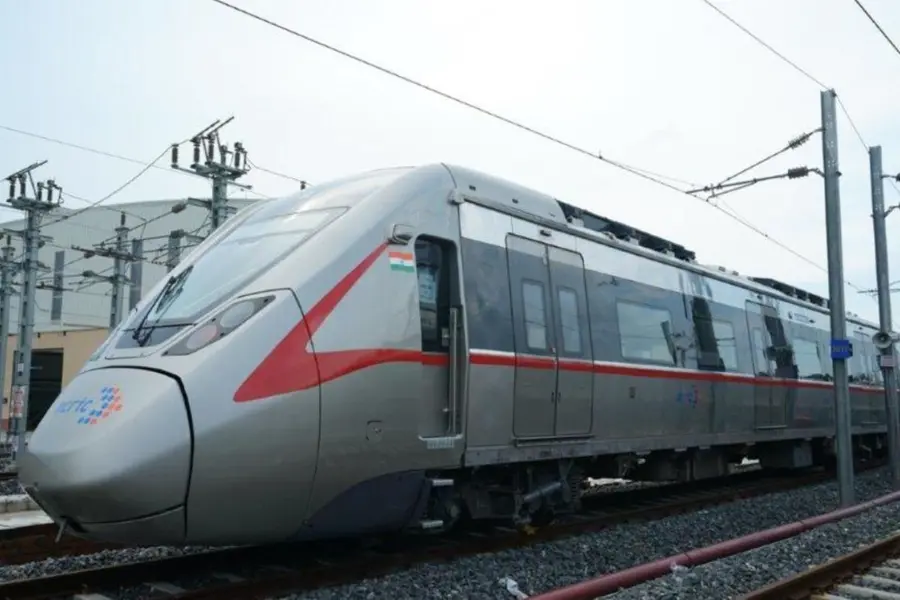
Finance Minister Nirmala Sitharaman on Sunday unveiled an ambitious proposal to develop seven high-speed rail corridors across India, signalling a major push to modernise the country’s rail infrastructure and sharply cut inter-city travel time.
Presenting the Union Budget 2026, Sitharaman said the proposed corridors are aimed at strengthening long-distance mobility, boosting logistics efficiency, and supporting more balanced regional development.
Also Read

The announcement marks one of the most expansive rail infrastructure visions outlined in a Union Budget, with the focus firmly on connecting key economic, industrial, and cultural centres.
The seven proposed high-speed rail corridors
According to the budget speech, the corridors identified for development are:
- Mumbai – Pune
- Pune – Hyderabad
- Hyderabad – Bengaluru
- Hyderabad – Chennai
- Chennai – Bengaluru
- Bengaluru – Varanasi
- Varanasi – Siliguri
Together, these routes span western, southern and eastern India, linking major metros, technology hubs, manufacturing clusters and densely populated regions.
Boost to economic integration
The finance minister noted that the corridors are designed not only to reduce travel time but also to improve economic integration between regions.
High-speed connectivity between cities such as Mumbai, Pune, Bengaluru, Chennai and Hyderabad is expected to benefit India’s IT sector, manufacturing ecosystem and services industry by enabling faster movement of skilled professionals and high-value goods.
The inclusion of longer corridors such as Bengaluru–Varanasi and Varanasi–Siliguri reflects the government’s intent to extend the benefits of modern rail infrastructure beyond metropolitan belts, connecting northern and eastern India more closely with the southern growth engines.
Focus on modern rail technology
While detailed timelines and cost estimates are expected to be announced later, officials indicated that the corridors will rely on modern high-speed rail technology aligned with global standards.
The government has previously emphasised safety, energy efficiency, and passenger comfort as key priorities in rail modernisation, and the proposed corridors are expected to follow the same principles.
The announcement also builds on India’s broader push to upgrade rail networks through semi-high-speed trains, dedicated freight corridors and station redevelopment projects.
Also read: Union Budget 2026: Nifty50 on edge as Dalal Street awaits big-bang announcements
Regional development and logistics gains
Experts believe the high-speed corridors could play a crucial role in decongesting air routes on busy inter-city sectors while offering a reliable alternative for medium- to long-distance travel.
Faster rail links are also expected to improve logistics efficiency, reduce carbon emissions per passenger kilometre, and stimulate economic activity in cities along the routes.
Sitharaman underlined that improved connectivity is essential for inclusive growth, stating that the new corridors aim to bridge regional disparities and unlock new development opportunities across states.
With the Union Budget 2026 placing infrastructure at the centre of its growth strategy, the proposed seven high-speed rail corridors are set to become a defining feature of India’s next phase of transport modernisation.
Published: 01 Feb 2026, 12:09 pm IST
Related Topics
Disclaimer: Kindly avoid objectionable, derogatory, unlawful and lewd comments, while responding to reports. Such comments are punishable under cyber laws. Please keep away from personal attacks. The opinions expressed here are the personal opinions of readers and not that of Mathrubhumi.