
This creates a major headache for the Trump administration: the strong dollar directly contradicts his promises to lower fuel costs, cut interest rates, and boost exports.
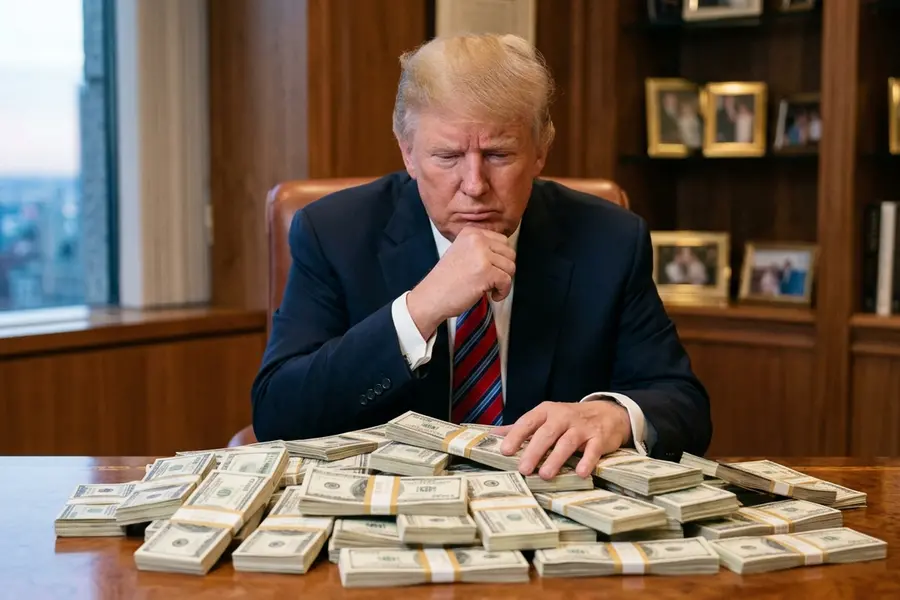
A dramatic rise in energy costs sparked by the conflict in West Asia has fortified the U.S. dollar, creating a paradoxical challenge for President Donald Trump’s stated economic goals.
As the greenback surges against global competitors, analysts are examining the drivers behind its renewed dominance.
The Role of Global Oil Markets
Since the onset of hostilities nearly two weeks ago, investors have divested from various assets to pivot toward energy and the dollar, the primary currency for pricing global oil and gas. Attacks on Gulf infrastructure and the closure of the Strait of Hormuz have driven Brent crude prices up by more than 33%, with the benchmark now hovering near $100 per barrel.
Because more currency is required to settle oil transactions, the greenback has gained roughly 2.5% since the war began, according to the Dollar Index. The currency remains the premier safe-haven investment due to its high liquidity and its status as the dominant reserve currency for central banks.
Domestic Production Shield
The United States has remained largely insulated from the immediate supply crisis as the world’s top crude producer. While the U.S. continues to import oil, federal data shows it sources only 8% of its needs from the Gulf, relying instead on Canada for nearly two-thirds of its requirements.
Soaring prices further bolster the dollar because the U.S. is a net exporter of gas and refined petroleum, which improves the national trade balance. In contrast, European and Asian economies with heavy dependencies on Gulf energy have seen their currencies and bonds become less appealing to investors.
Inflationary Pressures
Expectations of a spike in inflation due to energy costs have also fueled the dollar's rise. This trend increases the probability that the Federal Reserve will delay planned interest rate reductions or potentially hike borrowing costs in the near term. Such a "higher-for-longer" rate environment enhances the dollar's allure over gold and other traditional hedges.
Despite this recent momentum, the dollar remains below the peaks seen just before Trump’s inauguration. Lingering anxieties over the president's tariff policies, high national debt levels, and his public pressure on the independence of the Federal Reserve continue to act as a drag on its value.
"The dollar remains in demand and well supported," Kathleen Brooks, an analyst at XTB, told AFP. "However, as the conflict drags on, the attractiveness of the dollar could diminish... The U.S. still has a massive budget deficit, which could get worse due to the war, as military spending may need to rise sharply in the coming months."
The President’s Dilemma
Current market trends directly conflict with Trump’s campaign promises to lower fuel costs, secure lower interest rates, and maintain a weak dollar to boost American exports.
The administration’s messaging has been further complicated by Treasury Secretary Scott Bessent, who asserted in late January that the "U.S. always has a strong dollar policy." Mark Sobel, a former Treasury official, characterised the administration’s stance as "confused, muddled and inconsistent."
Marc Chandler of Bannockburn Capital Markets noted that for the White House, the strategic goal of "denying Iran nuclear weapons or missiles seems to have a higher priority than the short-run impact of the foreign exchange market."
With inputs from AFP
Published: 13 Mar 2026, 09:21 pm IST
Disclaimer: Kindly avoid objectionable, derogatory, unlawful and lewd comments, while responding to reports. Such comments are punishable under cyber laws. Please keep away from personal attacks. The opinions expressed here are the personal opinions of readers and not that of Mathrubhumi.
