
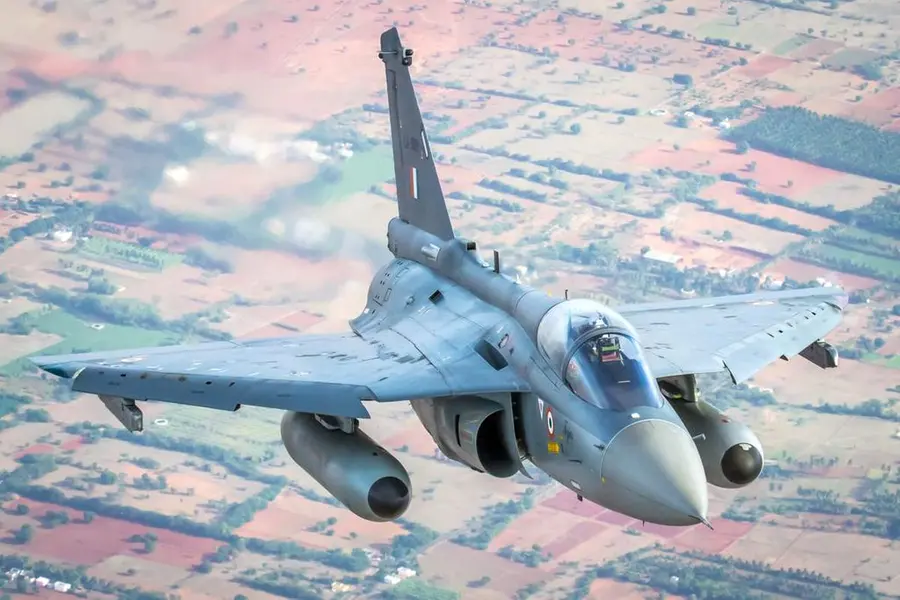
India's pursuit of self-reliance in defense technology has taken a significant turn with its exploration of a partnership with France's Safran to co-develop engines for the next-generation Tejas Light Combat Aircraft (LCA) Mk2, Moneycontrol reported citing sources.
The move comes against the backdrop of delays in the delivery of General Electric's (GE) F404 engines for the Tejas Mk1A, highlighting the need for diversified and reliable engine development collaborations. Mathrubhumi could not independently verify the contents of the report.
GE's supply chain hurdles and impact on Tejas Mk1A
The Tejas Mk1A program has faced notable setbacks due to delays in the delivery of GE's F404-IN20 engines. Initially, GE's production line for these engines had been dormant for several years, leading to challenges in reactivating the supply chain. Factors such as the COVID-19 pandemic, component shortages, and logistical issues have further compounded these delays.
Consequently, the Indian Air Force's (IAF) plans to induct the Tejas Mk1A have been postponed, affecting the overall modernization timeline of the IAF's fleet.
Safran's expanding footprint in India's aerospace sector
In contrast, Safran has been steadily increasing its presence in India's aerospace landscape. The company is set to inaugurate a new Maintenance, Repair, and Overhaul (MRO) facility in Hyderabad in 2025, dedicated to servicing LEAP engines. This facility is part of Safran's €1 billion global investment to expand its MRO network, underscoring its commitment to supporting India's growing aviation sector.
Additionally, Safran's collaboration with Hindustan Aeronautics Limited (HAL) in setting up a helicopter engine MRO facility in Goa further exemplifies its strategic investments in the country.
India's consideration of Safran as a partner for developing engines for the Tejas Mk2 signifies a strategic shift towards diversifying its defense partnerships. Safran's proposal is said to include full transfer of intellectual property rights, enabling India to have greater autonomy in engine design, development, and production. This aligns with India's broader goal of achieving self-reliance in defense technology and reducing dependency on foreign suppliers.
Implications for India's defense manufacturing ecosystem
The potential collaboration with Safran could have far-reaching implications for India's defense manufacturing ecosystem. It would not only bolster indigenous capabilities in jet engine technology but also enhance the country's position in the global defense supply chain.
Furthermore, the establishment of advanced MRO facilities by Safran in India would contribute to skill development, employment generation, and technological advancement in the aerospace sector.
India's exploration of a partnership with Safran for the development of Tejas Mk2 engines represents a strategic move to overcome existing challenges and fortify its defense manufacturing capabilities.
By diversifying its partnerships and investing in indigenous development, India aims to achieve greater self-reliance and resilience in its defense sector, ensuring the timely and efficient modernization of its armed forces.
Published: 28 May 2025, 04:13 pm IST
Related Topics
Disclaimer: Kindly avoid objectionable, derogatory, unlawful and lewd comments, while responding to reports. Such comments are punishable under cyber laws. Please keep away from personal attacks. The opinions expressed here are the personal opinions of readers and not that of Mathrubhumi.
