
To protect investors from online fraud and misuse of funds, SEBI has rolled out a new “Validated UPI Handles” system for the securities market. The regulator has also launched a unified investor app, introduced trading account freeze options, and tightened oversight on social media to combat unregistered finfluencers.
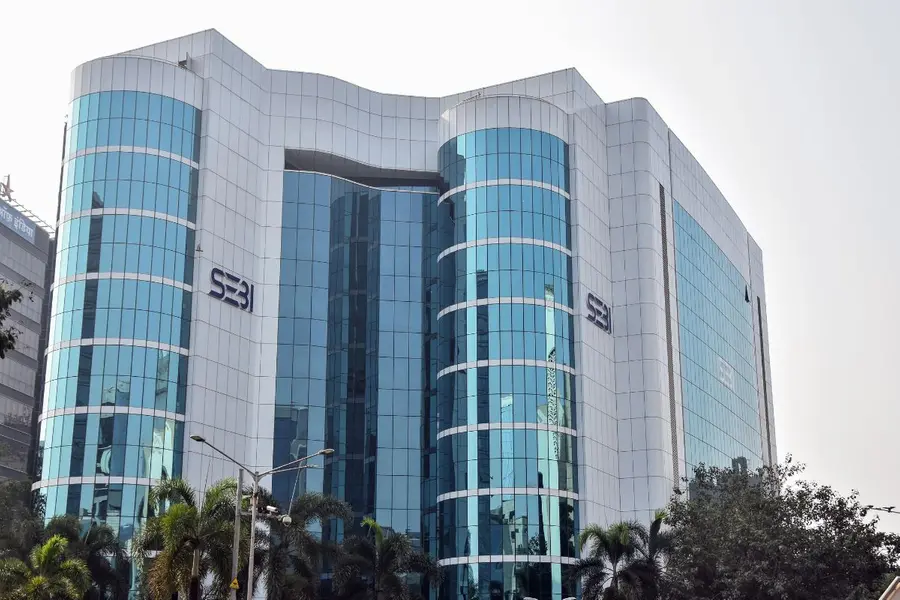
Mumbai: In a major step to safeguard investors from cyber fraud and enhance transparency in capital markets, the Securities and Exchange Board of India (SEBI) has rolled out a new sub-system of UPI — the “Validated UPI Handles” — exclusively for the securities market.
Announcing the initiative at the Kautilya Economic Conclave 2025, SEBI Chairman Tuhin Kanta Pandey said the system, launched in collaboration with the National Payments Corporation of India (NPCI), will help investors instantly verify whether the bank account receiving investment funds belongs to a genuine SEBI-regulated intermediary.
The move is part of SEBI’s broader push to strengthen investor protection and curb cyber and social media–driven market manipulation.
“Along with the ‘SEBI Check’ facility, investors can now verify within seconds from their mobile phones whether a bank account seeking credit for investments is genuine,” Pandey said.
Validated UPI Handles: A Secure Identifier
According to SEBI’s circular, the UPI IDs of SEBI-registered investor-facing intermediaries will now carry the exclusive “@valid” handle, issued by NPCI, along with category-specific suffixes for easy recognition.
For example:
Brokers: abc.brk@validhdfc
Mutual Funds: xyz.mf@validicici
The new format ensures that investors can easily identify legitimate intermediaries and avoid transferring funds to fraudulent entities.
Investor Protection: Multiple Digital Safeguards
SEBI has also introduced a framework mandating stock brokers and clearing members to upstream all client funds to clearing corporations, ensuring brokers cannot misuse investor money.
Additionally, a “voluntary freeze/block” feature for trading accounts — similar to freezing an ATM card — has been introduced to empower clients to act instantly if they detect suspicious trading activity.
Unified Investor App for Seamless Access
Pandey also announced the launch of a unified investor app, offering a consolidated view of securities held across both depositories. The app enables investors to:
- View transactions and holdings in one place
- Access e-voting on company resolutions
- Review proxy advisory recommendations
- Market Monitoring and Finfluencer Oversight
SEBI is actively monitoring social media platforms for misleading, manipulative or unregistered financial content, Pandey said, warning against the influence of unregistered “finfluencers”.
Capital Markets at Record Growth
India’s capital markets, Pandey highlighted, have raised nearly ₹93 trillion through equity and debt issuances in the past decade. Equity issuances in FY26 have already crossed ₹1.8 trillion, with over 170 IPOs in the pipeline.
Corporate bond issuances reached ₹10 trillion in FY25 and ₹4.3 trillion in the first five months of FY26. Investor participation has also soared, with unique investors tripling from 42 million in March 2019 to 134 million today.
The mutual fund industry’s AUM has jumped from ₹24 trillion (FY19) to ₹75 trillion, while AIF investments have expanded five-fold to ₹5.7 trillion.
New Initiatives for Mutual Funds and AIFs
Key reforms in the mutual fund and alternative investment space include:
- Reclassifying REITs as equity for mutual fund investments.
- Incentives for distributors in B-30 cities and first-time women investors.
- Lowering minimum investment for Large Value Funds of AIFs from ₹70 crore to ₹25 crore.
- Promoting accreditation for investors and greater flexibility for AI-only schemes.
New frameworks introduced include:
- MF Lite Framework – Simplified entry norms and lighter compliance for passive funds and ETFs.
- Specialized Investment Funds (SIFs) – Bridging the gap between mutual funds and PMS for sophisticated investors.
- MITRA Platform – For tracking inactive mutual fund folios and reducing fraud risk.
Vision for the Future
“Our collective efforts are focused on strengthening the corporate bond market, enabling capital formation at scale, and making investments seamless,” Pandey said, adding,
“We are building a market ecosystem that is more resilient, inclusive, and aligned with the aspirations of a developed India.”
Published: 05 Oct 2025, 09:21 am IST
Disclaimer: Kindly avoid objectionable, derogatory, unlawful and lewd comments, while responding to reports. Such comments are punishable under cyber laws. Please keep away from personal attacks. The opinions expressed here are the personal opinions of readers and not that of Mathrubhumi.
