
For many Indian households, gold is not seen as a luxury item but as a “wearable” form of savings and a financial safety net.
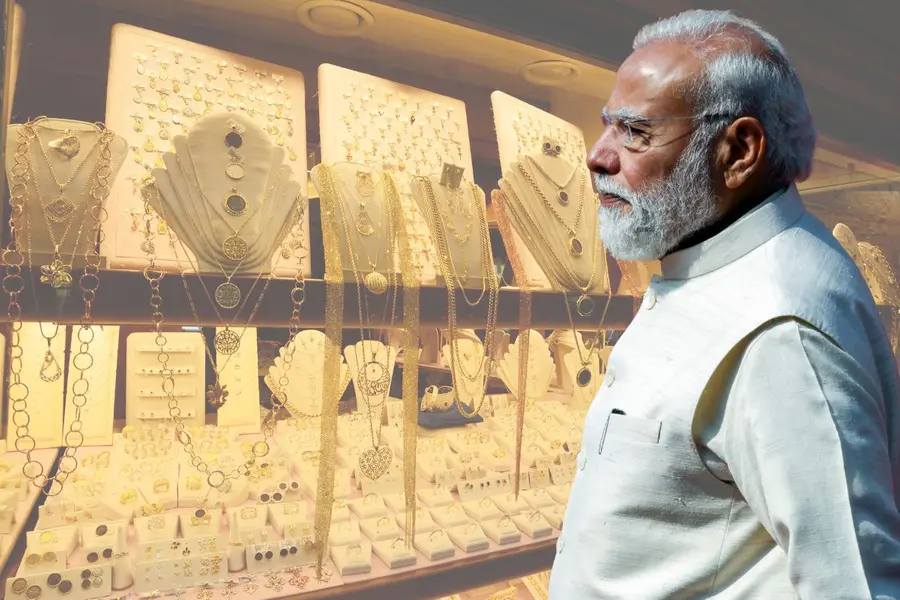
Prime Minister Narendra Modi’s appeal to reduce gold purchases has triggered fresh debate over how India can protect its foreign exchange reserves without hurting the jewellery sector.
While Modi urged citizens to cut back on gold buying amid global volatility, industry experts say the focus should shift towards using the gold already stored inside the country rather than reducing demand altogether.
They argue that mobilising “idle” gold kept in lockers and households could help reduce India’s dependence on imports and ease pressure on foreign exchange reserves.
Industry pushes gold recycling over demand cuts
Industry representatives warned that a sharp fall in gold demand could affect more than five million workers linked to the jewellery sector, including artisans and manufacturers.
For many Indian households, gold is not seen as a luxury item but as a “wearable” form of savings and a financial safety net.
Experts are instead advocating gold recycling — the process of taking old, unused or inherited jewellery and converting it back into usable gold. This includes buying gold from households, testing its purity through scientific methods, and reusing it for new jewellery designs or bullion.
India imports around 800 tonnes of gold annually at a cost of nearly ₹12 lakh crore. Industry experts said a significant quantity of gold remains stored in homes and lockers as passive investments.
They said recycling even a small share of this stored gold could help reduce import dependence.
The industry also pointed to changing consumer behaviour. While older generations often treated gold as a permanent family legacy, younger consumers are increasingly willing to sell or exchange excess gold through organised and transparent channels, especially when prices are high.
Bullion banking and GST reforms proposed
To support this shift, industry experts have proposed setting up a formal bullion banking system. They described it as a regulated framework, potentially centred around hubs such as GIFT-IFSC, to move domestic gold stocks into the active economy.
Under such a system, gold ETFs could lend part of their holdings, allowing passive investments to become productive resources. Industry representatives said this could help India depend less on international markets and manage currency pressures more effectively.
Another proposal involves changes to Goods and Services Tax (GST) rules. Industry leaders suggested that the sale of raw bullion, including gold bars, should be restricted to GST-registered buyers.
They said the aim is to discourage people from buying raw gold only to store it as a passive investment. The industry wants greater focus on “value-added” consumption such as jewellery manufacturing, which supports millions of jobs and could help reduce unnecessary imports.
Published: 13 May 2026, 08:15 am IST
Related Topics
Disclaimer: Kindly avoid objectionable, derogatory, unlawful and lewd comments, while responding to reports. Such comments are punishable under cyber laws. Please keep away from personal attacks. The opinions expressed here are the personal opinions of readers and not that of Mathrubhumi.
