
Supporters of the appeal say the focus is on reducing dollar outflow and protecting foreign exchange reserves amid global uncertainty.
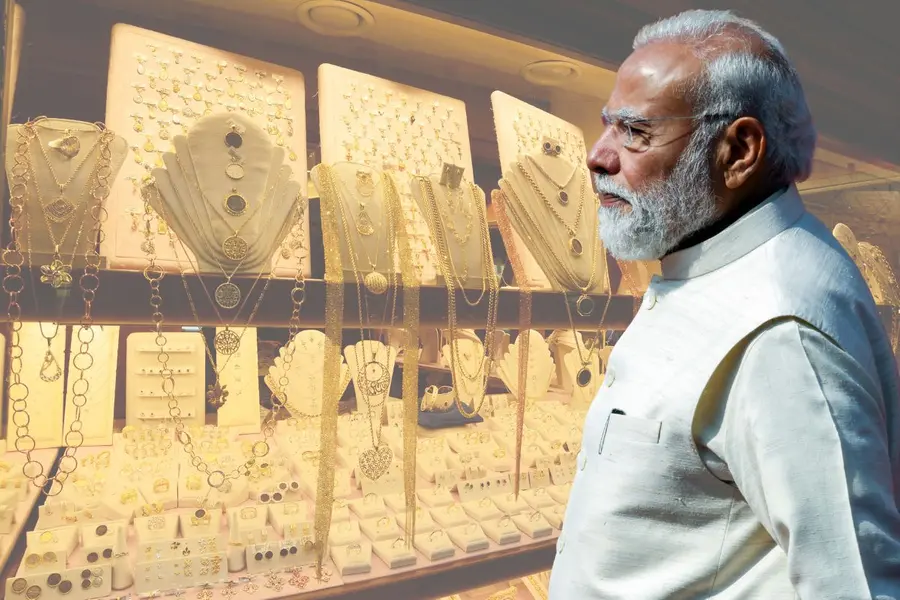
Prime Minister Narendra Modi’s appeal to avoid non-essential gold buying for a year triggered a sharp market reaction, trader protests, and divided industry responses, while also reshaping debate on imports and forex reserves.
Jewellery stocks fall and market value wiped out
Following Modi’s remarks urging people to defer gold purchases, listed jewellery stocks saw a sharp sell-off on May 11. Titan fell around 7%, Kalyan Jewellers dropped over 9%, while Senco Gold, Thangamayil Jewellery and P N Gadgil Jewellers declined between 6% and 8%.
Together, these losses wiped out nearly ₹35,000 crore in market capitalisation in a single session. The fall reflected investor concern over a possible short-term slowdown in discretionary jewellery demand.
Trade bodies seek clarity in PMO meeting
Jewellery industry associations are scheduled to meet officials from the Prime Minister’s Office. The discussion agenda includes concerns over demand sentiment and market stability after the public appeal.
Industry participants say gold imports had already been falling due to high prices and operational issues like customs delays and GST-related uncertainty, but the remarks added fresh pressure on sentiment in retail markets.
Protest in Lucknow over demand fears
In Lucknow, members of the Sarafa Association held protests raising slogans against the statement. Traders said the appeal created anxiety in an already weak market marked by high prices and lower consumer demand. Police were deployed, though the protest remained peaceful.
Associations claimed the trade supports thousands of families directly and indirectly through jewellery making, polishing, transport and allied work. Leaders said reduced buying could impact small and medium traders most.
Industry response split on demand impact
Some industry voices said the cultural nature of gold buying in India means consumption may not fall sharply, especially during weddings. They described the impact as more psychological than structural.
Others suggested consumers may shift toward lighter jewellery, digital gold or gold ETFs. Several also pointed out that global oil prices, currency movements and geopolitical tensions have a stronger influence on imports than sentiment alone.
Supporters link appeal to forex and import pressure
Supporters of the appeal said gold is a major driver of India’s import bill, accounting for nearly 10% of total imports in FY26. They noted India imported around $72 billion worth of gold, requiring large dollar outflows.
They argued that reducing non-essential gold purchases could ease pressure on forex reserves, especially alongside high crude oil imports and a widening current account deficit. Even a partial drop in imports, they said, could reduce dollar demand significantly.
Published: 12 May 2026, 11:47 am IST
Related Topics
Disclaimer: Kindly avoid objectionable, derogatory, unlawful and lewd comments, while responding to reports. Such comments are punishable under cyber laws. Please keep away from personal attacks. The opinions expressed here are the personal opinions of readers and not that of Mathrubhumi.
