
Warsh served during the 2008 financial crisis but left the Fed in 2011 after disagreements over its policy direction.
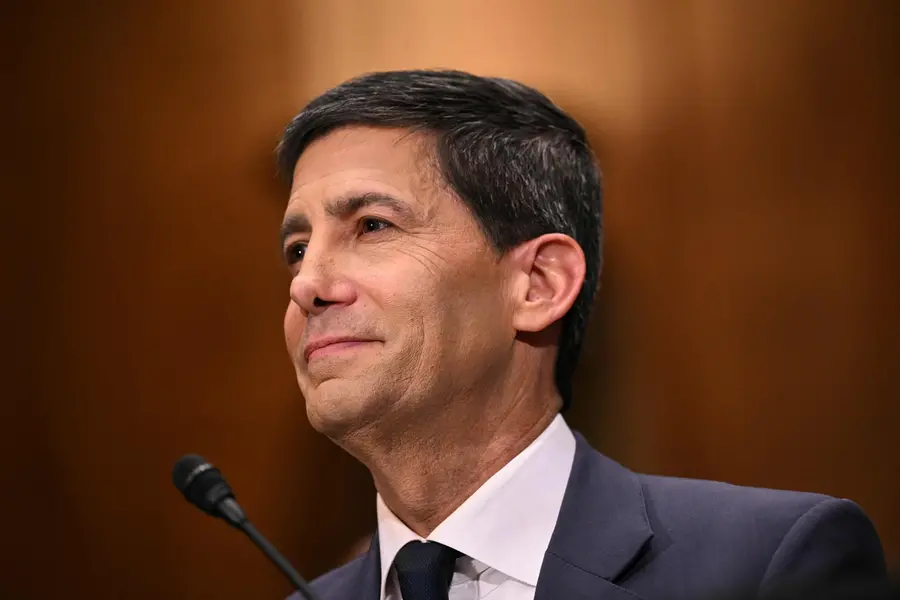
Washington: Kevin Warsh is set to return to the US Federal Reserve as its new chair with an ambitious reform agenda and mounting scrutiny over whether he can maintain the central bank’s independence under pressure from Donald Trump.
Warsh, who was confirmed by the Senate last week for a four-year term, will officially take the oath at the White House on Friday. The former Fed governor returns to the institution more than a decade after resigning early over disagreements on monetary policy during the global financial crisis.
Now 56, Warsh is expected to push sweeping changes to how the Fed communicates, makes policy decisions and manages the US economy, while also facing concerns over Trump’s repeated attempts to influence the central bank.
At his Senate confirmation hearing, Warsh sought to distance himself from suggestions that he would act in line with the president’s wishes.
“I am honoured the president nominated me for the position, and I'll be an independent actor if confirmed as chairman of the Federal Reserve,” he said.
Warsh also said he would “absolutely not” be Trump’s puppet.
The appointment comes after months of tension between Trump and outgoing Fed chair Jerome Powell. Trump had repeatedly attacked Powell over interest rates, demanding aggressive cuts to boost the US economy. His administration also launched a criminal probe targeting Powell and has continued efforts to remove Fed governor Lisa Cook.
Born in Albany, New York, Warsh studied at Stanford University and Harvard Law School before beginning his career at Morgan Stanley, specialising in mergers and acquisitions.
He later joined former President George W. Bush’s administration as an economic adviser before being appointed to the Fed’s Board of Governors in 2006.
Warsh served during the 2008 financial crisis but left the Fed in 2011 after disagreements over its policy direction. Since then, he has worked on Wall Street and served on corporate boards, including that of UPS.
At his hearing, Warsh criticised the Fed for overextending its role in the economy.
“I saw the Fed and its people at their very best, but I also witnessed an institution that was tempted to play a larger role in the economy and society,” he said.
In recent years, Warsh has increasingly aligned with Trump’s economic views, including calls for lower interest rates despite persistent inflation concerns in the aftermath of the COVID-19 pandemic.
He has blamed the inflation surge on what he described as “policy errors” by the Fed in 2021 and 2022.
Warsh has proposed what he calls “regime change” inside the central bank, including altering the data used for policy decisions, removing forward guidance from Fed communication and encouraging more debate among policymakers.
He has also advocated shrinking the Fed’s balance sheet and relying more heavily on interest rates as the central bank’s primary policy tool.
According to analysts, however, implementing those reforms may prove difficult.
David Wessel of the Brookings Institution said Warsh had laid out an expansive vision for the Fed but warned that actions would matter more than rhetoric.
“He is very smooth, and generally good with the people, and that will serve him well in this endeavour as long as he doesn't move too fast or too radically,” Wessel told AFP.
Kathryn Judge said internal divisions within the Fed could complicate Warsh’s plans.
“I think we really just have to wait and see,” Judge said.
“It's been a long time since we've had a chair coming in who is seeking to chart a new course, rather than to build on the success of his predecessors.”
Published: 22 May 2026, 09:32 am IST
Related Topics
Disclaimer: Kindly avoid objectionable, derogatory, unlawful and lewd comments, while responding to reports. Such comments are punishable under cyber laws. Please keep away from personal attacks. The opinions expressed here are the personal opinions of readers and not that of Mathrubhumi.
