
The economic risks come as IMF warned that the Middle East conflict has delivered an “unprecedented shock” to regional economies, with no certainty of a swift recovery.
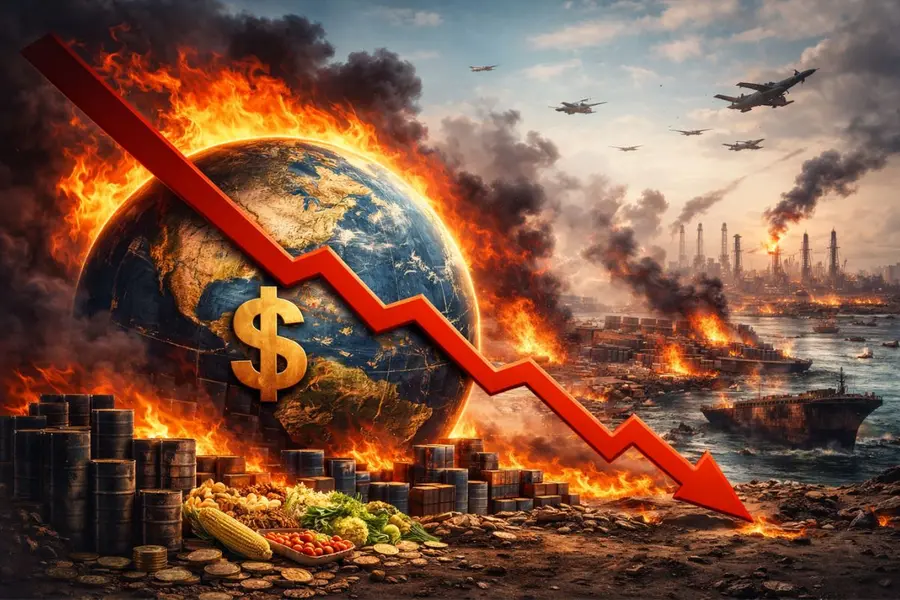
Washington: The United Arab Emirates has opened discussions with the United States on securing a financial safety net as the ongoing Iran conflict threatens to destabilise Gulf economies, The Wall Street Journal reported, citing US officials.
According to the report, UAE Central Bank Governor Khaled Mohamed Balama raised the possibility of a currency-swap line during meetings last week in Washington with Treasury Secretary Scott Bessent and senior officials from the US Treasury and Federal Reserve. Emirati officials stressed that while the country has so far avoided the worst economic fallout of the conflict, it may still require a financial lifeline if conditions worsen.
The talks, described as precautionary, reflect mounting concerns in Abu Dhabi over prolonged disruptions, particularly to oil shipments through the Strait of Hormuz, which could dent dollar revenues, strain foreign exchange reserves and undermine investor confidence in one of the region’s key financial hubs.
Yuan angle raises stakes
Meanwhile, the report further added that Emirati officials signalled that if access to US dollars tightens, the UAE may be forced to conduct oil trade and other transactions in alternative currencies, including the Chinese yuan.
Such a shift, even if limited, would challenge the long-standing dominance of the US dollar in global oil markets and align with China’s broader push to internationalise the yuan, especially across West Asia’s energy trade corridors.
IMF flags ‘unprecedented shock’
The economic risks come as the International Monetary Fund (IMF) warned that the Middle East conflict has delivered an “unprecedented shock” to regional economies, with no certainty of a swift recovery.
"It's an unprecedented shock for the region," Jihad Azour, the IMF’s Middle East and Central Asia chief, told AFP earlier this week.
He added that "there's uncertainty over how long the crisis will last and how it will end."
An agreement without long-term assurances, he cautioned, "will make it hard to ensure confidence".
The IMF said five of the Gulf’s eight oil- and gas-producing nations are expected to contract this year, while growth in Saudi Arabia, the UAE and Oman will slow but remain positive.
The conflict, marked by Iran’s retaliatory strikes on energy infrastructure and the effective closure of the Strait of Hormuz, has severely disrupted Gulf exports, sending global oil prices sharply higher.
According to the IMF’s regional report, attacks and precautionary shutdowns have cut Gulf energy production by more than 10 million barrels of oil and around 500 million cubic metres of gas per day. Growth forecasts for Gulf Cooperation Council economies have been halved to 2.0 percent compared to October estimates.
Spillover risks mount
Beyond energy, key sectors such as aviation, trade and tourism, central to the Gulf’s diversification strategies, have also been hit hard.
Qatar has been particularly affected, with its 2026 growth forecast slashed by nearly 14 percentage points to a contraction of 8.6 per cent.
Projections of a recovery in 2027 hinge on a rapid resolution of the conflict, with a normalisation of conditions expected only if hostilities ease by mid-year.
Countries with stronger fiscal buffers may weather the crisis better. The IMF noted it has “seen increases in spreads and some capital outflows... but the situation is still under control”.
However, a prolonged conflict could have wider regional consequences, fuelling inflation, worsening humanitarian conditions in vulnerable nations such as Sudan and Yemen, and increasing borrowing costs for heavily indebted economies like Egypt.
Remittances from Gulf-based migrant workers, critical to economies such as Egypt, Jordan and Lebanon, could also be impacted.
For Lebanon, already grappling with a fragile economy and conflict involving Hezbollah and Israel, the outlook remains highly uncertain.
"It is too early to assess the impact on infrastructure and on the southern region, which is currently a conflict zone," Azour said.
"But it is clear that a situation that was already precarious is going to become even more difficult."
Published: 20 Apr 2026, 07:58 am IST
Related Topics
Disclaimer: Kindly avoid objectionable, derogatory, unlawful and lewd comments, while responding to reports. Such comments are punishable under cyber laws. Please keep away from personal attacks. The opinions expressed here are the personal opinions of readers and not that of Mathrubhumi.
