
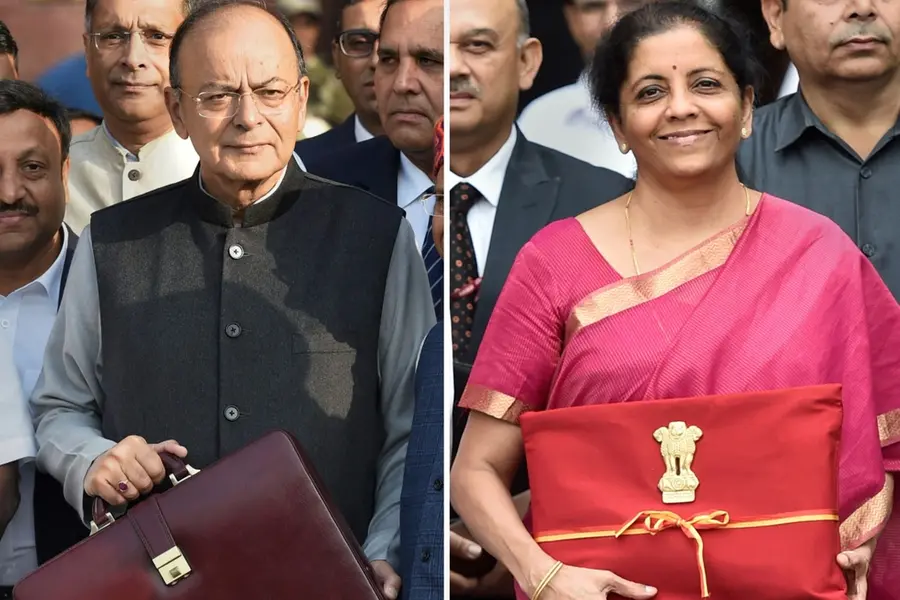
The Union Budget is a cornerstone of India’s economic framework, outlining the government’s fiscal policies and priorities for the upcoming financial year. On February 1, 2025, Finance Minister Nirmala Sitharaman will present the Budget in Parliament, marking the second comprehensive financial statement of the Modi 3.0 administration since its re-election in 2024. But beyond the numbers and financial projections, the Budget comes with a rich history and intriguing traditions. From the first woman to present it, to the quirky ‘halwa ceremony’, the journey of the Budget is as fascinating as the policies it announces. Here are some noteworthy facts and insights into the Budget and its journey over the years.
What’s in a name?
The word ‘Budget’ comes from the French term 'bougette', which means a small leather briefcase. This historical origin is a nod to the practice of carrying the Budget documents in a briefcase—a tradition that has evolved over time in India.
Why February 1?
The Union Budget is presented on February 1 each year to allow sufficient time for any legislative changes to be implemented before the new financial year begins on April 1 and ends on March 30 the following year.
Who prepares the budget?
The creation of the Union Budget involves a collaborative effort between the Ministry of Finance, NITI Aayog, and various spending ministries. However, the primary responsibility lies with the Budget Division under the Department of Economic Affairs in the Ministry of Finance.
The ‘Halwa Ceremony’
A unique tradition marks the finalisation of the Budget—the famous ‘halwa ceremony’. A delicious halwa is prepared in a large vessel and served by the Finance Minister to officials and staff involved in the Budget process. This practice symbolises the auspicious start of the Budget presentation.
However, in recent years, including during the Covid-19 pandemic, this tradition was replaced with sweet boxes delivered to North Block, where the Ministry of Finance is located.
India’s PMs as budget presenters
A few Indian Prime Ministers have taken on the additional responsibility of presenting the Union Budget themselves. Jawaharlal Nehru (1958), Indira Gandhi (1970), and Rajiv Gandhi (1987) are among them.
First woman to present the budget
Indira Gandhi, while serving as Prime Minister and holding the Finance portfolio, was the first woman to present the Union Budget in 1970.
Nirmala Sitharaman’s record
Nirmala Sitharaman, India’s current Finance Minister, holds the record for presenting the most Union Budgets by a female Finance Minister—seven consecutive Budgets to date.
The budget veterans
Morarji Desai tops the list of Finance Ministers who’ve presented the Union Budget the most, doing so 10 times. He’s followed by P Chidambaram (9), Dr. Pranab Mukherjee (8), Yashwant Sinha (8), and Dr. Manmohan Singh (6).
First live telecast
The Union Budget was first broadcast live in 1997 during the tenure of Finance Minister P Chidambaram, making it accessible to every citizen in real-time.
Going paperless
Traditionally, the Budget documents were printed and carefully guarded. However, in 2021, the Budget went entirely paperless due to Covid-19 restrictions. This shift aligned perfectly with the government’s ‘Digital India’ mission, and subsequent Budgets have continued this practice.
Budget in Hindi
Before 1955, the Union Budget was printed solely in English. The Congress-led government that year introduced the first-ever Hindi version, and now the Budget is presented in both English and Hindi.
The 1950 leak
In 1950, the Budget was leaked, prompting stringent measures to prevent such incidents. Since then, officials directly involved in the Budget process have been sequestered in the basement of North Block for ten days before the presentation, cut off from family and friends until Budget Day.
The longest budget speech
Nirmala Sitharaman holds the record for delivering the longest Budget speech in history. Her Union Budget 2021 speech lasted 2 hours and 40 minutes, surpassing her own 2020 speech, which lasted 2 hours and 17 minutes.
Time and date changes
The Budget presentation time was shifted from 5 pm to 11 am in 1999 by Finance Minister Yashwant Sinha, moving away from the British-era tradition. Similarly, in 2017, Arun Jaitley changed the date from the last working day of February to February 1, streamlining the process.
From briefcase to 'Bahi Khata'
In a move towards Indian traditions, Nirmala Sitharaman replaced the iconic briefcase for carrying Budget documents with a 'bahi khata' (ledger wrapped in a red cloth) adorned with the national emblem.
The ‘Black Budget’ of 1973
Finance Minister Yashwantrao Chavan’s Budget in 1973 was dubbed the ‘Black Budget’ due to its high fiscal deficit of Rs 550 crores, which resulted from the economic strain of the 1971 Indo-Pak War and the liberation of Bangladesh.
Railway budget integration
Until 2017, the Railway Budget was presented separately. However, it has since been merged with the Union Budget for more streamlined governance.
Published: 26 Jan 2025, 09:47 pm IST
Related Topics
Disclaimer: Kindly avoid objectionable, derogatory, unlawful and lewd comments, while responding to reports. Such comments are punishable under cyber laws. Please keep away from personal attacks. The opinions expressed here are the personal opinions of readers and not that of Mathrubhumi.
