
India’s industrial and warehousing demand surged 29% in 2025 to 72.5 million sq ft.
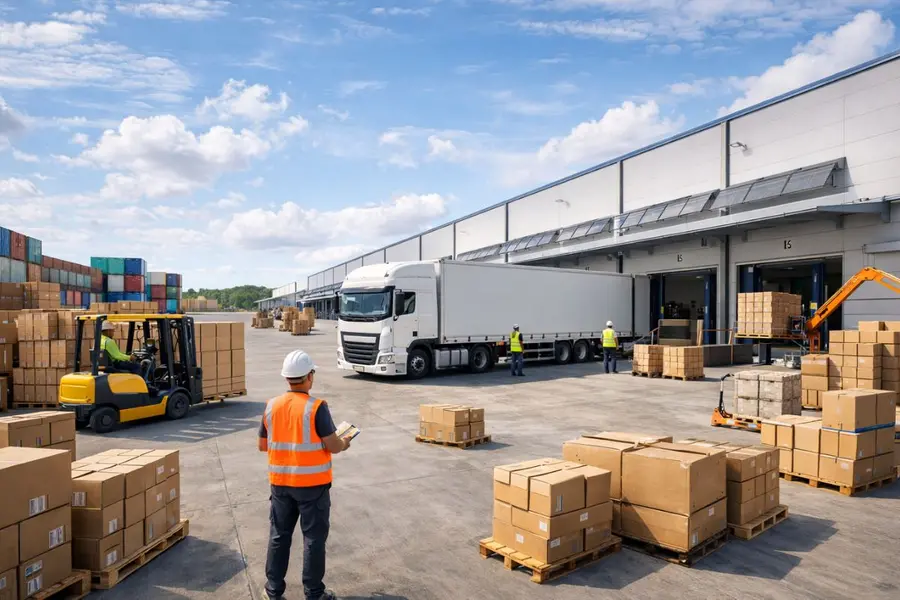
New Delhi: India’s industrial and warehousing real estate sector recorded a 29 per cent year-on-year (YoY) increase in demand in 2025, reaching 72.5 million sq ft, according to a report by Knight Frank India. This marks the strongest growth in the post-pandemic period.
The consultancy noted that Q4 2025 emerged as the busiest quarter, with 23.4 million sq ft of transactions, highlighting sustained momentum across the sector. Grade A facilities continued to be the most preferred by occupiers, accounting for 63 per cent of leased space, up slightly from 62 per cent in 2024.
Manufacturing and e-commerce drive demand
Manufacturing occupiers, excluding FMCG and FMCD, remained the largest contributors to growth, accounting for 47 per cent of total leased volume with 34 million sq ft transacted, a 55 per cent YoY increase. Strong demand was also observed from third-party logistics (3PL) providers and e-commerce firms, with e-commerce space take-up rising 56 per cent YoY to 7.8 million sq ft, the highest annual volume since 2021.
Also read| Kerala Ramadan export crisis: Could Gulf markets see skyrocketing fruit and vegetable prices?
Regional highlights
Pune led the growth chart with 16 million sq ft of transactions, an 86 per cent YoY increase, capturing 22 per cent of total national volumes. Manufacturing leasing was concentrated in Pune and Chennai, together accounting for 51 per cent of manufacturing-related transactions in 2025.
Mumbai held the largest share of total warehousing stock at 31 per cent, followed by the National Capital Region (NCR) at 21 per cent. Other markets, excluding Kolkata and Hyderabad, also reported growth in transaction volumes, reflecting a maturing market aligned with India’s key manufacturing hubs.
Also read| Investors flock to safe-haven assets as bullion prices rise on geopolitical risks
Outlook
Shishir Baijal, International Partner, Chairman and Managing Director, Knight Frank India, said, “As global trade realigns and infrastructure investments accelerate, India is set to strengthen its position as a preferred manufacturing and distribution hub, driving ongoing demand for high-quality, institutional-grade warehousing.”
The report emphasised that India’s industrial and warehousing sector is becoming a resilient, scalable, and strategically positioned hub within both global and regional supply chain networks, with vacancy levels stable at 11.6 per cent during the year.
IANS
Published: 05 Mar 2026, 03:44 pm IST
Related Topics
Disclaimer: Kindly avoid objectionable, derogatory, unlawful and lewd comments, while responding to reports. Such comments are punishable under cyber laws. Please keep away from personal attacks. The opinions expressed here are the personal opinions of readers and not that of Mathrubhumi.
