
Discover India`s 2026-27 Budget: driving growth with reforms, tech, and investments in cities, manufacturing, and minerals. See fiscal outlook & key highlights. Click to learn more!
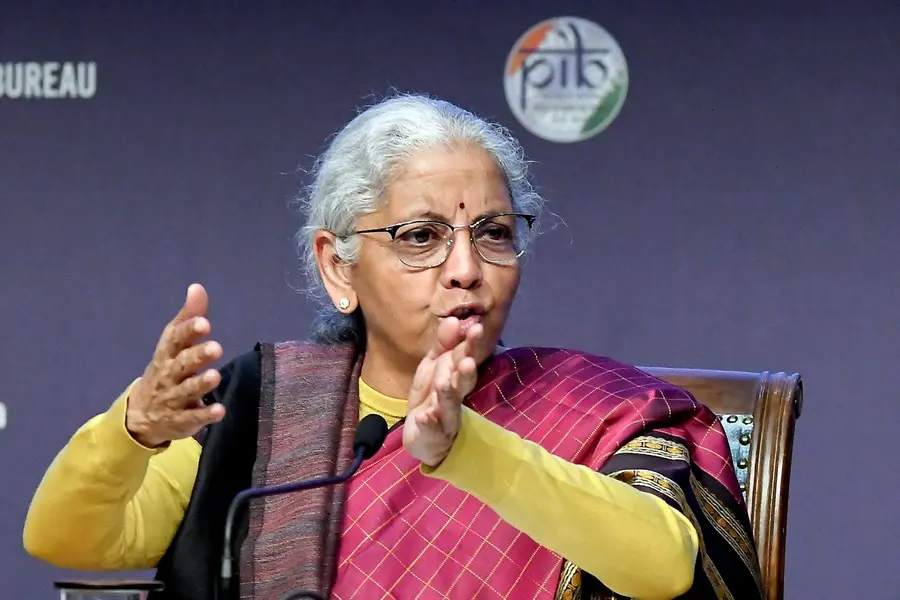
New Delhi: Finance Minister Nirmala Sitharaman on Sunday said the Union Budget 2026–27 is designed to sustain India’s growth momentum through structural reforms, technology-driven governance and targeted investments in cities, manufacturing and critical minerals.
Speaking at the customary post-Budget press conference, Sitharaman said the government’s focus remains on building a strong economic ecosystem that boosts productivity and generates employment. “Primarily, we are looking at building the ecosystem with structural reforms, which will go on. Reforms have been carried out. We are continuing to do the reform activities. It will continue with an aim to make sure that we create enough environment for improving productivity and making sure employment is generated,” she said, adding that technology will play a central role in delivering benefits to citizens.
Highlighting cities as engines of growth and innovation, Sitharaman said the Budget places special emphasis on Tier-2 and Tier-3 cities, as well as temple towns, to ensure balanced urban development. The government has proposed mapping City Economic Regions (CERs) based on local growth drivers and has earmarked ₹5,000 crore per CER over five years to implement development plans through a challenge-based and results-oriented financing model.
“Rs 1000 crore per year per city is being given, and the emphasis is going to be largely on tier 2, tier 3 cities,” the Finance Minister said, noting that the initiative will strengthen infrastructure, improve basic amenities and unlock new economic opportunities in emerging urban centres.
ALSO READ: What Budget 2026 means for your health, car and business insurance: IndusInd CEO explains
Push for semiconductors, electronics and rare earths
Sitharaman also underlined major announcements under the Semiconductor Mission and the new electronic components manufacturing scheme. The government has allocated ₹40,000 crore to boost domestic electronics manufacturing and reduce import dependence, while strengthening India’s intellectual property and technology ecosystem.
In another key move, the Budget announced the establishment of rare earth corridors in Odisha, Kerala, Andhra Pradesh and Tamil Nadu. These corridors aim to help India explore, process and utilise critical minerals domestically, reducing reliance on external sources, especially for magnets and advanced manufacturing needs. “They are going to have multiple, decadent uh impact on the Indian economy,” Sitharaman said.
ALSO READ: Union budget explained in simple words: Key terms like fiscal deficit, economic survey you must know
Fiscal numbers and growth outlook
For 2026–27, non-debt receipts are estimated at ₹36.5 lakh crore, while total expenditure is projected at ₹53.5 lakh crore. Net tax receipts for the Centre are estimated at ₹28.7 lakh crore. Gross market borrowings are pegged at ₹17.2 lakh crore, with net borrowings from dated securities at ₹11.7 lakh crore.
The fiscal deficit for 2026–27 is estimated at 4.3% of GDP, slightly lower than the revised estimate of 4.4% for 2025–26. The debt-to-GDP ratio is projected to decline to 55.6% in 2026–27 from 56.1% in the previous year.
Published: 01 Feb 2026, 05:43 pm IST
Disclaimer: Kindly avoid objectionable, derogatory, unlawful and lewd comments, while responding to reports. Such comments are punishable under cyber laws. Please keep away from personal attacks. The opinions expressed here are the personal opinions of readers and not that of Mathrubhumi.
