
India’s basmati rice exports are facing renewed uncertainty as escalating tensions in Iran and US President Donald Trump’s warning of fresh tariffs
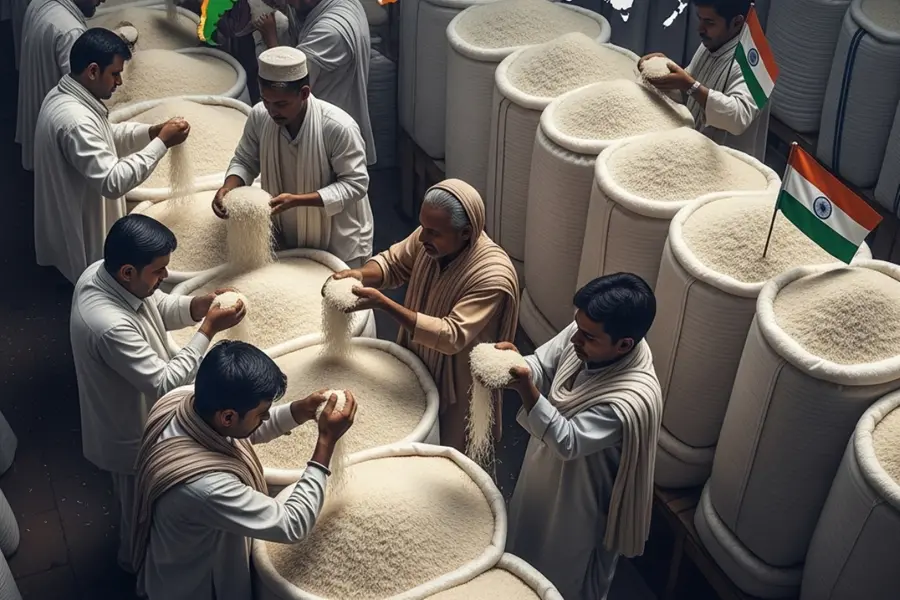
Mumbai: India’s rice export outlook is coming under pressure amid growing instability in Iran and US President Donald Trump’s announcement of a 25 per cent tariff on countries continuing trade with Tehran. The development has raised concerns across India’s basmati export sector, which relies heavily on Iran as a key destination.
In a post on his social media platform Truth Social, Trump said, “Effective immediately, any Country doing business with the Islamic Republic of Iran will pay a Tariff of 25% on any and all business being done with the United States of America. This Order is final and conclusive.” While clarity on implementation remains limited, the statement has already unsettled exporters.
According to recent export data, India shipped basmati rice worth $468.10 million to Iran between April and November of the 2025–26 financial year, amounting to nearly 5.99 lakh metric tonnes. Despite Iran continuing to be one of the most important overseas markets for Indian basmati, exporters say the current internal turmoil has begun to disrupt trade execution, delay payments and destabilise delivery schedules.
The Indian Rice Exporters Federation (IREF) has warned that rising internal unrest and large-scale demonstrations in Iran are weighing on trade flows and putting downward pressure on basmati prices in Indian mandis. The uncertainty has spread across contracting, payment cycles and shipment planning, with exporters increasingly cautious about exposure to the Iranian market.
“These pressures are now clearly reflected in domestic markets,” IREF noted, pointing out that prices of major basmati varieties have softened sharply in recent days due to postponed deals, cautious buying and growing risk aversion among exporters.
According to Times Now reports Dr. Prem Garg, National President of IREF, said Iran has historically been a pillar market for Indian basmati rice but current conditions have weakened buyer confidence. “Iran has historically been a pillar market for Indian Basmati. However, the current internal turmoil has disrupted trade channels, slowed payments, and dented buyer confidence. The immediate fallout is evident in Indian mandis, where Basmati prices have softened sharply within days,” he said.
Dr. Garg added that exporters have been advised to reassess risks associated with Iranian contracts, strengthen payment safeguards and avoid excessive inventory accumulation aimed solely at Iran. “We are not sounding an alarm, but urging prudence. In periods of geopolitical and internal instability, trade is often the first casualty. A calibrated approach is essential to protect both exporters and farmers,” he said.
While Iran poses immediate risks, IREF believes the impact of Trump’s tariff warning on Indian rice shipments to the US may be limited. Indian rice exports to the US are already subject to duties of around 50 per cent, a steep increase from earlier levels. Despite this, export volumes have remained relatively stable.
“Indian rice—particularly basmati—is not a like-for-like substitute for rice of Pakistani or US origin. Additionally, Indian rice is deeply embedded in the culinary traditions of the Gulf region and the Indian subcontinent diaspora, ensuring sustained consumer demand despite price pressures,” IREF said.
The United States currently ranks as India’s 10th largest rice export market globally and the fourth-largest destination for Indian basmati, underlining its strategic importance. Even if the overall tariff burden increases further, IREF does not expect a sharp decline in shipments to the US.
In contrast, the federation has flagged more serious short-term risks from Iran, where importers have reportedly struggled to meet contractual obligations and transfer funds to India. Exporters say the duration and depth of the disruption remain unclear and could trigger further volatility in prices, cash flows and market confidence.
IREF has urged exporters to diversify into alternative markets across West Asia, Africa and Europe to cushion against prolonged disruptions. “As global trade becomes increasingly intertwined with geopolitics, the situation in Iran serves as a reminder that food exports—particularly strategic commodities such as rice—are highly sensitive to regional stability,” the federation said, stressing that timely caution could help prevent deeper distress across India’s rice ecosystem.
Published: 13 Jan 2026, 07:02 pm IST
Related Topics
Disclaimer: Kindly avoid objectionable, derogatory, unlawful and lewd comments, while responding to reports. Such comments are punishable under cyber laws. Please keep away from personal attacks. The opinions expressed here are the personal opinions of readers and not that of Mathrubhumi.
