
India’s GST 2.0 kicks in with big reforms, including exemptions for life and health insurance policies and lower taxes on personal care. Here’s everything you need to know
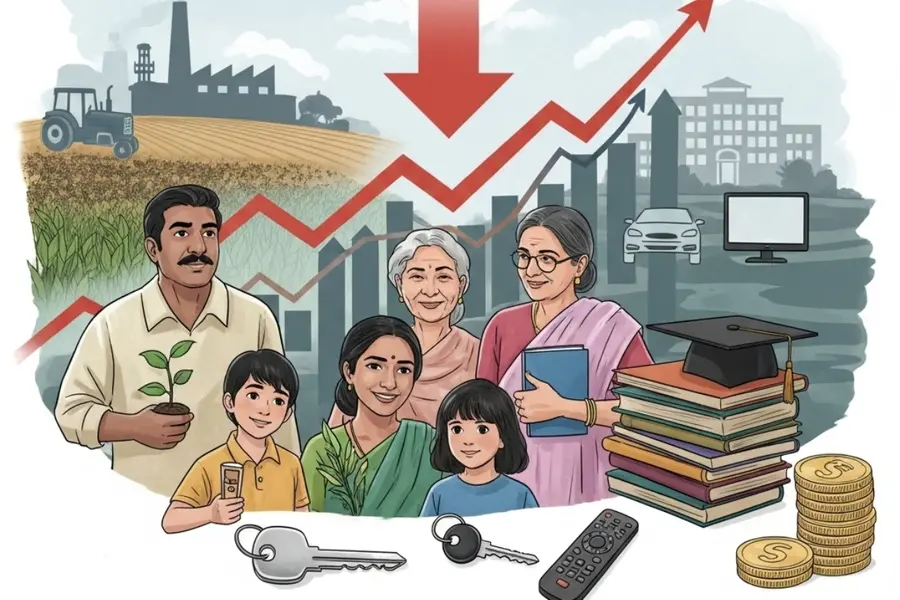
The Government’s second sweeping overhaul of the Goods and Services Tax (GST), known as GST 2.0, comes into effect today. The new regime introduces exemptions, rate reductions, and structural tweaks that affect insurance, healthcare, transport, imports, and even everyday essentials like milk and shampoos. Here are the top highlights you should know.
GST relief for life insurance policies
Also Read

All individual life insurance products are now exempt from GST. This includes term insurance, endowment policies, and unit-linked insurance plans (ULIPs). The exemption has also been extended to the reinsurance of these policies.
Health insurance now GST-free
Individual health insurance has also been brought under GST exemption. The move covers standard family health plans as well as policies tailored for senior citizens.
Transport services: Dual options for operators
Passenger transport by road will continue to draw a 5 percent GST rate without input tax credit (ITC). Operators, however, can choose to pay 18 percent if they want to claim ITC.
For air travel, economy class tickets remain taxed at 5 percent, while business and other premium class fares continue at 18 percent.
E-Commerce platforms and delivery liabilities
Under GST 2.0, local delivery services through e-commerce platforms will be taxed differently depending on the provider’s registration.
If the delivery partner is unregistered, the e-commerce operator will bear the GST liability. If registered, the provider themselves must pay.
Standard rate fixed for local deliveries
Local delivery services are now taxed at a uniform rate of 18 percent across the board.
Medicines remain taxed at 5 percent
The Finance Ministry clarified why medicines were not made entirely GST-free. Removing GST would prevent manufacturers from claiming ITC on inputs such as raw materials and packaging, thereby raising production costs. Medicines will therefore continue to be taxed at 5 percent .
Leasing and renting to mirror goods’ tax rates
Leasing or renting goods without an operator will now be taxed at the same rate as their sale. For example, if a car purchase attracts 18 percent GST, leasing the car without a driver will also draw 18 percent . The same logic applies to other goods as well.
GST changes apply to imports too
GST 2.0 rates extend to imports. Integrated GST (IGST) will be levied at the revised rates from 22 September onwards, unless an exemption has been separately issued.
Dairy milk exempt, plant-based milk at 5 percent
Ultra High Temperature (UHT) processed dairy milk is fully exempt from GST. Plant-based alternatives, however, are not. Previously, almond milk and similar drinks attracted 18 percent while soya milk was taxed at 12 percent . Now, under GST 2.0, all plant-based milk drinks, including soya milk, will be taxed uniformly at 5 percent .
Rate reduction on shampoos and face powders
GST rates on face powders and shampoos have been cut. The Finance Ministry explained that the move was aimed at simplifying the GST framework rather than extending benefits to big corporations.
Published: 22 Sept 2025, 08:24 am IST
Disclaimer: Kindly avoid objectionable, derogatory, unlawful and lewd comments, while responding to reports. Such comments are punishable under cyber laws. Please keep away from personal attacks. The opinions expressed here are the personal opinions of readers and not that of Mathrubhumi.