
Following the RBI’s 50 basis point repo rate cut, four major public sector banks have reduced their lending rates
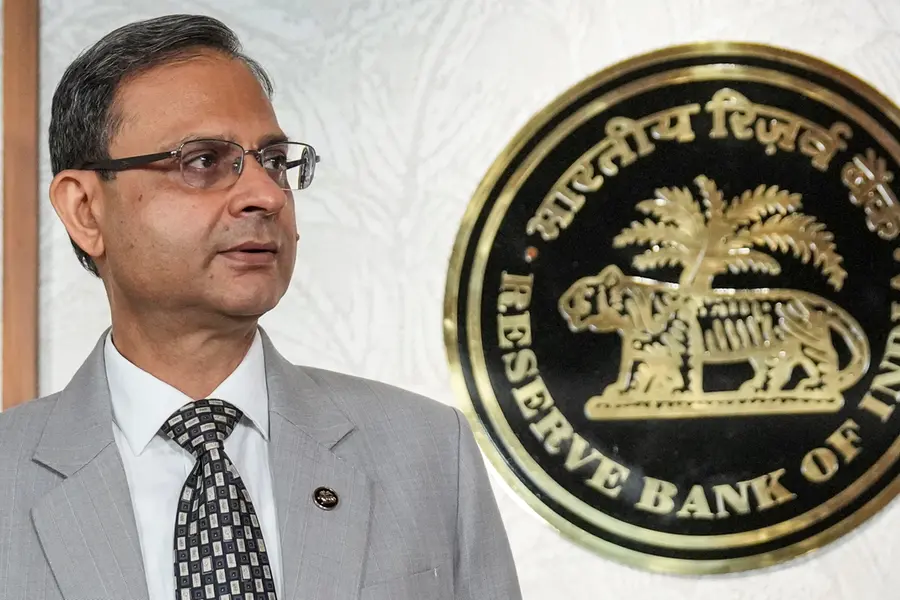
New Delhi: Following the Reserve Bank of India’s (RBI) recent decision to cut the repo rate by 50 basis points, four major public sector banks have adjusted their lending rates, reflecting the central bank’s monetary easing stance. The move aims to stimulate credit growth and support economic activity amid ongoing challenges.
Bank of Baroda was among the first to reduce its repo-linked lending rate (RLLR) by 50 basis points, bringing it down to 8.15% effective from 7 June 2025. Punjab National Bank (PNB) followed suit by cutting its RLLR by 50 basis points to 8.35% from 9 June, while keeping its Marginal Cost of Funds based Lending Rate (MCLR) unchanged. Similarly, Bank of India lowered its repo-based lending rate by 50 basis points to 8.35%, effective 6 June. UCO Bank implemented reductions in both its MCLR and RLLR; its RLLR now stands at 8.30% following a 50 basis point cut from 9 June, and it trimmed its MCLR by 10 basis points across various tenures, with the one-year MCLR now at 9%.
HDFC Bank, a leading private sector lender, also reduced its MCLR by 10 basis points across tenures starting 7 June. This adjustment brought down overnight and one-month MCLR rates to 8.9%.
The RBI’s repo rate cut directly impacts floating-rate loans, which must be reset in line with the benchmark repo rate as per RBI regulations. Consequently, existing borrowers with floating-rate loans will automatically benefit from lower interest rates. However, new borrowers may not receive the full benefit of the rate cut, as banks are expected to modify the spreads they charge over the repo rate to maintain profitability.
For example, after the revision, Bank of Baroda’s home loan rates for new borrowers now start at 8%. This selective adjustment means existing borrowers, many of whom had earlier secured loans at competitive rates due to market competition, stand to gain more than fresh borrowers.
Prior to the RBI rate cut, several public sector banks, including Bank of India, Bank of Maharashtra, Central Bank of India, and Union Bank of India, were offering home loans at rates as low as 7.85% for loans up to Rs 30 lakh. Other lenders such as Canara Bank, Indian Bank, Indian Overseas Bank, and UCO Bank offered home loans at 7.90%, with Canara’s rate applicable for loans above Rs 75 lakh and others for smaller loan amounts.
Among private sector banks, South Indian Bank had the lowest home loan rate at 8.30% for loans up to Rs 30 lakh, followed by Karur Vysya Bank at 8.45%, and PNB Housing Finance and Tamilnad Mercantile Bank at 8.50%. Bandhan Bank, Axis Bank, and Karnataka Bank offered rates ranging between 8.66% and 8.78%.
To preserve profitability amid the rate cuts and increased liquidity in the banking system, lenders are also expected to reduce returns on fixed deposits (FDs). This adjustment may make fixed deposits less attractive to savers in the near term.
The RBI’s repo rate reduction and the subsequent adjustments by banks reflect ongoing efforts to balance credit availability, profitability, and competitive pressures in the Indian banking sector, while attempting to spur economic growth through cheaper borrowing costs.
Published: 09 Jun 2025, 09:09 am IST
Related Topics
Disclaimer: Kindly avoid objectionable, derogatory, unlawful and lewd comments, while responding to reports. Such comments are punishable under cyber laws. Please keep away from personal attacks. The opinions expressed here are the personal opinions of readers and not that of Mathrubhumi.
