
SC judge B V Nagarathna questions menstrual exclusion in Sabarimala case, raises doubts on applying Article 17 to religious practices
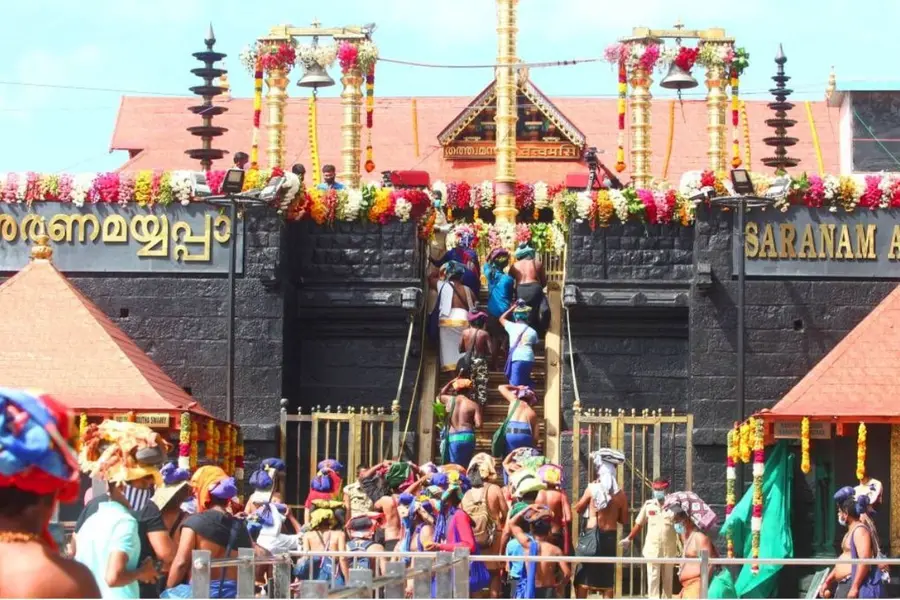
New Delhi: Supreme Court judge Justice B V Nagarathna on Tuesday raised critical observations on the treatment of women in religious spaces, stating that it is not reasonable to consider a woman “untouchable” for a few days each month and then treat her differently thereafter. Her remarks came during hearings on petitions concerning discrimination against women at places of worship, including the Sabarimala temple in Kerala.
The petitions also touch upon broader questions relating to the scope and limits of religious freedom across different faiths, according to a reports.
Remarks on menstruation and ‘untouchability’
Justice Nagarathna’s comments were made in reference to menstruation. She questioned the applicability of such practices, noting the inconsistency in treating women differently during specific days.
“Speaking as a woman, there cannot be a three-day untouchability every month, followed by normalcy on the fourth day,” she observed.
She further expressed reservations about invoking Article 17 of the Constitution in this context, pointing out that the provision was historically framed to address entrenched forms of untouchability.
Bench composition
Justice Nagarathna is the only woman member of the nine-judge Constitution Bench hearing the matter. The bench also includes Chief Justice Surya Kant and Justices M M Sundresh, Ahsanuddin Amanullah, Aravind Kumar, Augustine George Masih, Prasanna B Varale, R Mahadevan and Joymalya Bagchi.
Centre objects to 2018 Sabarimala observations
The discussion arose after Solicitor General Tushar Mehta, representing the Union government, objected to certain observations made in the Supreme Court’s 2018 Sabarimala verdict.
He challenged the earlier reasoning that the exclusion of women between the ages of 10 and 50 from entering the temple amounted to a form of “untouchability” under Article 17 of the Constitution, as reported by Live Law.
Reference to Justice Chandrachud’s earlier opinion
In the 2018 judgement, Justice D Y Chandrachud had held that restricting women’s entry based on age or menstrual status effectively amounted to a form of untouchability. He had also stated that such practices placed women in a subordinate position, reinforcing patriarchal norms and undermining their dignity.
Centre’s stand on Sabarimala practice
During the hearing, Mehta argued that India should not be viewed through a lens that assumes it is inherently patriarchal or shaped by gender stereotypes in the way some Western interpretations suggest.
He emphasised that the restriction at the Sabarimala temple is linked to a specific age group rather than menstruation itself.
“Let there be no confusion. Sabarimala concerns only a particular age group. Temples dedicated to Lord Ayyappa across the country and abroad allow women of all ages. It is only this temple that has such a restriction, making it a unique case,” he said.
He further clarified that his defence of the practice would not be based on menstrual considerations but on the distinct nature of the temple’s traditions.
Published: 07 Apr 2026, 09:02 pm IST
Related Topics
Disclaimer: Kindly avoid objectionable, derogatory, unlawful and lewd comments, while responding to reports. Such comments are punishable under cyber laws. Please keep away from personal attacks. The opinions expressed here are the personal opinions of readers and not that of Mathrubhumi.
