
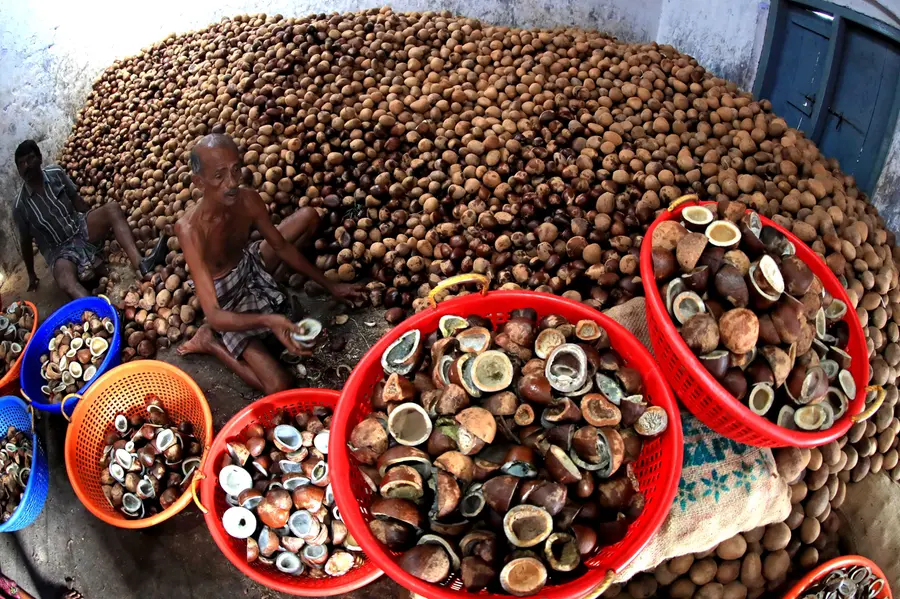
Kerala’s contribution to the country’s ball copra (unda copra) production has declined to an all-time low of just 10.2% in the 2023-24 fiscal year, a major drop from 19.4% in 2018-19. While Kerala once led the nation in ball copra production, Karnataka now dominates with a staggering 72.8% share. Despite record prices for ball copra, the benefits are largely confined to a small group of farmers in Kerala.
Karnataka has increasingly taken over the role of India’s ball copra powerhouse, producing more than double the amount of Kerala. In 2018-19, Kerala produced nearly 60,000 tonnes, but this figure has dropped by almost half over the years. Karnataka, on the other hand, which had a share of 60.2% in 2018-19, saw its output rise from 2 lakh tonnes to 2.5 lakh tonnes during the same period. Today, Karnataka produces more ball copra than Kerala, with its contribution reaching 72.8% of the country’s total.
Kerala Vs Karnataka data
In 2019-20, Kerala's contribution decreased to 17.6%, while Karnataka's rose to 61.1%. By 2020-21, Kerala's share further dropped to 15.2%, and Karnataka's increased to 64.9%. In 2021-22, Kerala's share was 13.5%, while Karnataka's was 65.5%. In 2022-23, Kerala produced 12.7% of the country's copra, and Karnataka's share grew to 67.3%. Finally, in 2023-24, Kerala's share fell to 10.2%, with Karnataka contributing 72.8% of the total copra production in the country.
Kerala’s glorious past
Once, Kerala was the leader in ball copra production, with North Kerala as the main hub. Coconuts would be dried for up to eight months using a drying process that involved placing them on a roof rack (Attam). There were no major costs involved in processing. Earlier, every household had an attic above the kitchen for drying coconuts. When the copra inside matured and loosened, it was taken out, shredded, and sold directly.
However, with the advent of concrete houses devoid of attics and the increased sale of raw coconuts, farmers in Kerala have been pushed away from ball copra production. Farming practices in the state have also changed. A decline in coconut production, coupled with the consecutive rock-bottoming of copra prices, has had a negative impact. The current increase in prices is a result of a drop in production.
Why ball copra?
At present, a single coconut processed into ball copra fetches around Rs 25, while a fresh coconut is priced at Rs 20. This trend has been evident for a long time. Some traders have begun processing copra into Rajapur copra, a variety that has a higher market value. By splitting the coconut and completely removing the moisture, it is turned into Rajapur copra. This variety is a popular food item in Northern India and is used for religious offerings and rituals. The price of Rajapur copra is higher than that of regular copra. Two weeks ago, the price reached a record Rs 23,000 per quintal.
Published: 29 Dec 2024, 10:35 am IST
Related Topics
Disclaimer: Kindly avoid objectionable, derogatory, unlawful and lewd comments, while responding to reports. Such comments are punishable under cyber laws. Please keep away from personal attacks. The opinions expressed here are the personal opinions of readers and not that of Mathrubhumi.
