
Middle East conflict hits Kerala kitchens as commercial LPG stops and domestic refills are restricted to once every 25 days.
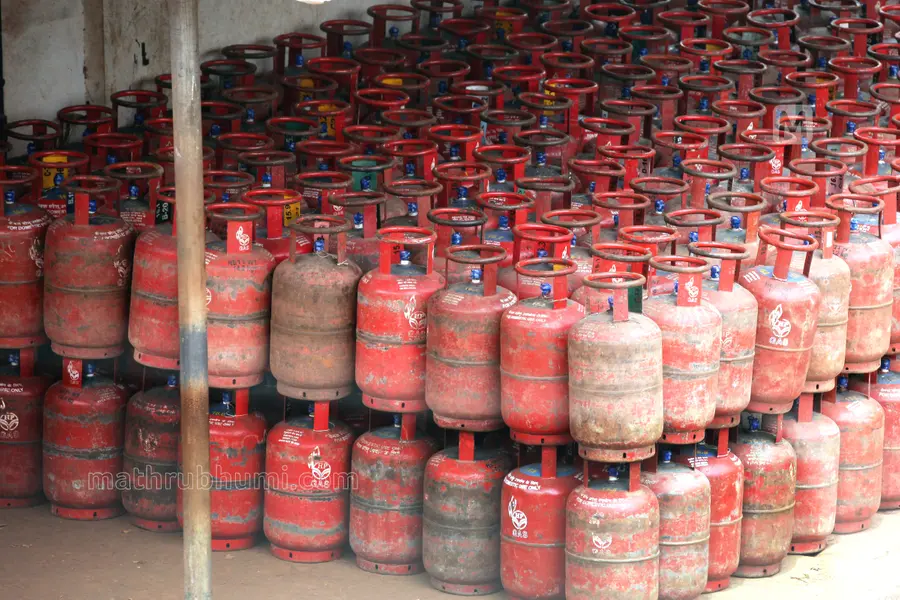
Kochi/New Delhi/Mumbai: As the conflict in the Middle East severely impacts petroleum imports, the supply of commercial Liquefied Petroleum Gas (LPG) in the state is heading toward a standstill. Oil companies are currently struggling to prevent a total breakdown in domestic supplies, though restrictions on household cylinders are expected in the coming days. The shortage was triggered by the closure of the Strait of Hormuz—located between Iran, the UAE and Oman—which has choked import routes.
At the BPCL plant in Ambalamugal, the bottling of Bharat Gas commercial cylinders has been completely halted. Since Saturday, the movement of commercial stocks has been disrupted. Typically, the plant bottles approximately 50,000 cylinders daily, including 14.5kg domestic units and various commercial sizes (5kg, 19.5kg, 35kg, and 45kg). Out of this, the production of roughly 12,000 commercial cylinders has ceased entirely. Similarly, at the IOC's Udayamperoor unit, the bottling of Indane commercial cylinders has also been suspended.
At HPCL’s Irumpanam unit, the bottling of HP Gas for commercial use has been limited. Production is now restricted solely to essential sectors, such as hospitals. Currently, 60% of India’s LPG requirement is met through imports from Gulf nations, which are then processed and bottled by local refineries.
Hotels facing crisis
G Jayapal, president of the Kerala Hotel and Restaurant Association, stated that if the availability of commercial cylinders is not restored immediately, 80% of hotels in the state will be forced to shut down in the coming days.
Centre orders guaranteed supply
Meanwhile, the Central Government has issued an order under the Essential Commodities Act to divert natural gas supplies to priority sectors, including domestic needs. Refineries must ensure that the supply of Piped Natural Gas (PNG) for households, CNG for transport, LPG production and pipeline compressor fuel remains consistent with the average consumption of the last six months.
Refineries have been ordered to operate at full capacity, and domestic LPG production must be increased by 10%. Steps have also been initiated to source LPG and LNG from more countries. To prevent hoarding, the minimum interval for LPG booking has been increased from 21 days to 25 days. A three-member committee, including representatives from public sector oil companies, has been appointed to monitor the shortage.
Oil prices dip to $90
After a record-breaking surge, global oil prices have retreated. The international benchmark, Brent Crude, dropped to $88.22 per barrel on Tuesday before stabilizing at $92.24. This follows Monday’s closing price of $98.96. The dip is attributed to US President Donald Trump’s statement suggesting that the conflict in Iran may not be prolonged.
Published: 11 Mar 2026, 07:35 am IST
Related Topics
Disclaimer: Kindly avoid objectionable, derogatory, unlawful and lewd comments, while responding to reports. Such comments are punishable under cyber laws. Please keep away from personal attacks. The opinions expressed here are the personal opinions of readers and not that of Mathrubhumi.
