
On the occasion of Vishwakarma Jayanti, craftsmen urged the government to introduce schemes to revive the intricate art that once adorned generations with unique handcrafted ornaments.
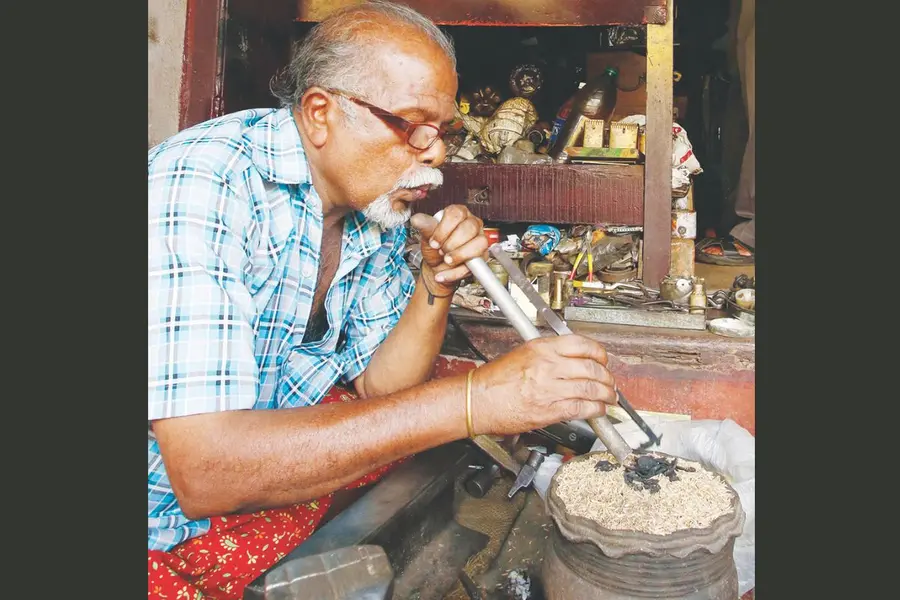
Malappuram: The delicate art of traditional gold jewellery making in Kerala, once a hallmark of local craftsmanship, is now a fading memory, experts say.
Jewellery was once crafted by heating gold in a clay pot over charcoal, blowing through bamboo pipes, and then hammering it into fine wires. Gold wires were combined and shaped into intricate patterns to form ornaments with unique designs.
“Golden memories of that local excellence remain,” said NV Prakash of Kondotty and K Balan of Kannur, traditional jewellery makers and traders. The pair noted that even when a ten-tola (116.64 grams) gold bar cost Rs 900, Muslim households in Malabar adorned daughters with 101 sovereign gold ornaments for their 'Nikah' (marriage). Hindu households typically reserved gold for personal use on special occasions.
Historically, skilled goldsmiths, or Thattans, from the Vishwakarma community, crafted ornaments believed to protect wearers from evil or danger. Popular items included 'njali', 'nagaphanathali', 'palakkamothiram', 'ponchittu', 'kummar', 'chakramala', and large silver bangles. Elders often provided gold from family holdings for artisans to craft elaborate ornaments over several weeks.
Prakash and Balan said the intricacy of traditional goldwork still attracts buyers from abroad, sometimes commanding prices higher than the gold itself. However, mechanisation has largely replaced manual craftsmanship, pushing traditional goldsmiths out of the jewellery industry. Artisans are now calling for schemes, including the Pradhan Mantri Vishwakarma Yojana, to create new opportunities and preserve the craft.
Published: 17 Sept 2025, 11:54 am IST
Related Topics
Disclaimer: Kindly avoid objectionable, derogatory, unlawful and lewd comments, while responding to reports. Such comments are punishable under cyber laws. Please keep away from personal attacks. The opinions expressed here are the personal opinions of readers and not that of Mathrubhumi.
