
CPI Kerala secretary Binoy Viswam has stirred a political controversy by stating that Vande Mataram is not India's national anthem and that reciting the song beyond its first two stanzas is neither mandatory nor historically practised, amid an ongoing dispute over its rendition in the Kerala Assembly.
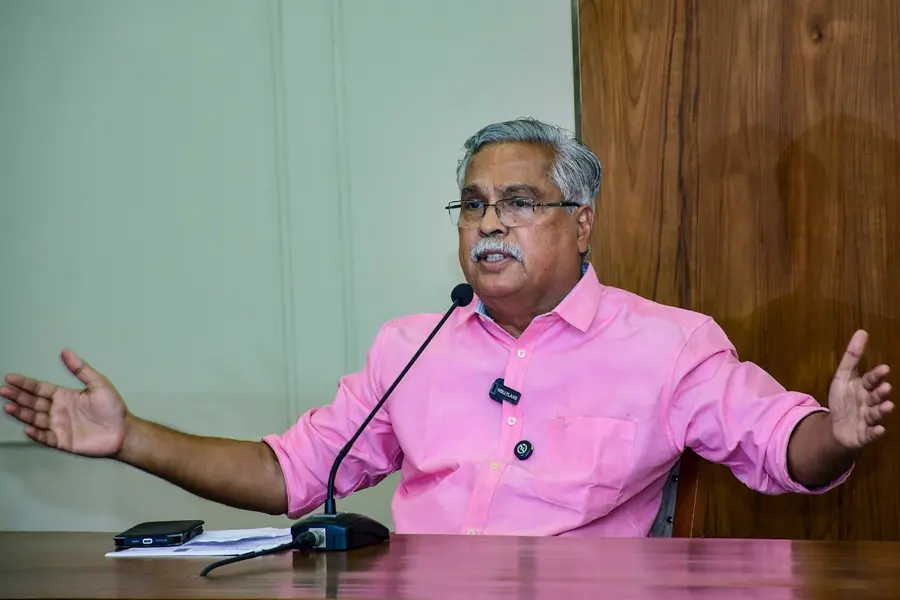
Thiruvananthapuram: A fresh political controversy has erupted in Kerala over the rendition of Vande Mataram in the State Assembly, with senior CPI leader Binoy Viswam asserting that the song is not India's national anthem and that only its first two stanzas have traditionally been considered for public recitation.
The remarks came as the debate intensified between the Kerala government and Governor Rajendra Vishwanath Arlekar over the manner in which Vande Mataram was played during Assembly proceedings.
Also Read

What did Binoy Viswam say?
Binoy Viswam said Vande Mataram holds an important place in India's history but cannot be equated with the national anthem.
According to him, while Vande Mataram is recognised as the national song, it has never officially been treated as the national anthem in independent India.
Viswam argued that there had historically been an understanding that only the first two stanzas could be recited on certain occasions if organisers chose to do so, and even that was optional rather than compulsory.
He further contended that the later stanzas contain references to Hindu deities and therefore have been the subject of debate since the pre-Independence era.
The CPI leader also noted that objections to the complete rendition of the song had been raised by sections of the freedom movement before Independence.
Why has the controversy erupted?
The row began after the Kerala Legislative Assembly started proceedings with the rendition of Vande Mataram for the first time in its history. However, only the opening portion of the song was played and that too in instrumental form by a police band.
Governor Rajendra Vishwanath Arlekar reportedly expressed dissatisfaction over the decision, questioning why the song was not played in its entirety.
The issue subsequently triggered a wider political debate over protocol, tradition and the role of Vande Mataram in official state functions. Kerala Chief Minister V. D. Satheesan also stated that there is no requirement for the full rendition of Vande Mataram during official proceedings.
His remarks further fuelled the controversy, drawing criticism from opposition voices and supporters of a fuller rendition of the national song.
Viswam targets Governor
During his interaction with reporters, Viswam also took a swipe at Governor Arlekar. The CPI leader said that while he personally regarded the Governor as a good individual, Arlekar's ideological background as a swayamsevak influenced his views on the issue.
Viswam suggested that the Governor's criticism stemmed from political and ideological considerations rather than constitutional requirements. His comments have since drawn reactions from political leaders across party lines.
The controversy soon spread beyond Kerala, with Vishnu Deo Sai strongly criticising those who question or oppose Vande Mataram. Sai said citizens would not support people who insult Vande Mataram, avoid saying "Bharat Mata Ki Jai" or challenge cultural and religious symbols associated with India's heritage.
His remarks added a national political dimension to what initially began as a procedural dispute within the Kerala Assembly.
What is the status of Vande Mataram?
Vande Mataram, written by Bankim Chandra Chattopadhyay, played a significant role in India's freedom movement and is recognised as the country's national song.
India's national anthem, however, remains Jana Gana Mana.
Over the years, discussions have periodically surfaced regarding which portions of Vande Mataram should be sung during official functions, particularly because later verses contain references to Hindu religious imagery.
Historically, public renditions have generally been limited to the first two stanzas. The Kerala controversy also comes amid broader discussions across states regarding ceremonial protocols involving national and state songs.
In Tamil Nadu, recent government events witnessed political disagreements over the sequence in which Tamil Thai Valthu and Vande Mataram were played, with opposition parties alleging that changes in protocol altered long-standing traditions.
The latest debate highlights how issues related to national symbols, cultural identity and official protocol continue to generate political controversy across India.
(With ANI inputs)
Published: 30 May 2026, 10:14 am IST
Disclaimer: Kindly avoid objectionable, derogatory, unlawful and lewd comments, while responding to reports. Such comments are punishable under cyber laws. Please keep away from personal attacks. The opinions expressed here are the personal opinions of readers and not that of Mathrubhumi.