
Sree Padmanabhaswamy Temple’s Murajapam enters its final phase as preparations peak for the grand Laksha Deepam illumination on January 14, with thousands of lamps, security arrangements and historic significance.
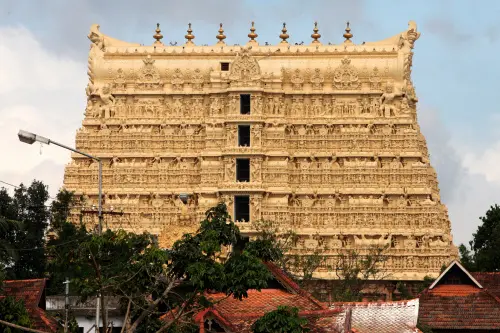
Thiruvananthapuram: The ritualistic Murajapam at the Sree Padmanabhaswamy Temple, held once every six years, has entered its final phase, with preparations intensifying for the grand Laksha Deepam ceremony. The Laksha Deepam will conclude on January 14, coinciding with Makara Sankranti, when thousands of ghee lamps and electric lights will illuminate the temple complex, Padmatheertham banks and surrounding walls. Union Home Minister Amit Shah is scheduled to visit the temple at 11 am on Sunday.
Preparations for the Laksha Deepam are in their final stages. Electric lamps are being installed across the temple premises, including the gopuram, and inspection of the lighting arrangements is in progress. Ghee lamps and oil lamps will be lit in the stone lamp structures in the Shivelipura, while the azhimadams of the nalambalam (structure surrounding the sanctum sanctorum) will also glow with traditional lamps.
The Ponnum Shiveli (temple procession), an important ritual associated with the Laksha Deepam, will take place at 8.30 p.m. Authorities expect around 25,000 devotees to witness the event, and entry will be restricted through passes. Heavy security arrangements will be deployed inside and outside the temple. Large numbers of devotees are also expected at Padmatheertha banks and the eastern gate to witness the grand illumination.
From Rs 2 lakh to Rs 6 crore: Rising cost of Laksha Deepam
The first Laksha Deepam, initiated 275 years ago by Maharaja Marthanda Varma, reportedly cost Rs 2 lakh. Today, the Murajapam and Laksha Deepam rituals together cost nearly Rs 6 crore, compared to Rs 4 crore spent six years ago.
Despite historical challenges, including British opposition and national crises, the Laksha Deepam continues into its 46th edition. In 1810, then ruler Balarama Varma refused to cancel the ceremony despite pressure from British Resident Colonel Macaulay and administrative concerns, asserting the sanctity of the tradition.
Even during the First World War in 1914, when Travancore faced financial strain, Sri Moolam Thirunal Maharaja ensured the ritual was conducted at a cost of Rs 8 lakh. The ritual has also witnessed debate over its expense. "At that time, when gold was worth Rs 15, the question arose whether a 58-day ritual was worth Rs 8 lakhs?", with cultural figures like V T Bhattathiripad questioning the financial burden a century ago.
Swathi Thirunal Maharaja, who ascended the throne in 1829, elevated Murajapam into a grand spiritual and social event. Determined to preserve the sanctity of the rituals dedicated to Lord Sree Padmanabha, he also initiated significant developmental reforms in the capital as part of the ceremony.
Infrastructure development linked to Murajapam includes the cutting of Parvathiputhanar during the reign of Rani Parvathibai to transport goods from the north. It later developed into the Thiruvananthapuram–Shoranur (TS) Canal, expansion of railway facilities, and enhancement of healthcare services in the capital to support pilgrims visiting during the festival.
Published: 10 Jan 2026, 10:34 am IST
Related Topics
Disclaimer: Kindly avoid objectionable, derogatory, unlawful and lewd comments, while responding to reports. Such comments are punishable under cyber laws. Please keep away from personal attacks. The opinions expressed here are the personal opinions of readers and not that of Mathrubhumi.
