

The Princess invites us to see Thiruvananthapuram, my constituency since 2009, not merely as an administrative capital, but as a civilisational landscape whose identity has been shaped over centuries by faith, scholarship, reform and cultural exchange
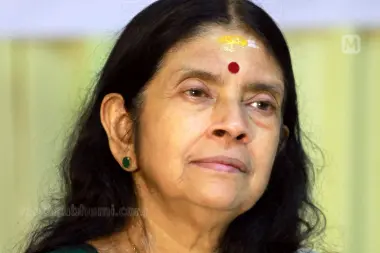
I had the recent pleasure, in Delhi, to celebrate not only the publication of another book by Her Highness Princess Aswathi Thirunal Gouri Lakshmi Bayi of Travancore, but the continuation of a remarkable literary journey. The Princess has, over the years, fashioned a body of work distinguished by its intellectual curiosity, literary grace and unwavering commitment to Kerala's civilisational inheritance. Her fourteenth and latest book, The Patchwork Quilt, at first glance appears to be precisely what its title promises: a patchwork, a carefully stitched collection of 49 essays, speeches and reflections written over three decades, each conceived for a different audience, occasion or purpose. Yet, as with every finely crafted quilt, the beauty lies not merely in its individual pieces, but in the invisible threads that bind them together. What emerges is not a miscellany, but a coherent intellectual tapestry, woven together by a singular and abiding love for Kerala, for its history, its culture, its people, and above all, for the city that has served as both the geographical and spiritual centre of her life's work, my own karmabhumi, Thiruvananthapuram.
Also Read
The Princess invites us to see Thiruvananthapuram, my constituency since 2009, not merely as an administrative capital, nor simply as a city of expanding roads and growing skylines, but as a civilisational landscape whose identity has been shaped over centuries by faith, scholarship, reform and cultural exchange. In these pages, the Sree Padmanabha Swamy Temple is not presented only as an architectural marvel or a sacred shrine; it becomes the moral axis around which the history of Travancore itself revolves, a place where kings surrendered sovereignty to the deity, where power was tempered by devotion, and where public life derived its legitimacy not from conquest but from service. Through this lens, the author reminds us that institutions endure not merely because of stone and mortar, but because generations choose to invest them with meaning.
One of the book's greatest virtues is its ability to honour the past without becoming captive to it. The Princess recounts stories that illuminate Kerala's remarkable tradition of coexistence: Muslim communities contributing to the protection of the temple in moments of peril, Christian fishermen safeguarding the Travancore monarch during sacred rituals, lower-caste devotees finding recognition within temple traditions, and a society that, despite its undeniable imperfections, repeatedly demonstrated a capacity for accommodation and mutual respect. At a time when our understanding of the past is increasingly reduced to simplistic narratives of conflict, The Patchwork Quilt gently but firmly reminds us that Kerala's greatest inheritance has been its extraordinary ability to harmonise differences without erasing them. It is a timely lesson, for ours is an age that urgently needs to rediscover the quiet strength of pluralism.
The book also pays affectionate tribute to those enlightened rulers whose vision transformed Travancore into one of the most progressive regions of pre-Independence India. From Maharaja Marthanda Varma's statecraft and spiritual dedication to the artistic genius of Swathi Thirunal and the epoch-making social reforms of Sree Chithira Thirunal, these essays remind us that the past is shaped not only by the exercise of power, but by the endurance of ideas translated into institutions. The Princess writes not as a detached historian poring over brittle archives, but as a custodian of a living legacy, one who understands that remembrance carries with it the responsibility of honest preservation rather than uncritical celebration.
Yet perhaps the most striking quality of The Patchwork Quilt is that it never allows heritage to become an excuse for nostalgia. Interwoven with reflections on temples, music, literature and royal history are thoughtful meditations on renewable energy, environmental degradation, education, medicine, psychology and the ethical dilemmas of our own age. Her Highness asks searching questions about what becomes of a society when its relentless pursuit of material progress comes at the expense of its ecological balance or its moral compass. She reminds us that a civilisation cannot measure its success solely by the height of its buildings or the speed of its highways; it must also ask whether it has preserved the values that made it worth inhabiting in the first place. In doing so, she demonstrates that tradition and modernity are not adversaries but partners in an ongoing conversation.
For me, however, the most moving chapters are the deeply personal ones. The recollections of her father, Lieutenant Colonel Godavarma Raja, the visionary whose dreams anticipated the aviation, tourism and technological aspirations of modern Kerala; the memories of childhood shaped by spiritual influences; and the reflections on family, loss and inheritance lend the book a warmth that scholarly histories alone cannot achieve. They remind us that history is never merely public. It is also intimate. Every civilisation is sustained as much by personal memory as by official record, by stories told within families as by those inscribed in monuments.
The title itself becomes, ultimately, the perfect metaphor. A patchwork quilt derives its strength not from uniformity but from diversity. Individual fragments, separated by time, subject and circumstance, acquire fresh meaning when stitched together into a larger whole. So too with these essays. Written across three decades, they transcend the occasions that first inspired them to become something far more enduring: a meditation on the past, a commentary on the present, and, perhaps most importantly, a statement of faith in Kerala's future. In preserving memory without surrendering to nostalgia, and in embracing modernity without abandoning tradition, The Patchwork Quilt exemplifies the rarest achievement of all. It transforms a collection of writings into a compelling philosophy of belonging.
The Patchwork Quilt is the latest milestone in a literary journey that has steadily expanded in both scope and ambition over the years. It also offers us an opportunity to reflect upon the author herself, because Princess Aswathi Thirunal Gouri Lakshmi Bayi occupies a distinctive place in Kerala's literary and cultural landscape. Born into the ancient Trippapur Swaroopam of the Royal House of Travancore, she inherited a legacy that has profoundly shaped Kerala's political, cultural and spiritual life. Yet, rather than allowing that inheritance to remain confined to family memory or the pages of history, she has devoted herself to documenting, interpreting and sharing it with the wider world. Through her books, she has ensured that the story of Travancore, and of Kerala itself, continues to speak to new generations with freshness and relevance.
Her evolution as a writer has been as fascinating as it has been wide-ranging. She began with poetry, that most intimate of literary forms, before her interests expanded naturally into religion, culture, public affairs and the rich civilisational legacy of Kerala. Whether she is illuminating the enduring spiritual significance of the Sree Padmanabha Swamy Temple, recovering the story of Travancore's enlightened rulers, celebrating Kerala's artistic heritage, or reflecting on the social and environmental challenges of our own times, her writing is distinguished by meticulous scholarship, thoughtful reflection and a deep personal engagement with her subject. She writes neither with the detachment of the archivist nor with the sentimentality of the nostalgic. Instead, she approaches the past as a living inheritance, one that continues to illuminate the present and shape the future.
It is this larger purpose that binds together her entire body of work. Her books are not written simply to recount history or celebrate tradition; they seek to preserve a civilisational inheritance while inviting each succeeding generation to engage with it afresh. At a time when cultural memory is increasingly vulnerable to the pressures of a rapidly changing world, her writings serve as both record and reminder, preserving not only the events of Kerala's past but also the values, ideas and traditions that have given our society its distinctive character. The Patchwork Quilt is the latest expression of that enduring commitment, and it stands alongside her earlier works as part of a remarkable literary endeavour that has enriched Kerala's intellectual and cultural life.
It is for this reason that Princess Aswathi Thirunal Gouri Lakshmi Bayi deserves our admiration not only as an accomplished author, but as one of the foremost custodians of Kerala's cultural memory. Through her scholarship, her poetry and her unwavering commitment to preserving our heritage, she has enriched the intellectual life of our state and left an enduring legacy for future generations.
In an age when the relentless pace of change often threatens to sever our connection with the past, she reminds us that a civilisation endures not merely through its monuments, but through the stories it chooses to preserve and the values it chooses to transmit. Her books invite us to look back with understanding rather than nostalgia, and to look ahead with confidence rooted in the wisdom of our inheritance.
Published: 15 Jul 2026, 07:56 am IST
ABOUT THE AUTHOR
Related Topics
Disclaimer: Kindly avoid objectionable, derogatory, unlawful and lewd comments, while responding to reports. Such comments are punishable under cyber laws. Please keep away from personal attacks. The opinions expressed here are the personal opinions of readers and not that of Mathrubhumi.