
Former Kerala DGP and BJP leader R Sreelekha has alleged “double justice” in a Facebook post after Punalur Police registered a case against her over remarks comparing Rahul Gandhi’s protest in Delhi to a “drug-induced tandava”.
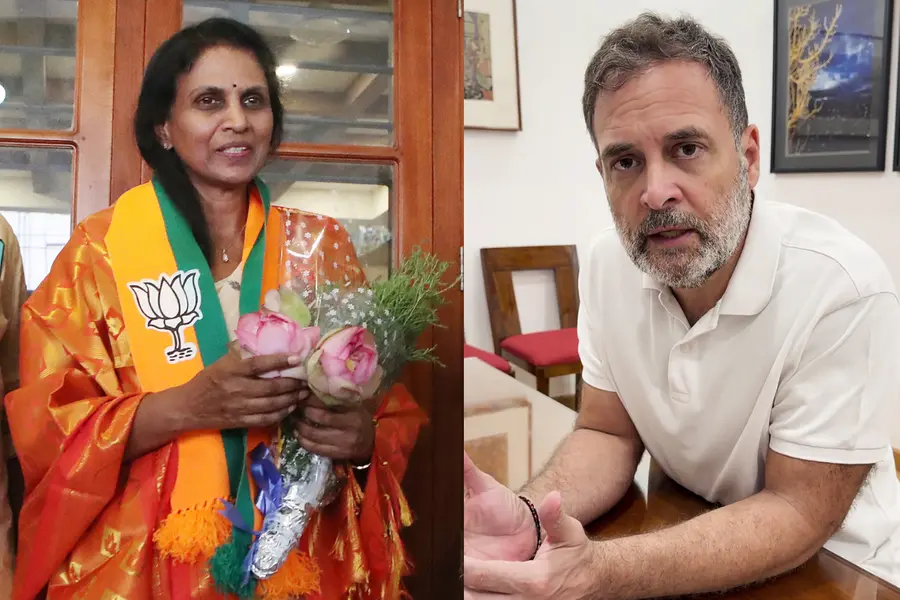
Thiruvananthapuram: Former Kerala Director General of Police R Sreelekha has criticised the police action against her, alleging “double justice” in a Facebook post published on Saturday. The BJP leader questioned what she described as unequal treatment of political speech, comparing cases involving remarks about Prime Minister Narendra Modi and Congress leader Rahul Gandhi.
In her post, Sreelekha wrote: “The government's double justice!”
Also Read

She claimed that if someone made abusive remarks about the Prime Minister, the matter would be treated as defamation, which the police could not directly take up. In contrast, she alleged that a complaint over remarks about Rahul Gandhi had resulted in a charge of inciting riots.
Why has a case been registered against Sreelekha?
Punalur Police in Kerala’s Kollam district have registered a case against Sreelekha under Section 192 of the Bharatiya Nyaya Sanhita (BNS), which concerns wantonly giving provocation with the intent to cause a riot, or knowing that a riot is likely to be caused.
The case follows remarks she made during a public speech in Kollam about Rahul Gandhi’s participation in a protest in Delhi. Sreelekha reportedly described Gandhi’s actions as a “drug-induced tandava”, comparing the protest to the uncontrolled behaviour of someone under the influence of excessive drugs.
She also criticised Congress for organising the protest while holding up the Constitution and used the term “cockroaches” to describe those participating, according to the account of her speech.
The police case concerns the alleged attempt to incite a riot. Registration of a case does not establish guilt, and the allegations would have to be examined through the legal process.
Ramesh Chennithala condemns the remarks
Congress leader Ramesh Chennithala criticised Sreelekha’s comments, arguing that political disagreement should focus on a person’s policies and arguments rather than personal insinuations.
He called the description of Gandhi’s protest as a “drug-induced tandava” an example of language that went beyond political criticism. He also objected to the use of tandava, a term associated with Lord Shiva’s cosmic dance, in what he described as a crude political insult.
Chennithala urged Sreelekha to withdraw her remarks and apologise. He also questioned whether a former senior police officer should make such statements, given the responsibilities associated with the office she previously held.
Responding to suggestions that the police might have fabricated the case, Chennithala questioned how such an action could remain unnoticed by the public. He maintained that political interests did not excuse the use of language he considered inappropriate.
What is the controversy about?
The dispute has developed along two lines: the legal question of whether Sreelekha’s remarks meet the threshold under Section 192 of the BNS, and the political argument over whether authorities apply the law consistently when complaints concern different political leaders.
Sreelekha’s Facebook post presents the case as an example of unequal treatment. Chennithala, meanwhile, has focused on the nature of her remarks and called for an apology.
Her comparison between cases involving Modi and Gandhi is an allegation made in her post; assessing it would require examining the specific complaints, applicable legal provisions and police action in each case.
What Section 192 of the BNS covers: The provision deals with provocation intended to cause a riot, or provocation given with knowledge that a riot is likely to occur. Whether the provision applies depends on the circumstances and evidence, not simply on whether a statement is offensive or politically controversial.
Published: 17 Oct 2026, 09:49 am IST
ABOUT THE AUTHOR
Related Topics
Disclaimer: Kindly avoid objectionable, derogatory, unlawful and lewd comments, while responding to reports. Such comments are punishable under cyber laws. Please keep away from personal attacks. The opinions expressed here are the personal opinions of readers and not that of Mathrubhumi.