
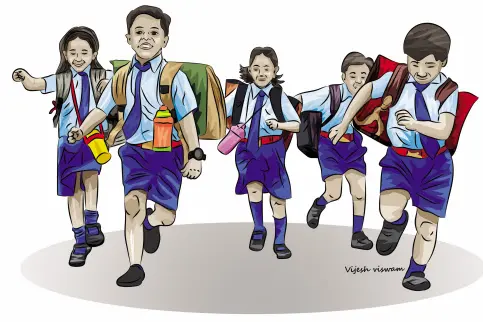
Kochi: It’s been two months since the production of the handloom school uniforms (provided freely by the state government) has come to a halt in the state. The shortage of threads and due to the ongoing financial crisis are the reasons attributed by the individuals involved in the process
48-50 lakh metres of cloth have to be prepared for the next academic year. However, only 30 lakh metres have only been produced so far. Usually, the entire cloth material gets ready by December. However, that’s not the case this year.
Almost 6,000 weavers are earning a livelihood out of handloom school uniform production in the state. However, they have not received their wages in the last five months. The government owes their societies almost Rs 20 crores in the form of pending wages. The state handloom association has also informed that payment amounting to Rs 30 crores is pending to Hantex in account of materials supplied so far. No intimation has been given regarding the pending production incentives as well.
Several of the weavers’ societies are on the brink of closure due to lack of funds. The employees aren’t receiving their wages, there is hardly any money to meet the daily production expenses. Employees have started finding other jobs to earn a living. Uncertainty looms large over provident funds and other welfare benefits for the employees as well.
Spinning mills in disarray
The crisis in the spinning mills has affected the production of threads. The government apparently is not paying them properly even when they supply products to the handloom weavers. The mill owners are saying it is almost impossible to engage in production without capital. They are lamenting that they don’t even have money to purchase raw materials including cotton. Paying electricity bills is also proving a mammoth task. The mills usually receive the order for threads from the handloom directorate.
It is the cotton season and the perfect time for mills to purchase the raw material in bulk at cheap rates. However, they are unable to do so due to the distressing conditions. All these factors are adversely affecting the entire production process.
Published: 20 Dec 2023, 02:06 pm IST
Related Topics
Disclaimer: Kindly avoid objectionable, derogatory, unlawful and lewd comments, while responding to reports. Such comments are punishable under cyber laws. Please keep away from personal attacks. The opinions expressed here are the personal opinions of readers and not that of Mathrubhumi.
