
Pinarayi Vijayan criticised the move to induct non-Muslims into Waqf Board management, calling it against secularism and accusing the Kerala government of adopting a Sangh Parivar-backed approach amid the ongoing Waqf law debate.
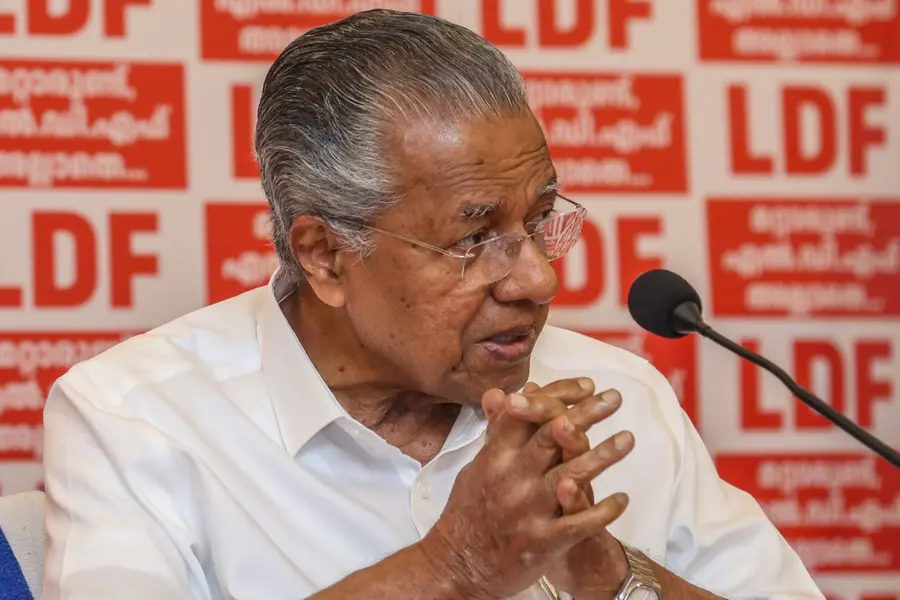
Thiruvananthapuram: CPI(M) leader and Kerala Opposition Leader Pinarayi Vijayan has criticised the move to induct non-Muslims into Waqf Board management, calling it a departure from India's secular principles and alleging that the state government is adopting a position aligned with the Sangh Parivar.
Addressing the controversy surrounding the Waqf Board, Opposition Leader Pinarayi Vijayan alleged that attempts to induct non-Muslims into the management of Waqf Boards form part of the Sangh Parivar's broader agenda and accused the Kerala government of trying to implement it.
Also Read

He said such a move goes against the secular values of the Constitution and claimed that the Kerala government was now taking a position similar to that of BJP-ruled states.
'Against the secular principles of the country'
Pinarayi Vijayan said that the proposal to include non-Muslims in the Waqf Board was a serious issue.
He stated: "The attempt to induct non-Muslims into Waqf Board management is serious. The practice followed so far as part of secularism in the country is that each religious community manages institutions related to their beliefs by people belonging to that community."
He further argued that including non-Muslims in a body that administers Muslim religious endowments amounted to a stand against secularism. "Including non-Muslims in the Waqf Board, which is related to the Muslim community, is a stand against secularism and should be strongly opposed."
Allegation against the Kerala government
Pinarayi Vijayan alleged that the Kerala government was colluding with the petitioners in the case and attempting to weaken the Waqf Board's independent character.
He also warned that the precedent could extend beyond the Muslim community. "The stance taken against the Muslim community today might be adopted by the government for other religious communities tomorrow."
According to him, the government's position aligns with the interests of the Sangh Parivar rather than a secular approach.
Background: Why is the issue being debated?
The controversy stems from changes introduced under the Waqf (Amendment) Act, which altered several provisions relating to the administration of Waqf properties and the composition of Waqf Boards. Among the debated provisions is the possibility of appointing non-Muslim members to Waqf Boards in certain categories, a move that has drawn opposition from several Muslim organisations and political parties.
Multiple petitions challenging provisions of the amended law are pending before the Supreme Court, with critics arguing that the changes interfere with the autonomy of Muslim religious institutions. Supporters of the amendments, however, have maintained that the changes are intended to improve transparency, accountability and governance in the administration of Waqf properties.
Political row continues
The remarks are the latest in the ongoing political debate over the amended Waqf law, with opposition parties and Muslim organisations continuing to oppose provisions relating to the composition and functioning of Waqf Boards, while the Centre has defended the reforms as administrative measures.
Published: 17 Jul 2026, 12:05 pm IST
Disclaimer: Kindly avoid objectionable, derogatory, unlawful and lewd comments, while responding to reports. Such comments are punishable under cyber laws. Please keep away from personal attacks. The opinions expressed here are the personal opinions of readers and not that of Mathrubhumi.